Proven Results
Backed by independent research and trusted by thousands of educators, our literacy programmes are research-proven.


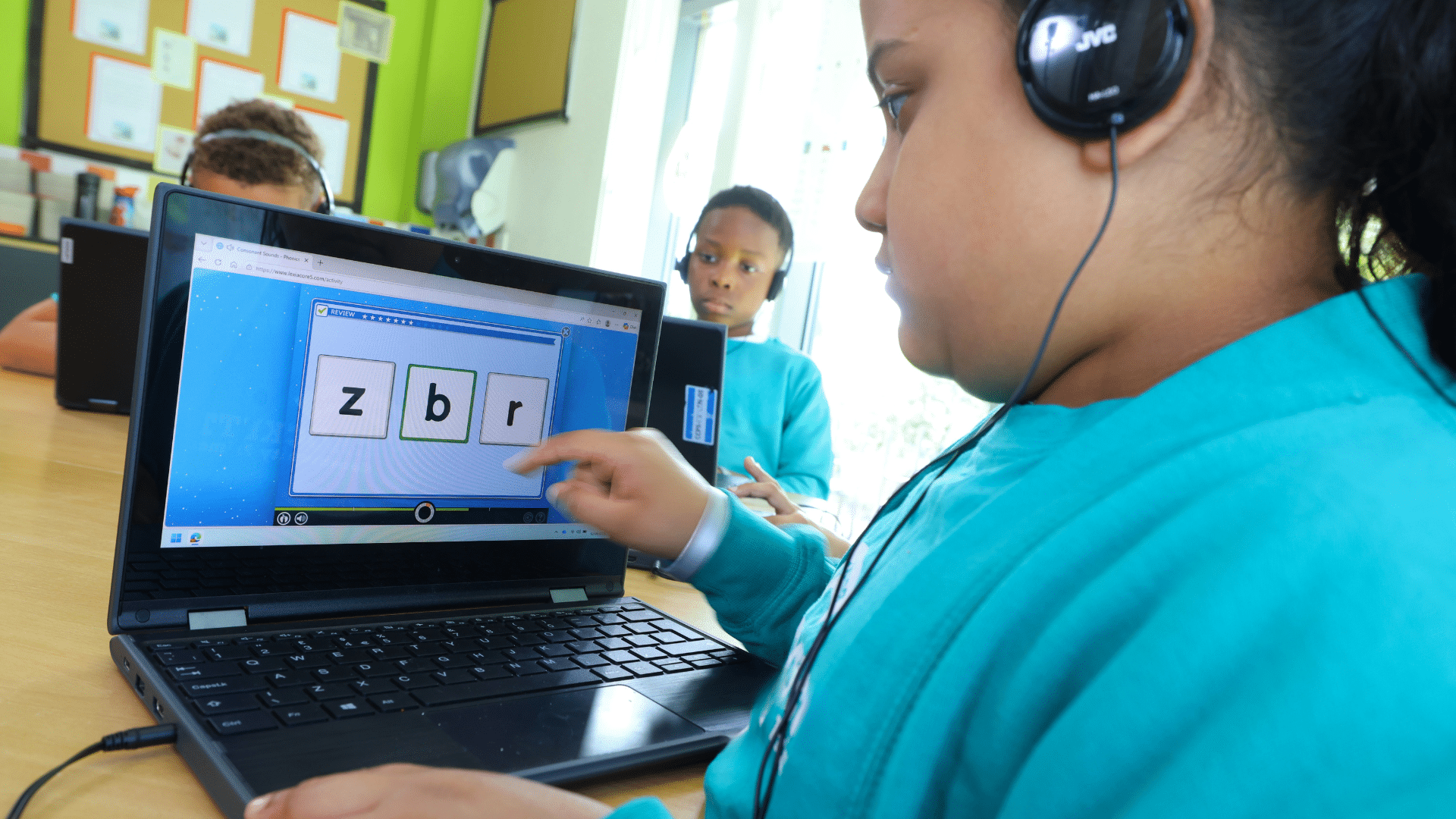
As a new school year begins, it’s the perfect time to revisit the tools within myLexia that can help you establish strong routines, identify pupils’ needs quickly and make the biggest possible impact. When it comes to maximising the impact of Lexia in your school, some of the most powerful tools are the ones that often go unnoticed. Beyond the familiar dashboards and progress reports, myLexia offers a range of hidden features that can transform the way educators track progress, target additional support, and enhance student learning.
In this article, we’ll revisit three valuable myLexia features that you may have overlooked or simply need a refresher on after the summer break. By making the most of these tools, you can gain a clearer picture of student progress, personalise support, and save valuable planning time.
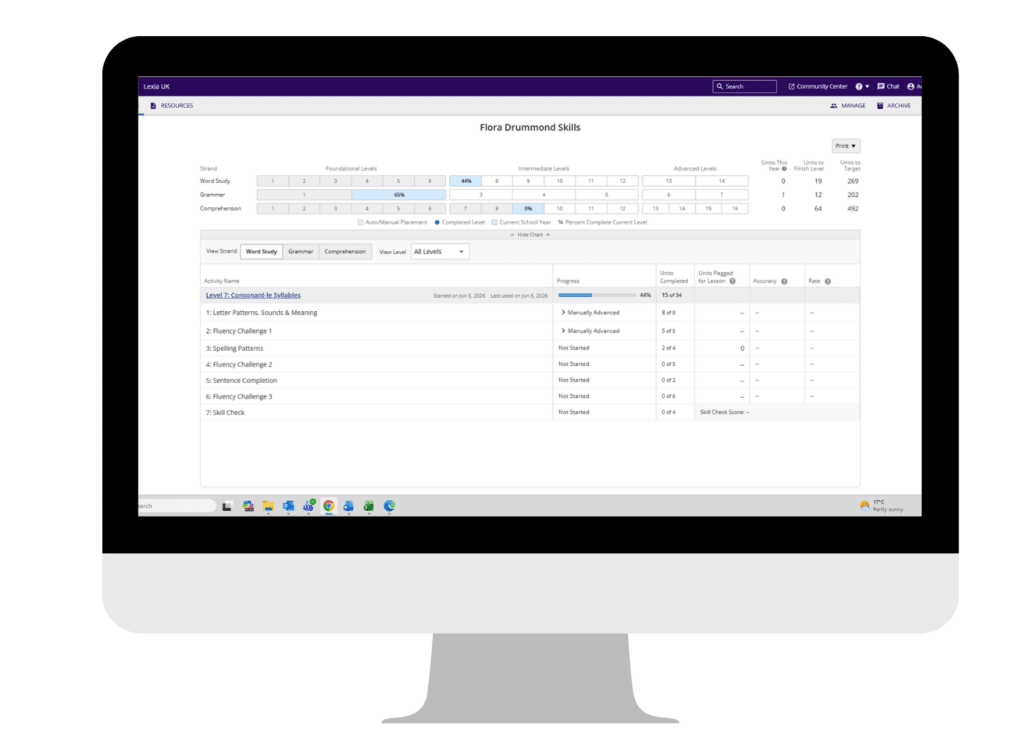
While many are familiar with myLexia’s Class Overview and Class Progress reports, fewer are aware of the level of detail that can be gained from the student reports. The student-level Detailed Skills Report provides an in-depth look into an individual student’s strengths and needs, right down to the specific phoneme, high frequency word, or comprehension question type.
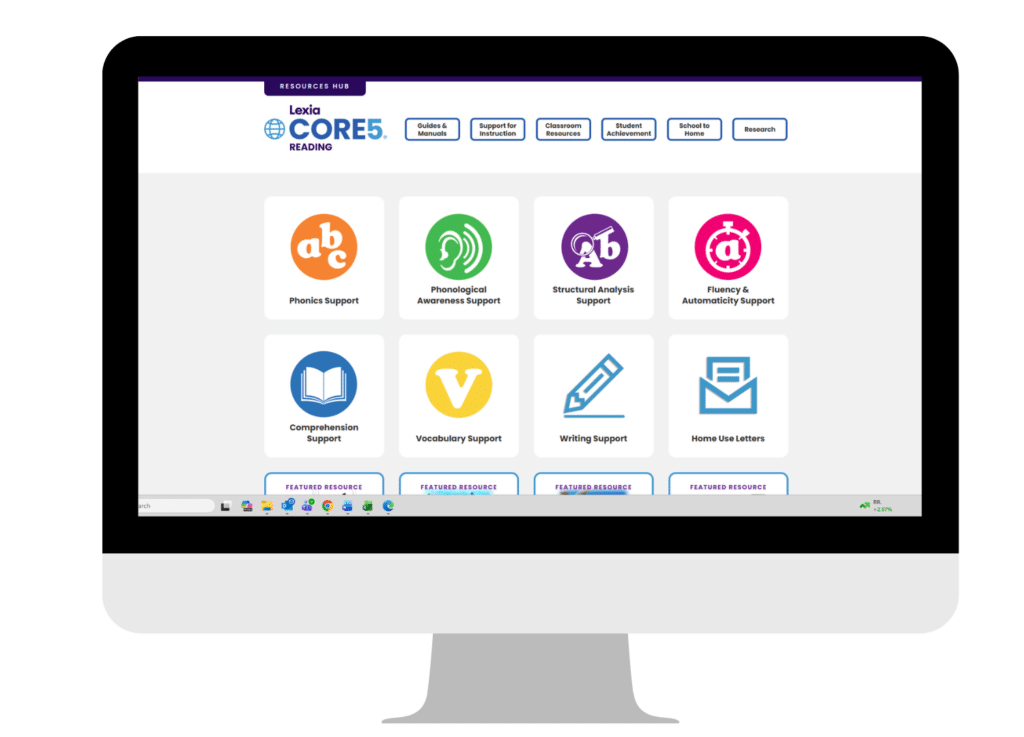
Lexia’s Resource Hub provides a veritable treasure trove of literacy resources, including structured lesson plans and printable activities, designed to reinforce key literacy skills. From comprehension passages and decodable readers to sticker charts and goal setting exercises, these resources can be integrated into classroom teaching, small-group interventions, or sent home as homework.
Many are already aware of the Skill Builders and their ability to provide printed offline practice and consolidation activities to ensure students have fully grasped key literacy skills. However, the introduction of Skills Checks in a recent update means that the delivery of these resources can be even more targeted and effective. Skills Checks serve as quick and subtle assessments at the end of each level to provide added progress and mastery information to the teacher.
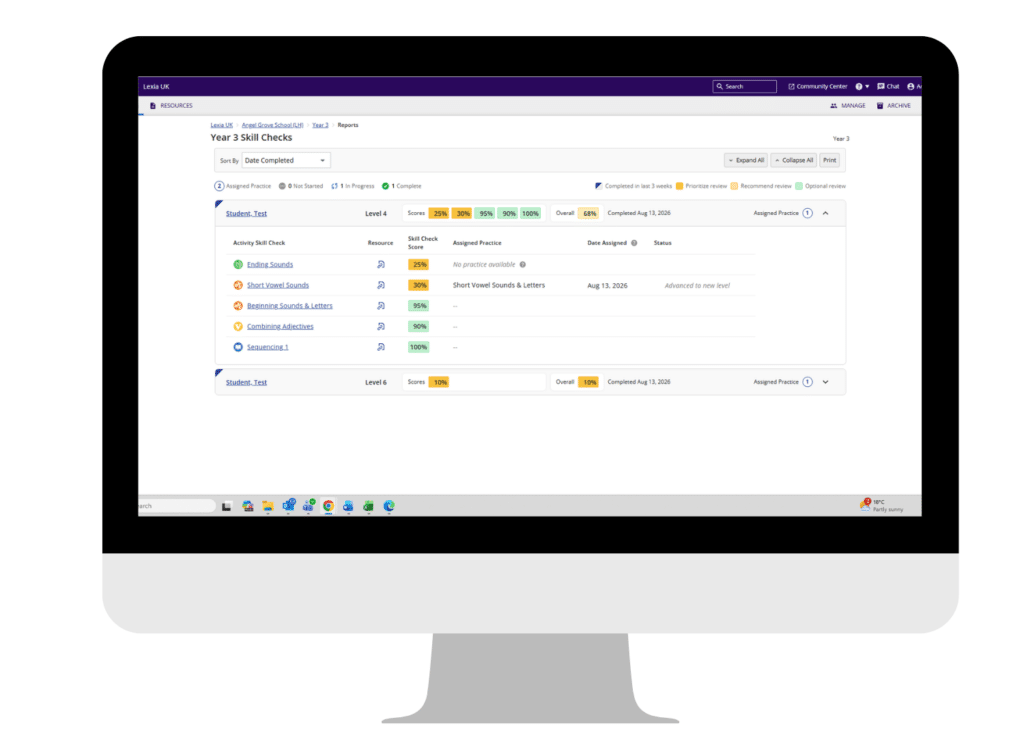
By making the most of these powerful features, you can gain a deeper understanding into student progress and deliver more targeted interventions to boost literacy progress even further. Whether it’s using Detailed Skills Reports to fine-tune interventions, exploring the Resource Hub for ready-made teaching resources, or taking advantage of Skill Checks and Skill Builders to reinforce learning, each tool is designed to help you maximise the impact of Lexia in your school.
Have you seen our Lexia League competition? Click here to find out how to win prizes for pupils.

Backed by independent research and trusted by thousands of educators, our literacy programmes are research-proven.

Find out how we are helping schools to accelerate their literacy progress.

Keep up to date with the latest industry news from LexiaUK.

Getting Lexia started early helps pupils establish positive learning routines and gives you valuable assessment data from the very beginning of term.
We’ve created a short video to help you get everything set up and ready for a successful year ahead.
Contact our dedicated implementation and support team below:
"*" indicates required fields

As the summer term begins, secondary schools face a familiar dual focus: supporting students through exam preparation while laying the groundwork for the next academic year. Alongside this sits a persistent challenge, addressing literacy gaps that can limit progress across the curriculum.
For many schools, this is not a new issue. Students often arrive in secondary education without the reading, writing and vocabulary skills needed to fully access subject content. Without the right support, these gaps can widen over time, affecting both confidence and attainment.
But the summer term offers a valuable opportunity. With a clear, focused approach, schools can strengthen literacy in ways that support immediate outcomes while building momentum for September.
One of the most important messages from the Education Endowment Foundation (EEF) guidance is that literacy is not confined to English lessons, it underpins success in every subject.
Students are expected to read complex texts in science, interpret sources in history and decode multi-step problems in maths. When literacy skills are secure, students are better able to access, understand and apply what they have learned. When they are not, even capable learners can struggle to demonstrate their knowledge.
This becomes particularly important in the summer term. For KS4 students, it is about applying knowledge under exam conditions. For KS3, it is about consolidating learning and preparing for what comes next.

One of the most important messages from the Education Endowment Foundation (EEF) guidance is that literacy is not confined to English lessons, it underpins success in every subject.
Students are expected to read complex texts in science, interpret sources in history and decode multi-step problems in maths. When literacy skills are secure, students are better able to access, understand and apply what they have learned. When they are not, even capable learners can struggle to demonstrate their knowledge.
This becomes particularly important in the summer term. For KS4 students, it is about applying knowledge under exam conditions. For KS3, it is about consolidating learning and preparing for what comes next.
Vocabulary sits at the heart of understanding. Students need to be able to interpret exam questions accurately and use subject-specific language with confidence in their responses.
In the final term, small, consistent actions can make a noticeable difference. In practice, this might include:
A consistent, cross-curricular approach ensures students encounter and use vocabulary in meaningful contexts, helping it stick.
Many of the challenges students face in exams stem from difficulty accessing the text itself. Whether it is a science explanation, a historical source or a GCSE question, comprehension is key.
Teachers can support this by making reading processes visible and intentional. Modelling how to approach an unfamiliar passage, pausing to clarify meaning and encouraging students to summarise or question what they have read, all help to build confidence. Over time, these strategies enable students to tackle increasingly complex material with greater independence.
Writing is often where gaps in understanding become most visible. Students may have the knowledge, but without the ability to structure and communicate it clearly, their attainment can suffer.
Effective strategies include:
Importantly, writing should be closely linked to reading. Students benefit from seeing and breaking down how strong written responses are constructed before attempting their own.
Opportunities for purposeful talk can have a powerful impact on learning. When students are encouraged to explain their thinking, justify their ideas and respond to others, they begin to organise their understanding more effectively.
In the context of revision, this might involve short, paired discussions, verbal rehearsal of answer or structured group work. These moments do not need to be time-consuming to be effective, but they can significantly improve students’ ability to articulate their thinking when it matters most.
Alongside whole-class approaches, targeted support remains essential. Some students will require additional help to develop the foundational literacy skills needed to access the curriculum with confidence.
The summer term is a critical window for this. Focused intervention can help students make meaningful progress before end of year assessments, while also supporting those who are at risk of falling further behind. For schools preparing to welcome a new Year 7 cohort, it is also an opportunity to begin addressing gaps early, setting the tone for a stronger start in September.
While attention is naturally on current students, the summer term is also a time to look forward. Many pupils will transition to secondary school without the literacy skills needed to fully engage with the curriculum from day one.
By prioritising early identification and support, schools can ease this transition. Helping students build confidence in reading and vocabulary before they arrive or in those first crucial weeks, can have a lasting impact on their progress across subjects.

At The Compton School in London, Lexia plays a central role in preparing students for the move into secondary education. Before the summer, prospective Year 7 students take cognitive assessments, allowing staff to identify potential reading barriers. During transition day visits, students complete the Lexia Auto Placement test, and parents are introduced to the program to encourage engagement at home. Each student receives a Lexia licence and is invited to a summer challenge to log minutes, helping to prevent the “summer slide” and giving them confidence in their reading before they even start secondary school.
Once Year 7 begins, Lexia is embedded into the school timetable through breakfast clubs and personal development sessions, ensuring students achieve recommended usage without feeling pressured. Supported by Lexia prefects and structured interventions, students develop reading skills, build confidence and stay motivated through small rewards and recognition. Emily Walker-Nolan, Assistant Headteacher, notes that this approach allows the school to identify needs early and gives students a strong foundation, setting them up for success from day one of secondary school.
Sustainable improvement in literacy does not come from one-off initiatives. It is built through consistent, whole-school approaches that are embedded in everyday teaching.
When departments align around shared strategies, and teachers are supported with practical, evidence-informed approaches, literacy becomes the foundation for learning. Over time, this consistency helps students develop the skills they need not just for exams, but for lifelong learning.
At LexiaUK, we recognise the pressures schools face, particularly in the final term of the year. Supporting students to make progress now, while preparing for the future, requires solutions that are both effective and manageable.
Our adaptive, personalised programmes are designed to support targeted literacy development, helping students strengthen reading, build vocabulary and gain the confidence they need to succeed across the curriculum.
As you look ahead to the rest of the summer term and beyond, having the right support in place can make a meaningful difference.
Discover how Lexia can support your students with a 30-day free trial. Take the first step by clicking below:
"*" indicates required fields

As a LexiaUK customer, you already know how powerful Lexia programs can be in transforming student outcomes. But did you know that starting Lexia usage early in the academic year can significantly boost student progress? By integrating Lexia into your classroom from the very beginning, you’re setting the stage for accelerated learning and mastery of key literacy skills.
Early adoption of Lexia ensures that students are consistently exposed to personalised reading and literacy activities that meet their individual needs. The sooner your students start, the more time they have to benefit from the program’s adaptive technology, which continually adjusts to challenge them at just the right level. This early momentum can lead to greater gains in reading proficiency, increased confidence, and a stronger foundation for the year ahead.
To help you make the most of Lexia right from the start, we’ve created a ‘First Session’ checklist. This essential resource will guide you through the steps needed to ensure a smooth and successful introduction to Lexia in your classroom. From setting up student profiles to introducing the program’s features, this checklist has everything you need to get started on the right foot.
Download Your First Session Checklist (Primary Schools)
Download Your First Session Checklist (Secondary Schools)

Last year, 74% of Year 6 pupils met the expected standard in reading. While nationally this is an improvement on the previous year, the reading gap remains a challenge, and it’s critical to continue addressing it head-on as we move forward
In this article, we will explore five essential strategies for schools, and how Lexia programs can help schools tackle the literacy gap.
To accurately address literacy needs in school, we must begin by gaining a full understanding of the current literacy levels of our students. In Ofsted’s English subject report earlier in 2024, they found that formative assessment is not always well used to help teachers understand what pupils have learned and whether they are ready to move on. Data-driven, formative assessments are needed to provide valuable insights into where each student stands in their reading abilities.
Tools like myLexia, Lexia’s reporting and administration platform, can assist schools in obtaining real-time formative data, detailing how pupils reading skills are progressing and where they have gaps in their knowledge. Identifying specific areas of improvement allows teachers to tailor support to meet individual needs effectively. myLexia goes a step further by not only identifying gaps, but then providing bespoke lesson plans for teachers, individually tailored to each pupil’s needs.
Personalised learning plans are a powerful tool in addressing literacy gaps. Once assessments are complete, we can develop individualised plans for each student, focusing on their strengths and weaknesses. Leveraging adaptive technology, such as Lexia Core5 Reading and Lexia PowerUp Literacy, can facilitate this process. These programs help students progress at their own pace and build confidence as they see their reading skills improve.
Access to broad and varied reading materials is crucial for improving literacy. Schools play a vital role in expanding this access. Consider creating digital libraries that students can access from home. Organise book drives within the community to provide physical books to students who may not have them. It may also be possible to form partnerships with local libraries to broaden students’ reading options, ensuring they have engaging and age-appropriate materials readily available.
In addition to physical books, online tools like Lexia Core5 Reading and Lexia PowerUp Literacy provide access to range of texts, spanning multiple subjects and ability and age levels. By providing extracts of texts, tailored with a clear focus on building specific reading skills, Lexia enables pupils to gain confidence in accessing increasingly more challenging texts.
Highly trained teachers are essential for effective literacy instruction. Consider investing in ongoing professional development for staff members. Workshops, online courses, and collaboration among teachers can help them stay updated with the latest research and teaching methodologies. Equipping them with the right tools and knowledge empowers educators to address the unique literacy challenges we face in schools today.
At LexiaUK, we take pride in our library of resources, such as Lexia Lesson Plans, which are designed to support teachers in delivering high-quality, targeted literacy intervention. Furthermore, LexiaUK’s training aims, not only to provide essential product training, but to arm educators with pedagogical knowledge regarding how students learn to read. This ensures that all educators can adopt a ‘Science of Reading’ approach to literacy intervention, even if they do not yet possess the confidence or experience of teaching in this area.
Literacy improvement is not the sole responsibility of schools. Engaging families and communities in the process is equally important. Consider organising family literacy programs that encourage parents to read with their children at home. Community reading events can foster a love for reading among students and create a supportive environment for literacy development.
Lexia PowerUp and Lexia Core5 can also be accessed from home and downloadable parent reports can be delivered home to create a seamless school to home learning environment. When schools and parents collaborate, the impact on closing the literacy gap is profound!
As we grapple to ensure the best for our students, the literacy gap is a challenge that schools must tackle head-on. By harnessing the power of adaptive teaching and creatively applying technology in the classroom, schools can make significant strides in addressing this critical issue. Together, we can ensure that all students have the opportunity to develop strong literacy skills and a love for reading.

Our Star School for June is…
We spoke to Rebecca Wilson, a Higher-Level Learning Mentor at the school, who is responsible for running Lexia sessions. In her interview, she shares some fantastic success stories from her pupils and gives us some valuable advice on timetabling and staff training.
I have been working at Theale Green School in the Inclusion Department for 8 years. Last year, when I was promoted to HLTA and took over literacy support, I noticed that there was a bigger need than I first thought. As a small team, we were unable to cater for as many pupils as we would have liked, and it was a challenge to tailor support to the individual needs of the pupils to the extent that was needed. It was also very difficult for us to track progress of the students with data evidence. I started looking for an online platform that could help us with this.
Our executive SENCO had heard of Lexia, but did not know too much about it, so I looked online to find out more and thought it looked good. I was able to phone up and speak to a Lexia consultant who supported us in setting up a trial at the start of the academic year and we just absolutely loved it! It has really revolutionised the way that we work. We have been able to triple the number of students that we are able to support while still tailoring support to their individual needs.
We did trial another product to compare but it mainly focused on comprehension skills, and we felt it wasn’t covering all the skills that we needed. There was such a diverse range of skills that we needed to support the ‘COVID hangover’ we are experiencing, the gap has widened and the number of students needing support has increased.
We are seeing an increase in students starting secondary school who are needing support with their phonics. This is something that we have not previously had to deliver, so we needed to either create a whole new programme of learning ourselves or find a program that did it for us and Lexia was the one that met our needs. It had the scope to support our lowest ability students, but still was able to support our higher ability students, who perhaps needed a boost to their self-esteem and confidence. It can also support pupils who have difficulties engaging with their work, as opposed to those that have a big gap in knowledge, so it is something that works on both ends of the scale.
My daily routine is extremely full and busy! I wish I could create many more Lexia groups but, because most of our pupils who are using Lexia are SEND and Pupil Premium, we are keeping the groups quite small. The maximum number of pupils we will have in one Lexia group is 6 students with 2 groups running at a time.
We are lucky to have a small computer suite here in the Inclusion Department, so it is a nice, focused atmosphere. We take our students out of lessons twice a week, so they complete at least 2x 45-minutes sessions each week. Our goal for the future of our Lexia Implementation Plan is to offer a 3rd session to support pupils meeting their usage targets more often.
We have also started a partnership with parents so, in addition to the 2 sessions in school, we will encourage them to do one or two more 30-minute sessions at home over the course of the week. We have also been working with the English department this term who are looking at setting Lexia as one of the English homework activities for Lexia pupils.
There has been a huge shift! When we first introduced the program our students were hesitant about being taken out of their lessons to do literacy. After a few sessions they really warmed to it. Now when I come to the classroom to take some students out to do Lexia, they all ask me if they can come too!
Students are now very positive about it. They really like consistent praise and reward and have thrived as a result.
Claire Lloyd, Theale Green’s Headteacher and Assistant Head SENCO also answered:
Claire: The Lexia programme has been a huge hit with students, parents and staff. We are seeing improvements not just in literacy but with higher self-esteem of students – they go into lessons feeling more positive, no longer seeing unfamiliar text as a barrier to their learning. The students enjoy the choice element, how it is delivered with IT alongside some taught sessions. The students have also loved the certificates and seeing their success as they complete a level.
Parents have been pleased with the flexibility it offers for accessing sessions at home as well as having a clear understanding of how their child is progressing.
Mrs Badarello (Headteacher): Lexia has been a seismic change in terms of how as a school we support students with literacy needs. Students are very positive about it and it has now become the “normal” way of doing things which is incredible. The impact of Lexia was witnessed by the school governors on a recent visit.
There were are that I think really deserve a mention. I’ll call them Student A, Student B, and Student C.
Student A is in Year 7 and was very disengaged in their learning and had high social needs. They were often out of lessons due to disruptive behaviour but would always engage with Lexia. They were our first student to complete the entire Word Study Strand. It was amazing to see that big green tick! This student is now on the advanced zone for the remaining 2 strands, so they are well on their way to completing the whole program!
We have another Year 7 pupil, Student B, who has very slow processing skills but really likes short snappy activities. PowerUp has really been able to keep their focus and they’ve been able to achieve 17 certificates since starting. This student started the program on the first level of the Comprehension strand and now they are working at Level 12! It is mind-blowing! This student works very hard and completes Lexia sessions at home too. It just goes to show that pupils who reach their usage and complete extra sessions at home are really making a positive difference to their progress.
Finally, Student C is in Year 9. They were really struggling with their self-confidence in their abilities. They use a laptop for extended writing in lessons, but even then, was struggling to write a lot and stay on task. With Lexia, this pupil has progressed amazingly. They have achieved 12 certificates so far and I have received feedback from their English teacher telling me that their confidence has sky-rocketed! They are now putting up their hand in lessons which they weren’t doing before. It has taken a few terms for them to get to this point. Lexia is not an overnight fix but the sustained effort is really making a positive impact. This student has also recently won our streak competition with a streak of 424 and went on to receive a Headteacher’s Award for their effort!
The praise and rewards aspects of the program has been something that we have really wanted to focus on from the start. Having a robust reward system for Lexia has made a huge impact. I have been able to use a lot of the school reward systems, such as house points, and have also used the certificates. We print them off and the students love taking them home. They also receive Super House Points with a note home to parents, so that the parents can see how well they are doing.
I have discovered that there is no age limit to enjoying a prize box! We have downloaded the Lexia Loyalty Cards which they love stamping themselves as they progress through their Lexia sessions. They are always looking forward to when they have saved up enough stamps to get a prize! I have restocked the prize box over the Easter break, it is full of smelly pencils, bendy pencils and other stationary along with a few sweets and lollies. The most coveted prize, however, is the queue pass for the canteen! I write the date on it, so it’s a one-time use only! They really like choosing that prize which goes to show that prizes don’t need to cost very much at all. It works really well!
We have also created some additional resource sheets that allow students to track their progress term by term. Many of our students find it difficult to deal with a lot of information all at once so we have found that this smaller version of tracking progress has been helpful. They complete these at the start and the end of each term, and it asks them how confident they feel in Word Study, Grammar and Comprehension. At the bottom they can describe something they have been able to complete in a lesson that Lexia has helped with. For example, one student recently recognised that the work they have done in PowerUp meant that they could give an example of an adverb when asked in their English lesson. They were very pleased with themselves for remembering thanks to the catchy song in PowerUp!
They have been very helpful. The first term we used the reports, it took a bit of investigating to find out what everything did. LexiaUK’s training really helped us there too. We booked an additional training session, and it was useful to review the little ins and outs of the data information available. There is a lot that you may not think is there unless you click it, and then all this detailed information comes up!
The new Skills Check data has been very helpful. We look at what percentages students got and use this data to identify who may need a little additional boost with a Skill Builder. It’s helped us to use these resources much more efficiently. We use the data to choose who benefits most from a skill builder and it allows us to be much more focused on which skill builders to give the students. For example, if we see that a pupil has gotten less than 70% on their Skills Check, we will usually send the Skill Builder home for them to complete as a homework.
We have also found the Skills Status reports very useful. The visual bars showing the movement from the Foundational Zone to Intermediate and then on to Advanced has been life-changing for me in helping me evidence progression for our senior leadership. The Assistant Head SENCO will come to me and say, “I have a senior leadership meeting and need data on how the students’ literacy is progressing”, and I can produce this at the click of a button!
We have found that timetabling has had the biggest impact to our Lexia implementation. We made sure to consider which lessons were appropriate to take pupils out of to complete Lexia avoiding their core subjects, PE, and PSHE. This has really helped to ensure that everyone gets a minimum of 2 sessions. We have also considered which pupils will benefit from one-to-one sessions, so we have been able to ensure that additional needs are met.
I would also say that training a good number of staff has a positive impact too. There are two of us HLTAs and a number of TAs trained on the program. This means that they can take Lexia sessions and support these students as well. It may only be an hour or two out of their week, but it adds up to make a big difference!
We have also added and trained the English team to use the myLexia reports so they can see their progress of their students. This has really helped with the communication between departments. It helps us get feedback and see the impact of Lexia elsewhere in the curriculum not just within their intervention sessions. English staff have been involved in Lexia training so they can use the program themselves and check in to see the progression of their students directly.
I would say 99% of them have said they really like the program. They love the streaks most of all, it really keeps them motivated. I think that the verbal encouragement they get from the program plays a part too. Being told they are ‘sensational’ and ‘awesome’ keeps them going. A lot of them are quite excited to be using it. In future, I would like to build on this and for Lexia to become part of their routine at home as week. Even if it is just once per week, it is a goal of mine that I think will make an even greater difference.
I think the main reason for our success with Lexia is because we have had support from the whole staff at all levels. From the top, the headteacher and governors, all the way to the TAs and support staff, everyone has been on board and working towards the same goal. I also think it’s been a success because we have worked hard to integrate it into school life. It’s become part of the way we do things, not just an add-on. Teachers now know that if they have a student in their class that is struggling due to literacy skills, that we have something in place to support them. It’s very much a team effort.
We have also been able to create some dedicated spaces to Lexia in school. In the Inclusion Department, we have small computer suite that acts as a Lexia classroom. We have a literacy display board in there and work to maintain a calm, quiet environment for pupils to learn and build their literacy skills. Even for pupils who may have been disruptive and sent out of lessons, they are very calm once they get into our Lexia space. It is a safe space for everyone.

For teachers and pupils alike, celebrating success is intrinsically linked to motivation and engagement. Celebration is often a key factor behind what drives intrinsic motivation, confidence, and a positive culture both in the classroom and across the school. Furthermore, it is no surprise that research has shown pupils who are motivated and engaged in their learning, tend to perform considerably higher academically than disengaged students. (Fredericks et al., 2004)
As you implement Lexia across your school, it is essential to ensure that your colleagues and students are engaged by finding ways to motivate them, recognising their efforts, and celebrating their achievements. In this guide, we outline some practical ways to use celebration to motivate and engage both school staff and students, recognising success and creating a positive culture surrounding Lexia in your school.
If your school has a regular newsletter or social media platform, consider incorporating some Lexia news with some of the following ideas:
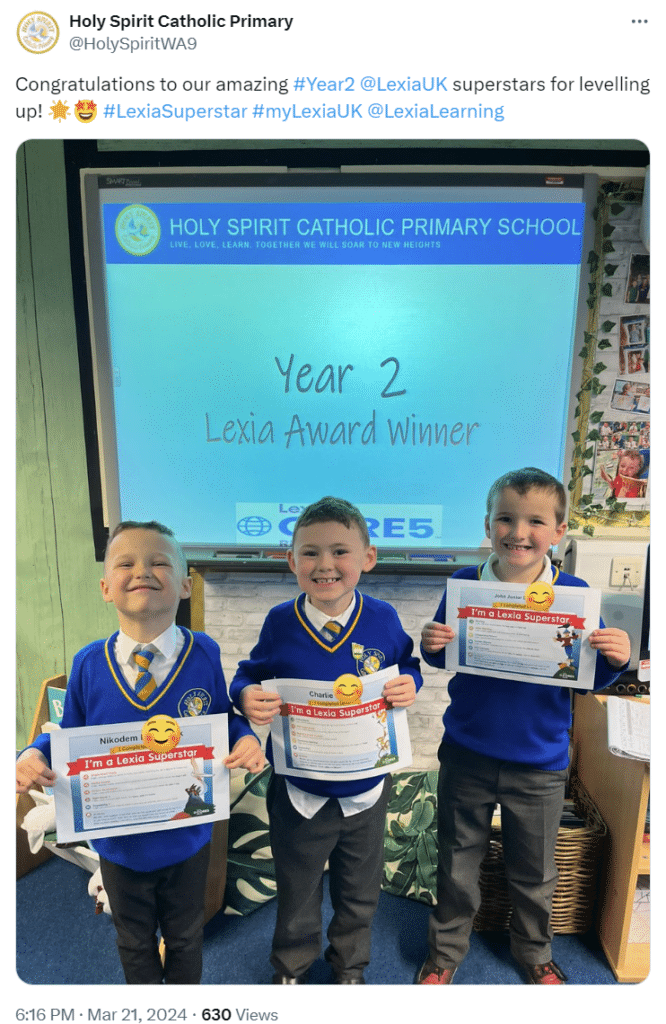
Tweet image used with permission from Holy Spirit Catholic Primary (@HolySpiritWA9)
Set aside time during the academic year to recognise and celebrate success. This could occur regularly as part of school routine or take place as a special event at the end of each term or the academic year.
If your school has a regular award ceremony or celebration assembly, consider utilising some of this time to celebrate and acknowledge Lexia success! Present certificates, medals, vouchers or trophies to highlight special achievements with Lexia such as completing levels or the whole program!
If your students would prefer their success to be acknowledged more privately, plan regular, smaller events into the school week for pupils to engage with and celebrate Lexia. For example, a Lexia Lunch can be a great way to recognise pupil achievement while providing additional opportunities to engage with the program.
Creating a celebratory learning environment can be a powerful way to positive impact Lexia engagement and promote a growth mindset in your school.

Set up a Lexia bulletin board or display in the corridor or hall to highlight achievements across the school. Quite often, some friendly competitive elements such as a leader board or tracker can be a natural motivator for both students and class teachers. Alternatively, you could take a collaborative approach with an art display that students can add to when they complete Lexia levels.
Boost your displays with myLexia data. Use graphics, leader boards and electronic displays to highlight classes and pupils that have met weekly usage, reached the next level or even completed additional work with a Lexia Skill Builder!
Incorporating celebrations into school routines can help both teachers and pupils feel invested and united in working towards a shared goal of literacy success with Lexia.
Research indicates that meeting pupils’ needs for autonomy, competence and relatedness is key in motivating them to achieve positive outcomes. (Dweck, 2015; Kaplan, Middleton, Urdan, & Migdley, 2002; Ryan & Deci, 2016)
Pupils need to have agency and autonomy over their learning. This means that they should be able to make decision about how the work towards their academic goals. Consider how you could build autonomy into your Lexia sessions, such as allowing students to set their own Lexia goals or enabling them to select the strand they want to work in on a given session.
Pupils need to feel effective, capable and successful when tackling learning challenges. Ensure all students receive positive feedback and praise from their teachers and that they know the purpose of engaging with Lexia. Encouraging student peers in encouraging each other’s achievements can also be a powerful way for pupils to recognise their success.
Pupils need meaningful learning experiences that connect them to their school community and that are relevant to their aspirations and interests. Ensure that your Lexia sessions include engagement and discussion among peers and that meaningful connections are made between what they are learning and pupils’ personal and academic goals.
Rewards and incentives can vary between age groups, but all can provide more tangible ways to acknowledge success with Lexia. Here are some tips for building these into your schools Lexia implementation.
Use competitions to boost Lexia use and celebrate success further. A class or school-wide competition can provide an opportunity for teachers and students to challenge themselves and take action towards their goals. (Image used with permission from Oasis Academy Leesbrook)
Like with any positive behaviour in school, use school reward systems to encourage habits that lead to Lexia success. For examples, if you have a school points-based system, points could be awarded for Lexia usage, unit and skill progress and other literacy accomplishments.
You can further personalise rewards and privileges for your Lexia pupils, such as:
Give students the chance to choose the kind of reward and incentive they would like. You might be surprised by their creative ideas that cost very little or nothing at all!
Implementing small practical ways to celebrate achievement can be one of the most impactful ways to build intrinsic motivation, engagement and most importantly, literacy success. If you need any support in formulating your Lexia Implementation Plan, reach out to our team on 0191 482 1939 or by email at customercare@lexiauk.co.uk.

The successful implementation of Lexia relies on continued effort and planning to take place to ensure the best outcomes for students. In their guidance report, ‘Putting Evidence to Work: A School’s Guide to Implementation’, the EEF highlights that implementation should be treated as an ongoing progress, not a single event.
With the end of term approaching, now if the perfect time to review your Lexia Implementation progress and ensure that best practice is continued into the next term. To support, we have devised a simple, 4-step Lexia Implementation Check to ensure you can effectively review how Lexia is being used and plan your next steps.
In this blog post, we delve into four essential steps for completing the Lexia Implementation Check. By conducting this quick review, you can ensure that the Lexia program continues to be a success, adapt to any changes, and ultimately foster the best literacy outcomes for your students.
Complete your Lexia Implementation Check with these 4 steps:
It’s crucial to ensure that your Lexia program is adequately staffed. Any changes in staffing should be considered to ensure seamless implementation. We encourage you to notify LexiaUK Customer Care of any staff changes, so we can provide the necessary support and training where needed.
If it has been a while since your team has received training, now is the perfect time to book an online session. Remember, the price of training is already included in your Lexia package, so there’s no additional cost to you. Simply get in touch and we’ll schedule an online session at your convenience.
Take a moment to review your school’s Lexia Implementation Plan. Reviewing your plan ensures that you are on the right path as a school team, and you can track progress towards your Implementation goals. Our Implementation Guide includes some helpful guidance and an Implementation Plan Template.
Evaluate which pupils are currently benefiting from Lexia and consider whether additional cohorts could benefit from the program. If you believe an extension of your current license package is necessary, please get in touch with us, and we’ll be happy to discuss the best options for your school.
By completing the Lexia Implementation Check, you’re taking proactive steps to ensure that your students continue to receive the best possible support for their literacy development. If you have any questions or require assistance, don’t forget that the LexiaUK team is here to help, every step of the way!

One of the great things about Lexia is how flexibly the program can be implemented. Covering a wide range of age and ability levels, it can be used in lots of ways, making it one of the most diverse tools in your literacy arsenal.
But with so many uses, it can be a challenge to ensure that all your chosen cohorts benefit from consistent and effective access to the program. This is why implementation planning of Lexia is vital to success.
In this article, we outline 3 common implementation models for Lexia, their benefits and any additional considerations that will need to be taken to ensure a smooth roll-out of the program.
In this model the Lexia Program, Skill Builders® and Lexia Lessons® delivered on a rotational basis in the classroom.

Pupils are withdrawn from a lesson or school activity to complete Lexia sessions.

A class or larger Lexia group can be taken to the computer suite to complete Lexia use all at once.

Unlocking the full potential of Lexia in your school requires thoughtful implementation planning. The three outlined models offer diverse strategies catering to different learning environments and student needs.
While each model presents its unique benefits and considerations, what remains consistent is the necessity for meticulous planning to ensure a seamless integration of Lexia into your literacy curriculum.
If you need help formulating your Lexia implementation plan, do not hesitate to reach out to our Customer Care team for bespoke advice and training suited to your school’s needs.