Proven Results
Backed by independent research and trusted by thousands of educators, our literacy programmes are research-proven.



Thousands of schools across the UK and Ireland trust Lexia Core5 Reading to help pupils build strong reading skills. Lexia provides a structured, evidence-based approach that delivers measurable progress, regardless of whether you are supporting early literacy acquisition or providing targeted intervention.
We’ve gathered voices from educators nationwide, sharing how Lexia has transformed reading outcomes, increased pupil confidence and supported teachers with actionable data.
These schools are closing reading gaps and seeing real impact, and your school can too. Hear first-hand how Lexia helps teachers turn assessment into action.
Discover how Lexia Core5 Reading can help your pupils build confidence, develop key reading skills and achieve measurable progress.
Fill in the form below, and one of our Literacy Programme Consultants will get in touch to offer personalised advice, guidance and a 30-day free trial of Lexia Core5.
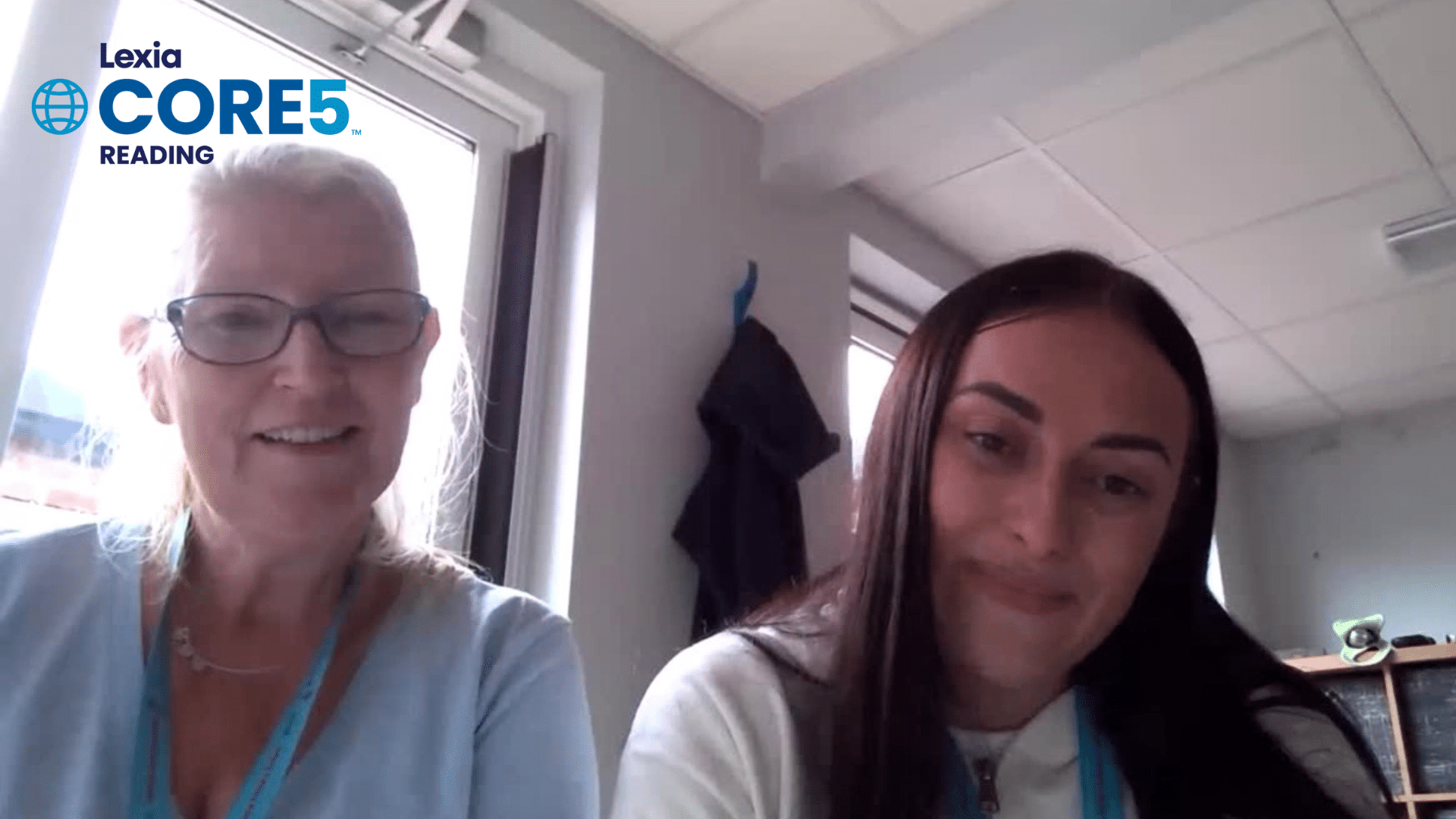
At Moyle Primary School, Larne, Northern Ireland, Hannah Henry (P1 Teacher & Lexia Coordinator) and Allison Perry (Lexia Support Teacher) have been seeing remarkable literacy growth from Lexia’s Core5 Reading programme. As our Star School for November 2025, Hannah and Allison discuss why they chose Lexia to support pupils flagged through dyslexia screening. They share how they organise daily routines to make the programme work, and what makes Lexia different from other literacy tools.
Their inspiring story shows how a structured, engaging, and effective approach can make a real difference in literacy outcomes.
Hannah: I was part of the curriculum team at the time, and we were researching how we could best support children who had been flagged through the dyslexia screener. We were researching different options, what interventions we could use, and that’s when I first heard about Lexia.
It actually came through a contact at another school who recommended it to me. We arranged a demonstration and started trialling it with small groups to see how it worked in practice.
We absolutely loved it. The individual learning paths, the teacher-friendly reports, and the fact that the pupils really enjoyed it made such a difference. That’s really what led us to the decision to go ahead with it.
Allison: After doing some training with LexiaUK around May last year, I learned a lot more about the admin side. Things like adding pupils, assigning them to classes, and even about the PowerUp programme, which I hadn’t realised we had access to before.
Hannah: It really is real-time monitoring of the children. Alison’s brilliant at picking up if a child is flagged, she can identify them straight away, and then we can get individual lessons sorted. Any difficulties are nipped in the bud, and we can feed that back to teachers so they know where a child might be struggling.
Allison: That’s one of the things I really like: not only do you get immediate feedback if a child hasn’t understood something, but you can also print out a one-to-one lesson and deliver it right away. You’re addressing the skill they struggled with on the same day, not waiting six months and hoping they remember.
Sometimes when I go to deliver a lesson, the children will say, ‘Oh, I was doing that on Lexia!’ In fact, there have been times when a pupil has even explained the spelling rule back to me perfectly, and I’ve thought, ‘Right, you clearly get this now, we don’t even need to continue with the lesson.’
Hannah: There’s also a nice bit of healthy competition. Pupils will almost challenge each other to see how many units they can complete. I love that energy.
Hannah: Every half term, teachers meet with the principal, vice principal and senior leaders to identify children they feel would benefit from Lexia. From there I pass them on to Allison and that’s when we set up the timetable.
Allison: We run three sessions a day, Monday to Friday, in the mornings. I also keep two afternoons each week as ‘mop-up’ sessions. That’s when I monitor who hasn’t met their unit target, who needs extra support or who might need a one-to-one lesson. I encourage the children to focus on their unit goal rather than just the time goal. The aim is that every student gets at least three 30-minute sessions a week, which is enough time to meet both their unit and time goals. If they don’t, they go into a mop-up session.
Hannah: Some children work better in smaller nurture groups, especially in Alison’s room, where we have the therapy dog, Nessa, while others do fine in larger groups. Some are too tired in the afternoon, others don’t arrive at school until later, so we avoid putting them in early sessions. And a small number prefer working in class rather than group sessions, but they’re monitored just as closely.
Allison: We’re very lucky to have a dedicated literacy coordinator, supportive leadership and extra staff to share the workload, whether that’s delivering lessons or helping with admin like printing and preparation.
If you want Lexia to be successful, you do need to put staff into it. The best way to make it work is to create a specific role for someone to deliver and manage the programme, rather than giving it as an extra responsibility. That’s essentially what’s been done for me, and it makes all the difference.
Hannah: Yeah, I think the impact has just been amazing. Even from my own experience in P5 and P4, I’ve noticed a real difference. A lot of the pupils who had been struggling with reading now have so much more confidence. Their fluency has improved, and they enjoy seeing their own progress. They love that sense of achievement.
We present Lexia certificates in assembly, which really helps celebrate success. You can see how much it means to them. They know exactly when they’re due one and will be waiting eagerly to go up.
Hannah: Our principal even said he should rename assembly the ‘Lexia Assembly’ because so many certificates were being awarded. It’s brilliant, though, because the children absolutely love it. And what’s been really encouraging is seeing those pupils who normally freeze at the word ‘literacy’ actually enjoying Lexia. For them, it doesn’t even feel like literacy, it feels different and that’s powerful.
Hannah: Yes, so there’s one child I’m thinking of. He was in Primary 5, and in a single year he went up nine levels. It was amazing! He was just so motivated.
Because I’d taught him the year before, I knew him well, and even when I saw him outside class he’d be saying, ‘Guess what? Guess how many levels I’ve done? Guess how many units I’ve got today?’
Allison: He was just so excited. You couldn’t get rid of him, he was always at the door saying, ‘Do you need me this afternoon?’ If there was a space, I’d let him come in, because he just loved it so much.
Allison: We track who gets the highest number of units each week. Those pupils get to come down to our little Lexia classroom, where they can see Nessa, our therapy dog, and pick a treat from the box of goodies.
Hannah: Yeah, it’s been really, really useful. At the end of the year we were printing out the overview, and Alison and I looked at it together. It was so detailed, and very interesting to see the levels.
I’ve also found it helpful that teachers can see very clearly where a student might be struggling. I keep a shared resource for staff, so if a child is flagged in a certain area, teachers can go in and see relevant support materials. We also have the workbooks for children, which teachers can use too.
Allison: The key is getting all staff on board. Timetables are busy and nobody wants ‘something extra.’ But once I’d done the training with LexiaUK, I realised how important it was for everyone to know what’s available and how to access it. It doesn’t just have to be children on Lexia who benefit, the Skill Builders and worksheets can be used by any member of staff. If a teacher wants to cover, say, “Magic E”, the resources are already there.
It helps keep everything joined up, and stops us reinventing the wheel. The information is already there, and using it just makes life so much easier.
Hannah: I think the key is to start with a really clear plan. At the beginning it can feel a bit overwhelming, so make sure from the start that staff understand how to use the reports and the resources.
It also helps to have a clear Lexia lead. Not too many people all doing the same thing, but also not leaving it all to one person either.
Allison: We’re also very lucky to have a dedicated space where children can come out of class for Lexia. We have tried running it within classrooms, and that can work for a few pupils, but it really needs a classroom assistant there to keep children on track.
Hannah: Finally, with the children themselves, I’d say celebrate them early on. Build engagement right from the start. Those small wins really matter, get the certificates printed and handed out quickly, and make them feel excited and invested.
Hannah: Yeah, so the feedback’s very positive. They like the fact that they get this time that’s just for them. They have their own login, they can see everything so clearly, and it’s theirs to do. It adapts to their level, so they’re working on things suited to them, and they also have choice in it.
Allison: They’ve also become very au fait with checking their progress. They’ll quickly go back to the home screen to see how many units they’ve done and how much time they’ve spent. They’ll often say things like, ‘Oh, I’ve done 40 minutes more than I should have,’ or ‘My unit wheel is complete.’ They really know where they’re at. It’s empowering for them, putting them in control.
Hannah: And a lot of the kids love having Nessa, our therapy dog, in the room. Even when she’s just walking around, they stay focused and engaged.
Allison: You’ll see them with their headphones on, working on their iPad, while patting the dog with the other hand. It’s very sweet.
Hannah: I think one reason it’s been so successful is because we’ve got clear responsibilities and good communication. We check in with each other regularly, how are things going, what needs to change and we’re adaptable. If something’s not working, we adjust.
We also talk a lot with class teachers. They’ll tell us if a pupil is struggling a bit, or finding it hard to come out of class, and we’ll think about ways to change things.
Both: We’ll go with “3 E’s”: Engaging, effective and empowering!

The Department for Education’s Curriculum and Assessment Review and the Government’s Response represent the first major review of the education framework in over a decade.
The aim is clear: to ensure the national curriculum remains ambitious, inclusive, and relevant for today’s learners. The curriculum must also equip them with the knowledge and skills they need to thrive in a changing world.
For secondary schools, the implications for literacy are profound. Reading, writing, and oracy will take centre stage across Key Stage 3 and 4, with new expectations for how these skills are taught, assessed and supported in every subject.
The Review concludes that the national curriculum remains “broadly sound” but highlights ongoing inequities that continue to limit outcomes for too many learners. Disadvantaged pupils and those with SEND remain disproportionately affected, while schools are under increasing pressure to build digital and media literacy alongside core reading and writing skills.
The guiding principle of “evolution, not revolution” is sensible in its recognition that teachers need stability. However, some may feel the Government’s current pace risks overlooking the urgency of persistent literacy gaps that widened during and after the pandemic. Without sufficient funding or training, even the most thoughtful policy intentions may struggle to translate into meaningful classroom impact.
The Government’s response builds on these findings, outlining a roadmap for curriculum reform and assessment change:
Literacy is set to become a shared responsibility across every subject area. The Government plans to introduce a new secondary literacy framework; connecting reading, writing and oracy development into a unified strand of learning.
This framework will promote:
This framework rightly recognises literacy as a shared responsibility across the curriculum. Yet its success will depend on sustained professional development and time for teachers to embed literacy practices meaningfully within their subjects.
Adaptive literacy tools like Lexia® PowerUp Literacy already align with this approach, building reading fluency, comprehension and critical thinking through personalised, data-driven learning.
Key Stage 3 will become an increasingly critical phase for developing and consolidating literacy skills.
Adaptive literacy programmes can provide the support schools need to respond effectively. Lexia PowerUp Literacy enables teachers to identify and close reading gaps quickly, providing targeted practice in word recognition, comprehension and grammar.
Real-time data dashboards in myLexia help staff pinpoint pupils who may need additional support, strengthening readiness for Key Stage 4.
At Key Stage 4, the reforms are likely to place greater emphasis on mastery and depth:
Here again, adaptive tools such as Lexia PowerUp Literacy can provide structured, motivating pathways that help older students catch up and prepare confidently for exams.
Both the Review and the Government’s response acknowledge that the current system “does not work well for all learners,” particularly those with SEND and from disadvantaged backgrounds. The Government’s response commits to a more inclusive curriculum through:

The proposed measures are promising. However, the real test will be implementation. Schools will need sustained support and funding to deliver genuinely inclusive literacy provision. Without this, the gap between policy aspiration and classroom reality could persist.
Lexia’s adaptive technology already helps bridge this gap, delivering personalised literacy instruction that adjusts to each pupil’s pace, including those with SEND or low prior attainment. By combining accessibility, motivation and measurable progress, schools can ensure every learner develops the skills and confidence to succeed.
As schools prepare for these reforms, a few practical steps can help lay the groundwork:
At Lexia, we’re proud to partner with schools to help every learner reach their literacy potential. Our adaptive reading programmes, including Lexia® PowerUp Literacy, support fluency, comprehension, and confidence across Key Stage 3 and 4, empowering teachers with the insights and flexibility they need to meet diverse learner needs.

Backed by independent research and trusted by thousands of educators, our literacy programmes are research-proven.

Find out how we are helping schools to accelerate their literacy progress.

Keep up to date with the latest industry news from LexiaUK.

In March 2025, the Department for Education (DfE) published its Curriculum and Assessment Review: Interim Report, the first major review of the education framework in more than a decade. Its aim is to ensure the curriculum remains “fit for purpose,” equipping learners with the skills and knowledge they need for the future.
The government has since responded, reaffirming ambitions for a curriculum that is rich, inclusive and aspirational. Literacy remains central, with strong foundations in reading, writing and comprehension highlighted as essential for lifelong learning.
While the response provides direction, many of the practical challenges, such as delivering the curriculum effectively in busy classrooms and supporting pupils with diverse needs, will still fall on schools to address.
At Key Stage 1, the Review reinforces the importance of phonics as the cornerstone of early reading. The phonics screening check remains statutory and early decoding skills continue to be critical. However, the report recognises that a crowded curriculum can sometimes prevent pupils from achieving true depth before progressing.
What this could mean for schools:
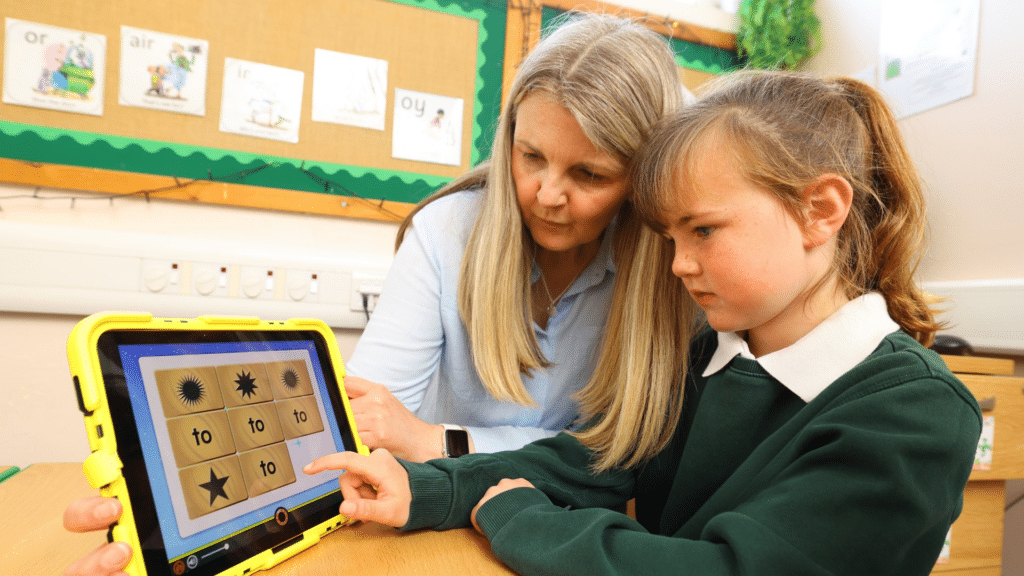
The DfE has set an ambitious target that 90% of Year 1 pupils meet the phonics screening benchmark. Schools are expected to adopt systematic synthetic phonics programmes, supported by up-to-date training and resources. For pupils at risk of falling behind, the government highlights early identification and intervention, alongside the expansion of the “Reading Ambition for All” professional development programme.
While promising, these measures may still require schools to adapt resources to ensure every child, including those with SEND, achieves mastery.
Lexia Core5 Reading helps schools translate these priorities into classroom impact. Its sequenced, adaptive pathways guide pupils from phonics through to fluent reading, reinforcing comprehension, vocabulary and automaticity.
For pupils needing extra support, Lexia delivers targeted, personalised practice, allowing early intervention. Teachers receive real-time data to track progress, pinpoint gaps and plan instruction efficiently, ensuring government priorities are realised.
At Key Stage 2, literacy challenges persist. In 2024, only 61% of pupils achieved the expected standard in reading, writing, and maths combined. Assessment approaches may not fully capture the breadth of literacy skills, particularly in writing.
What this could mean for schools:
The DfE acknowledges that mastering literacy foundations is essential. They desire greater clarity and specificity in English, particularly in speaking, listening and drama. Furthermore, a new oracy framework will be introduced. Grammar teaching will be reviewed to ensure it is taught in context rather than in isolation, and some complex concepts may be moved into KS3 to allow more time for mastery at primary level.
Lexia Core5 helps upper-primary pupils develop deeper comprehension, vocabulary, and critical thinking, while reinforcing grammar and composition skills in context. Its sequenced pathways support secondary transition, closing literacy gaps before Year 6 ends. Teachers benefit from real-time insights for personalised instruction, ensuring pupils achieve both fluency and depth regardless of curriculum change.
The Review emphasises that the system is “not working for all pupils”, with persistent gaps for disadvantaged learners and those with SEND.
The government supports inclusion and highlights the need for a rich, sequenced curriculum for all pupils, alongside resources and professional development. However, much of the responsibility remains with schools, and additional support may not reach every setting, particularly for pupils with more complex needs.
Lexia Core5 ensures all learners, including those with SEND, work at the right level through personalised, adaptive pathways. Pupils build confidence and literacy skills, while teachers receive actionable data to target support, bridging gaps even where broader system support is limited.
The Review and government response emphasise the importance of professional development focused on mastery, progression and inclusion. Schools may want to:
While the government sets the strategic direction, schools will need strong leadership, strategic planning and effective tools to deliver these outcomes.
The Curriculum and Assessment Review and government response provide a clear vision for literacy, but schools remain central to making it work in practice.
By prioritising mastery, comprehension, and reading for pleasure, schools can ensure pupils develop confidence, fluency, and lifelong reading habits. Lexia Core5 offers the structure, adaptive practice, and insights to help schools deliver this vision effectively, supporting teachers and learners every step of the way.

Backed by independent research and trusted by thousands of educators, our literacy programmes are research-proven.
Find out how we are helping schools to accelerate their literacy progress.
Keep up to date with the latest industry news from LexiaUK.

We are thrilled to publish the 2025 Data Report into the efficacy of Lexia Core5 Reading – our comprehensive, research proven literacy skills program aimed at KS1/2.
Our latest data report contains findings from the 2024/25 academic year, with a sample size of 600 schools that have implemented the program. Based on consistent, structured usage, we have found pupils achieving up to 17 months’ average reading progress.
Download the report today to see how Lexia Core5 can make an impact in your school.
Want to experience the impact of Lexia Core5 in your school? We’re offering a free 30-day evaluation for schools interested in seeing how Lexia Core5 can support their students’ literacy skills development.
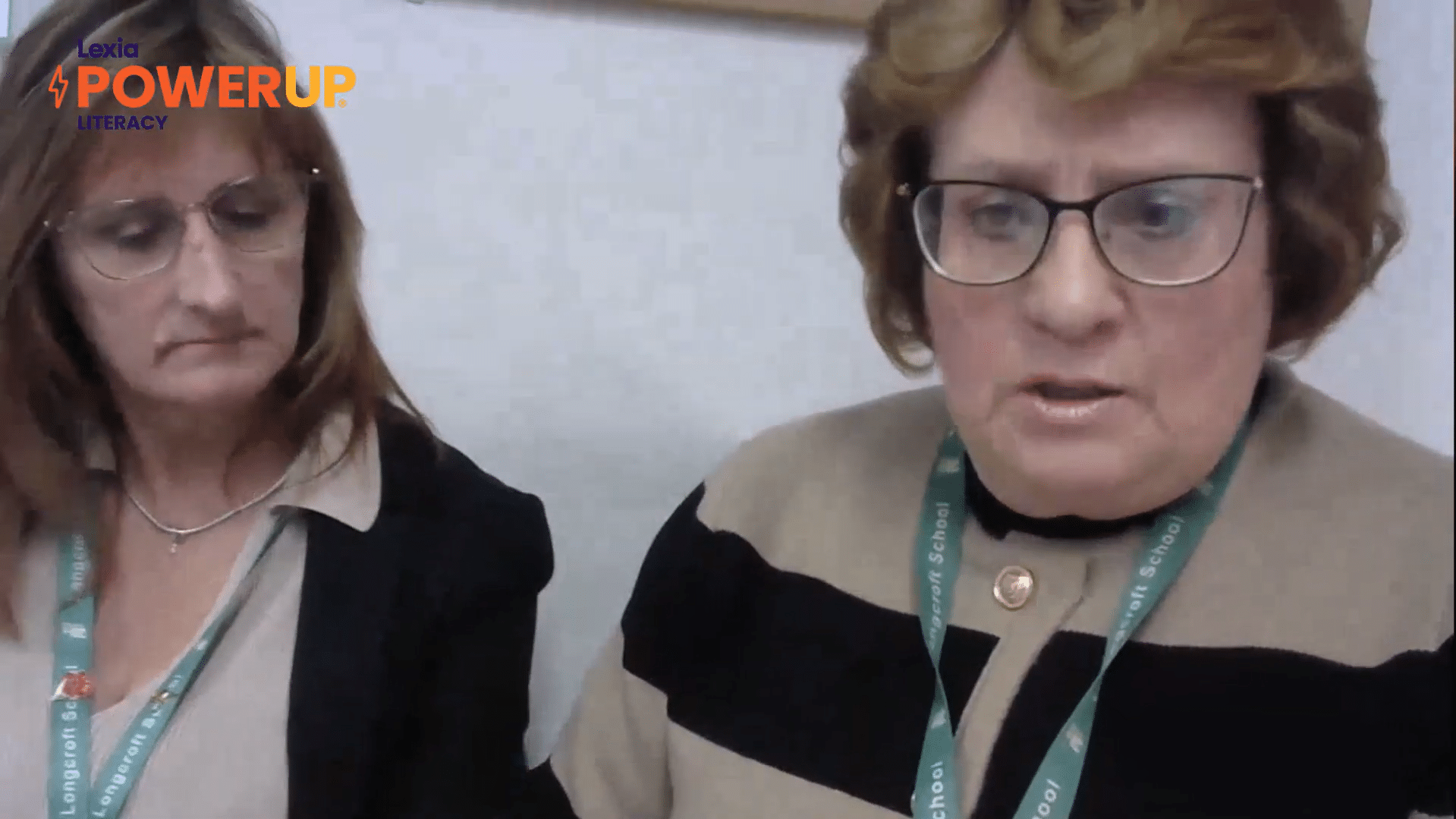
At Longcroft School in Beverley, Lexia has been supporting literacy intervention since 2017. In this month’s interview, teaching assistants Lesley Walker and Pam Fleming detail how implementing Lexia® PowerUp Literacy® has unlocked academic potential from KS3 to KS4, and how the adaptive learning model supports EAL students.
Pam: Lexia was first introduced to our secondary school in 2017 by our SENCO at the time, through our partner trust. It was set up by Lesley and another TA.
Lesley: We started by using it during tutor time in the mornings and afternoons. By 2018, we’d created a nurture group who used it much more.
Pam: I think that’s where we began to see real progress as they were accessing daily. Those students had regular access to the programme, unlike some others who only used it in short tutor slots. Over time, we realised how powerful it was and now we use it regularly – it’s brilliant!
Pam: For us, it’s easily accessible and promotes independent learning. When the students sit the initial placement test, they start at their own level, and from there they can clearly see their progress from where they started. It’s just amazing!
It’s also something that works well across year groups. We use it from Year 7 through to Year 10, and students enjoy the competitive side of it too.
Lesley: They like getting streaks! You’ll often hear pupils comparing how many streaks they’ve got, which really motivates them. We often hear a commentary from the pupils about who has the biggest streak!
Students with English as an Additional Language (EAL) do great with it too. We have seen lots of progress from them. This really shines in their English lessons, especially since some students start with very little English.
Pam: They are taking control and setting their own work, and they find it fun. I think it’s also the fact that it is on the computer, and it is independent. We are a school that promotes independent learning, and Lexia is student-driven but we are still there to step in when needed.
Pam: We use it during registration time. Each year group has one registration slot in the morning, and they also have one full hour lesson of Lexia a week. We identify the pupils through our STAR testing, who are usually the bottom 20% of readers.
Once they’ve been on the programme for a while, we look at their progress. It’s built into the classrooms and overseen by a member of the senior leadership team, who keeps an eye on all the data. We’ll take some students off and put others on depending on how they’re progressing.
Because we’re now getting the minutes in and they’re using it regularly, we can really see how much progress they’re making compared with when we first started using Lexia.
Lesley: We also use it to support English lessons as well. When they’ve got an English literacy lesson, the pupils who are on Lexia come out to us to do their session, while the others stay in the classroom and work with the teacher.
Lesley: According to the data we’ve have received recently, some of the students have gone up by two year groups with their reading ability, so it is having an impact. We’ve looked at the STAR results across the year and made comparisons, and we’ve even used some GL data at the end of the year. Using different types of data to analyse, we can see they are making good progress.
Pam: Some of the teachers have also said they’ve seen an impact in the classroom in their writing, spelling and grammar, an even just in retrieving information from texts. They can see a difference themselves.
Lesley: I think they’re picking up a lot of decoding skills as well from using the programme, and that helps going forward. If they start on it in Year 7 and are still using it in Year 10, then by the time they get to Year 11 they should be able to decode all the texts they’ll face in their GCSEs.
Lesley: I would say some of our nurture group pupils have really stood out. If you look back at their archived data, you’ll see big green ticks showing they’d completed everything in areas like comprehension. They went on to sit their GCSEs and did well, which was brilliant to see. They definitely shone for me!
Pam: I would echo Lesley as I can think of a few pupils in the nurture group that achieved in the same way. Currently we have an EAL student who joined without speaking a word of English. We started her on Core5, because the graphics were a bit more supportive for her, but we’ve just now moved her onto PowerUp. She’s flying now! We can see a huge difference in her progress.
Lesley: I tend to print the certificates off every week, and we’ve given them out in assemblies before. We also hand them out in lessons when students come in. They’ll say, “Oh, we’ve got certificates today,” and they’re really happy to receive them. Even the Year 10s have been given them, and you still see a smile on their faces, which is quite surprising given they’re in the higher year groups.
Pam: We also share progress with parents. At parents’ evenings we’ll show them how their child is doing and celebrate with them as well, and information will go home to parents. We encourage parents to be positive with the pupils and celebrate how well they’re doing.
Pam: We print the data , and we analyse it alongside all the other testing we do in school. And to be fair, Lexia does come out a little bit better. Comparing the STAR testing from when they started to what we’re doing now with Lexia, you can see the difference.
Lesley: Our senior leadership team also get the data. We give them the printouts and one of them even did a presentation to the wider leadership team about how good Lexia is – so it’s being promoted at that level as well.
Pam: When it generates the Lesson Plan, its me and Lesley who deliver them. The reports show us the areas where students are struggling the most and we will let teachers know, then they can also implement that support in the classroom as well.
We use the lessons and paper-based resources quite a lot too. If we don’t have a computer room available, we can print the lessons and Skill Builders off for the session, so no learning gets missed.
Pam: The main thing is to make sure pupils are getting their minutes. It’s important that they are getting their full time on the programme because that’s when you see the biggest impact.
Lesley: In the early days, it can be hard because pupils don’t always want to leave their English lesson or their friends. It takes perseverance. But once you get into the routine and they start receiving certificates, they see the rewards and that makes all the difference.
Pam: We did a survey recently and the feedback was very positive. Pupils said they enjoyed coming to the Lexia sessions and that they like how they could clearly see their progress and see that visual of their success. The like that it is computer-based as well. Overall, we have had some really positive feedback from both students and their parents.
Parents have also given strong feedback, sometimes even phoning us to ask about Lexia and how it works.
Lesley: Parents have also encouraged their children to use it over the summer holidays and we have been able to give them access to the program at home.
Interactive, motivating and rewarding.

Secondary schools face complex challenges, from growing academic pressures and stretched resources, to managing student wellbeing and behaviour. Among the most difficult to support are the pupils who appear disengaged from learning altogether.
These learners often arrive in Year 7 already on the back foot. They may have struggled throughout primary school, fallen behind in reading, and developed a deeply rooted belief that school isn’t a place where they can succeed. By the time they reach secondary education, their refusal to engage, especially with reading, isn’t just a behaviour issue. It is often a sign of a much deeper problem: significant gaps in literacy.
And when reading becomes a barrier, it limits access to every area of the curriculum. In effect, they’re shut out of learning before they’ve had a chance to catch up.
It is easy to label these pupils as ‘disruptive’ or ‘unmotivated’. But for many, what looks like defiance is actually a defence mechanism. For years, they’ve struggled with the foundational literacy skills needed to access schoolwork. They’ve experienced early failure, and often repeatedly, which chips away at their self-esteem.
By the time they arrive at secondary school, they’ve already learned ways to cope with the shame and frustration:
These aren’t pupils who won’t engage, they’re often pupils who can’t. After years in this cycle, they carry a mindset of disengagement with them into secondary school, believing that no matter how hard they try, success is out of reach.
To break this cycle, these learners need more than just good intentions and extra support. They need targeted, consistent, and compassionate intervention that tackles the root cause of their disengagement, their literacy gaps, while also rebuilding their confidence.
Re-engaging struggling readers in secondary school starts with creating the right environment, one that removes barriers, supports confidence, and allows learners to rebuild their skills at a pace that works for them. While the right technology can support this process, it’s the principles behind the approach that make the real difference.
Autonomy
Pupils who’ve struggled with reading often prefer to work independently, away from the pressure of performing in front of others. Giving them space to learn at their own pace, in a structured but self-guided way, helps reduce anxiety and gives them control over their progress. In practice, this might involve timetabled sessions using adaptive tools or online programmes, where pupils can quietly work through literacy tasks suited to their current level.
Quick Wins
When learners experience early success, however small, it builds momentum. Literacy interventions that focus on building blocks, such as decoding or sentence structure, can help pupils achieve small but meaningful progress quickly. Over time, these wins can start to shift a pupil’s mindset from “I can’t” to “Maybe I can.” Recognising these milestones, even informally, can go a long way in restoring confidence.
Low-Stakes, High-Impact Practice
Struggling readers may associate literacy tasks with failure, especially when they’ve had to repeatedly perform in high-pressure environments. Instead, regular opportunities for low-stakes practice, such as short, independent exercises with immediate feedback, can help reinforce skills without triggering fear of failure. Pupils benefit from being able to revisit and retry tasks without judgement, building fluency in a supportive way.
Bitesize Challenges
Literacy activities that are broken into manageable, skill-focused segments can make reading and writing feel more approachable. Many schools embed this approach into the day by offering short, structured literacy sessions. For example, during form time, as part of intervention periods, or in catch-up lessons. Keeping tasks concise helps reduce cognitive load and supports learners with lower attention spans or processing challenges.
Age-Appropriate Design
Engagement is closely tied to how relevant and respectful pupils find the content. For older students, intervention materials that feel too simplistic or “babyish” can be a significant barrier. It’s important that literacy tasks use age-appropriate language, themes, and visuals that reflect the interests and maturity of KS3 and KS4 learners. This helps ensure that pupils feel included and valued, rather than singled out.
Data to Inform, Not Overwhelm
Teachers supporting disengaged readers need timely insight into what’s working and where further support is needed, without adding to their workload. Digital tools that provide real-time data can support staff in identifying gaps, tracking progress, and offering timely intervention. This approach enables a more responsive and efficient use of staff time, helping schools reach the pupils who need the most targeted support.
Lexia PowerUp Literacy was developed specifically for struggling readers in secondary school. It’s not a one-size-fits-all programme, it adapts to each pupil’s needs across word study, grammar, and comprehension, filling in the foundational gaps that are holding them back.
What makes PowerUp different?
And crucially, it supports pupils in developing the skills they need not just to read, but to thrive across the curriculum.
If you’re seeing pupils switching off, acting out, or falling behind across the board, it’s time to look deeper. Disengagement is often not about attitude, it’s about ability. And for many pupils, that ability hinges on literacy.
By closing the literacy gap, we can unlock access to learning, restore confidence, and re-engage the pupils who’ve been left behind for too long.
Backed by independent research and trusted by thousands of educators, our literacy programmes are research-proven.
Find out how we are helping schools to accelerate their literacy progress.
Keep up to date with the latest industry news from LexiaUK.

Our Star School for September is…
At Pakefield High School, Lexia is helping students build confidence and make real progress in literacy. In this interview, Jess Harvey, Teaching Assistant and Lexia Coordinator, shares how the school has embedded Lexia into their intervention strategy, the impact on student motivation, and why it stands out as a valuable tool for reading development.
We had a school within our MAT that was already using Lexia. We received an email about it, so we spoke with the other schools to see how they had found the programme. After hearing their feedback, we decided to give it a try. The final decision came after the trial, as we felt it was the best intervention we could implement for English in our school.
We love that it’s online, it’s interactive, and it interests the children. It’s different from traditional classroom learning; they’re not just sitting with a piece of paper. We love that it’s independent, it’s tailored to each and every student, and it encourages that independent learning.
In terms of identifying students, we were already running phonics and spelling interventions, as well as STAR reading tests. So, we took the students who were already receiving those interventions or had been identified as having a lower reading age. We then spoke with class teachers to get their feedback and see if any other students stood out as needing extra support.
During the transition period, especially with new Year 7s coming in, we assess those students, and if they need intervention, we make sure they’re placed on it.
As for how we use Lexia in our school, we run it in different ways. We have form-time interventions, which are about half an hour in the morning with groups of up to 20 children. We also run sessions throughout the week for groups of 15 to 20 students, which is where we tend to support a lot of our lower-ability students.
In addition, we have Period 6 sessions, two 45-minute sessions for our older students in Years 10 and 11.
Oh, absolutely. We’ve definitely seen an improvement with teenagers, especially in their confidence. Students are able to check their progress and see how far they’ve come, from where they started to where they are now.
It’s great to see those moments where they say, ‘Look, Miss, I’ve completed this level!’ or ‘I’ve powered up!’, it’s really beneficial. It’s lovely to see them gain that self-confidence after a Lexia session.
Yes, we actually had a student with a low reading age, and from the trial to where they are now, they’ve made huge progress. Their reading ability has really improved, and their confidence has grown massively.
With their GCSEs coming up, they now feel much more positive, like, ‘I do know this, I can do this.’ So yeah, it’s made a real difference.
Yeah, so we use the Lexia resources, like certificates, at the end of every half term. We also hold assemblies where we recognise students’ achievements.
We’ll purchase small gifts for students who have really stood out, whether they’ve worked hard in a tricky area like grammar, word study, or comprehension, or if they’ve completed a large number of units and put in extra effort, including using Lexia at home. We nominate those students for a reward, which is really beneficial.
There’s definitely some healthy competition across all year groups. They really want that reward!
They’re really useful! Great for tracking the progress students are making. We do weekly check-ins to see how they’re getting on, how many units they’ve completed, and whether they might need a bit of extra support.
It’s also brilliant to share this data with other staff during meetings and compare it with other interventions we’re using in school. So, it’s really beneficial.
I would say get as many staff involved as possible in implementing it. I have several other TAs who run sessions alongside me, and we also have accounts for the headteacher and English teachers so they can access reports and track progress.
I’d definitely recommend making sure all staff can engage with it. And just give it time. Progress doesn’t happen overnight, but with consistency, you’ll see the results.
They love the reward system, especially that end-of-half-term moment when they receive their reward and see how many certificates they’ve accumulated over the half-term. And of course, they love the bigger rewards, like an Easter egg when Easter is coming up.
They also really like being able to check their progress at the end of each session. That’s something we make sure to do. We review how many units they’ve completed, and if they’re struggling, we can step in with extra support. They know they’ll get that help from us.
And they love the high score streaks too! They like seeing how many correct answers they’ve got in a row!
I think for our students, especially boys, interventions can be a big hurdle. But Lexia is interactive, fun and, well, I want to say ‘cool’! It’s definitely not your typical intervention!
What stands out is that it’s tailor-made for each student. It’s suited to them, at the right level, and they’re progressing as they should be.
I would say it’s personalised, targeted and enjoyable.
Backed by independent research and trusted by thousands of educators, our literacy programmes are research-proven.
Find out how we are helping schools to accelerate their literacy progress.
Keep up to date with the latest industry news from LexiaUK.

The Education Endowment Foundation (EEF) recently commissioned a large-scale, randomised controlled trial to test the impact of Lexia® Core5® Reading with groups of Year 2 pupils across multiple regions of England.
With a high evidence security rating, and the intervention deemed very low cost to implement, the trial provides trusted, independent insight into the role of adaptive technology in supporting reading development.
Download the free summary PDF to discover the study’s design, key findings and what teachers said about using Core5 in their classrooms.
Time is one of the rarest resources in education. Between teaching, supporting in class and or leading interventions, there’s often little space left in the week to dive into data. Yet, those insights are key to understanding pupil needs and planning next steps.
That’s why myLexia is designed to work with your workflow, not add to it. With just a few minutes each week, it can help highlight where to focus, who needs support and how best to use your time and resources.
To help you make the most of it, our Literacy Impact Coaches have shared three of their top tips, drawn from hundreds of conversations with teachers across the country.
Rather than saving everything up for an end-of-term review, taking five minutes a week to check myLexia can give you a clear sense of how things are going and where your time can make the biggest difference.
The Action Plan tab is particularly useful. It automatically organises pupils into helpful groups, helping you to quickly answer questions like:
This quick snapshot makes it easy to act early and positively.
“We always say: small, consistent check-ins win the race. Even just five minutes in the Action Plan tab can help you catch issues early, or recognise when a pupil is ready to be challenged further.”
– Denise, Literacy Impact Coach
When time is tight, class-level reports offer a quick and efficient way to check in on your whole cohort. You’ll find these reports to the right of the Class Overview screen in myLexia – just a couple of clicks, and you have a full picture of progress and usage at your fingertips.
Start with the Usage Report, which looks slightly different depending on whether you’re using Core5 or PowerUp:
Once you’ve reviewed usage, the Skills Progress Report can give further insight into overall progress. Look at the units gained column on the right-hand side of the report. By sorting pupils from most to least units gained, you can quickly see who’s making strong progress and who might benefit from additional support.
“Class-level reports give you a smart starting point. Sorting by units gained lets you spot patterns across the group and highlight any pupils who might otherwise slip under the radar.”
– Michael, Literacy Impact Coach
Paper-based resources like Skill Builders and Lesson Plans can be a valuable part of supporting pupils, but they’re most effective and time-efficient, when used at the right moment. Instead of printing packs for every pupil, use individual pupil data in myLexia to decide where these resources will have the most impact.
Here’s how to approach it:
This report provides a detailed breakdown of each pupil’s performance within a unit.
Within the same report, you can also see the number of attempts a pupil has made on each step in a unit by clicking into the level name, this will open the Detailed Skill Report.
In many cases, you can act even earlier. If you notice a pupil struggling after just a few attempts on a step, try offering brief, over-the-shoulder support. A short check-in or prompt while they’re working independently can often help them move past the barrier without the need for a full lesson plan.
“Skill Builders and Lesson Plans are brilliant when used with purpose. By checking just one or two key indicators, you can be confident that your support is timely, targeted and not adding to your workload unnecessarily.”
– Mark, Literacy Impact Coach
When used purposefully, myLexia can help you stay one step ahead without spending hours on admin or analysis. By setting aside just a few minutes each week to check in, you can spot issues early, celebrate progress and direct your support where it’s needed most.
Small, consistent actions, like reviewing usage patterns, sorting pupils by progress or checking skill-level data, can have a big impact on outcomes. Most importantly, they allow you to spend less time working out what to do and more time doing what works.
Remember that you are not alone. Our Literacy Impact Coaches are here to help you interpret your data, plan next steps and ensure Lexia is working as hard as possible for your pupils and your team.
If you’d like support with implementation, training or getting more from myLexia, we’re ready to help.
Contact Us to book an Online Review & Support Session to talk through your school’s data and next steps with a member of our team. These sessions are included as part of your Lexia subscription so there’s no extra cost.
Backed by independent research and trusted by thousands of educators, our literacy programmes are research-proven.
Find out how we are helping schools to accelerate their literacy progress.
Keep up to date with the latest industry news from LexiaUK.