Proven Results
Backed by independent research and trusted by thousands of educators, our literacy programmes are research-proven.



As the summer holidays approach, you may be thinking about how to help your pupils maintain literacy progress beyond the classroom. While the break offers an important chance for children to rest and recharge, even small amounts of reading and language practice can help learners return to school feeling confident and ready to learn.
The good news is that summer literacy support doesn’t need to feel like formal learning. With the right mix of accessible digital tools, creative activities and flexible resources, you can help families build literacy into everyday moments throughout the holidays.
Here are five Lexia resources that can support your pupils over the summer and keep learning going in a manageable and engaging way.
Both Core5 Reading and PowerUp Literacy can be used seamlessly at home, making it easy for your pupils to continue their learning routines during the summer break. Because learners are already familiar with the programmes, many families find it straightforward to fit short sessions into their week without needing extensive support or preparation.
To get pupils set up for summer learning, you simply need to provide login cards and home use letters to families. Staff can also access this helpful video showing how to print login cards quickly and easily.
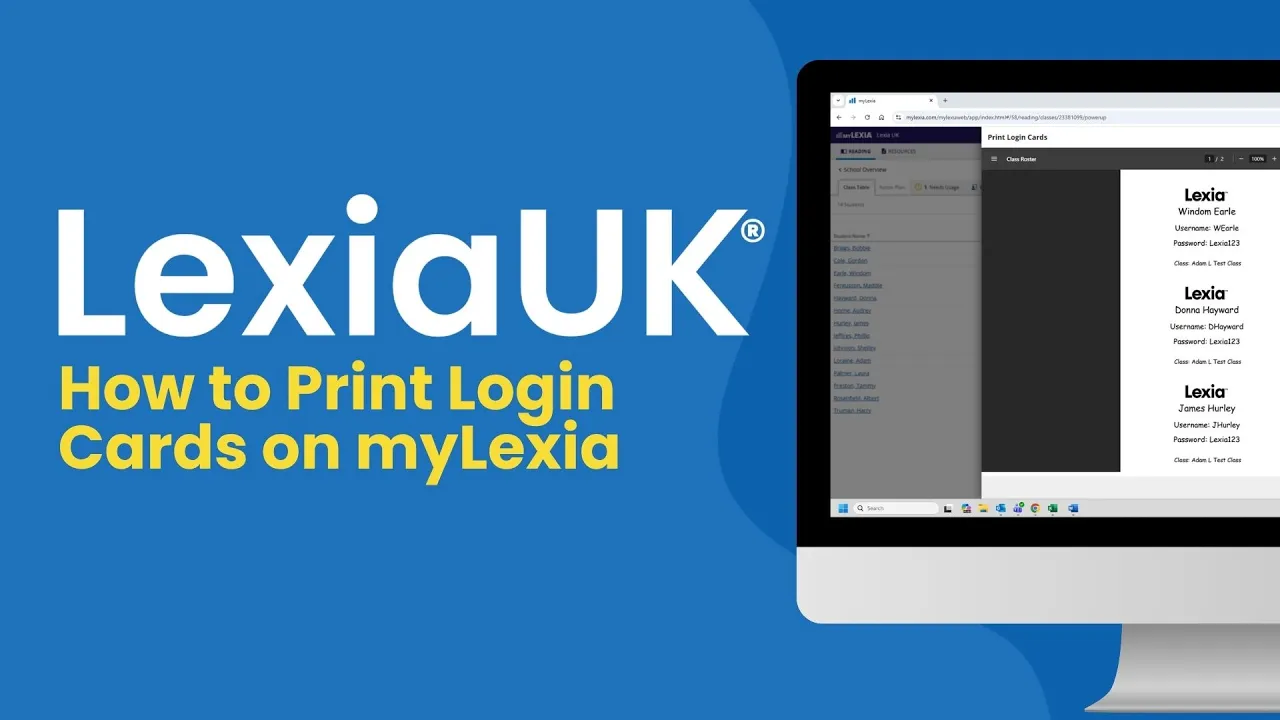
Additional guidance and support materials for families can be found in the School to Home section of the myLexia Resources Hub, helping you feel confident that parents and carers have everything they need to support learning at home.
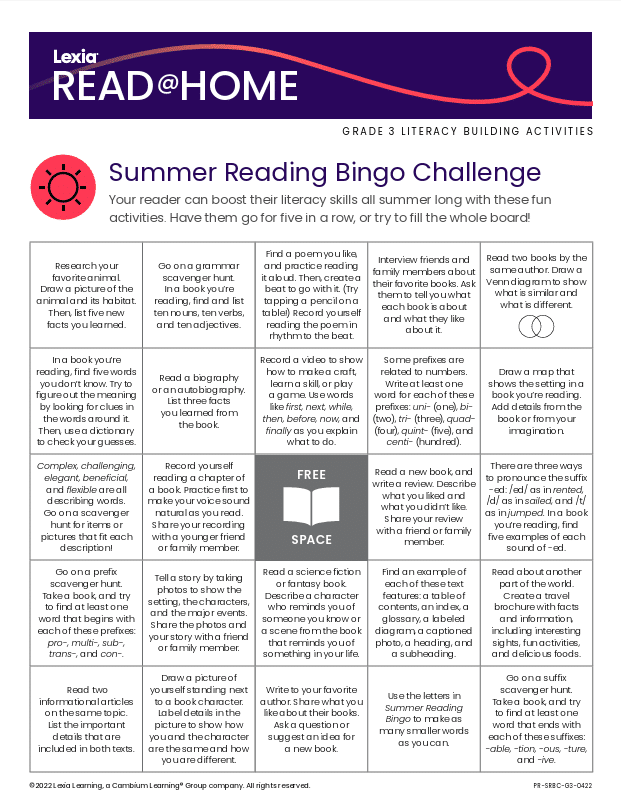
Keeping pupils motivated to read over the summer can sometimes be a challenge, particularly when reading begins to feel like “school work” to some learners. Lexia’s Summer Reading Bingo Challenges are designed to make literacy practice feel fun, flexible and achievable.
The bingo boards include a variety of age-appropriate reading activities that encourage pupils to explore literacy in different ways. Some activities focus on independent reading, while others encourage discussion, creativity or shared family experiences.
Your learners can aim to complete five activities in a row or challenge themselves to finish the entire board over the holidays. This flexible format allows families to participate at their own pace while helping pupils maintain positive reading habits throughout the summer.
These resources are available in the School to Home section of the myLexia Resource Hub.
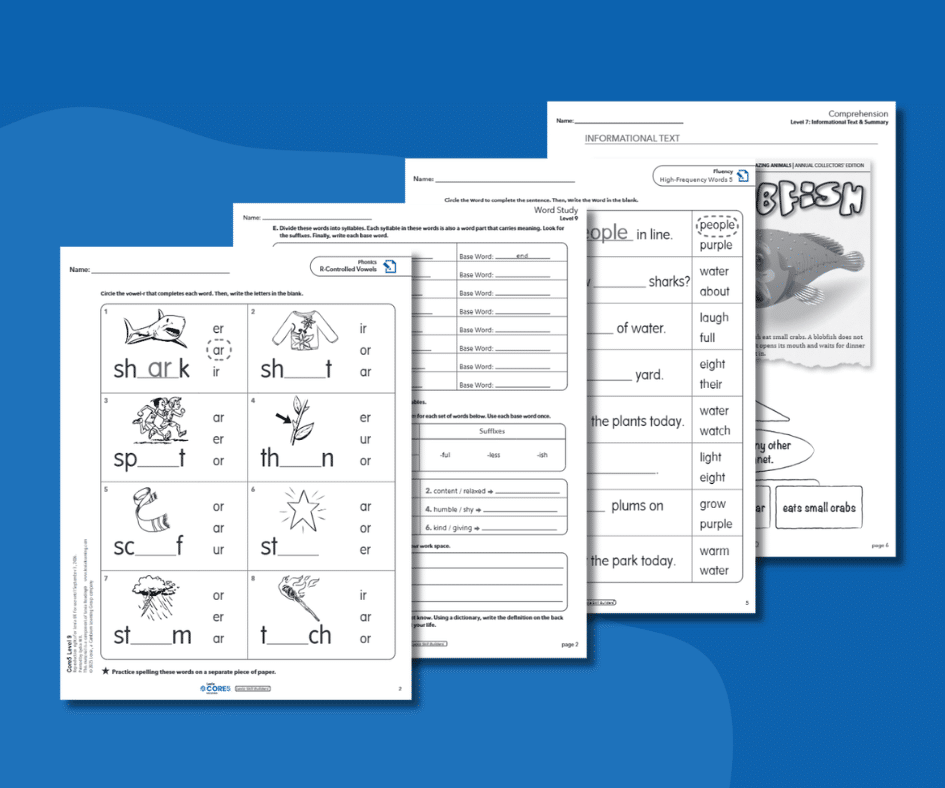
For some pupils, summer can be a useful opportunity to revisit specific literacy skills and strengthen areas where they may need additional practice. Lexia Skill Builders provide structured activities that can be tailored to individual learner needs using programme data.
You can use information from Student Action Plan reports and Skill Check scores to identify the most appropriate activities for each pupil. This helps ensure that summer practice feels purposeful and supportive rather than overwhelming.
Skill Builders are available both as printable paper activities and as digital resources through the myLexia Resource Hub, giving you flexibility in how you choose to share them with families.
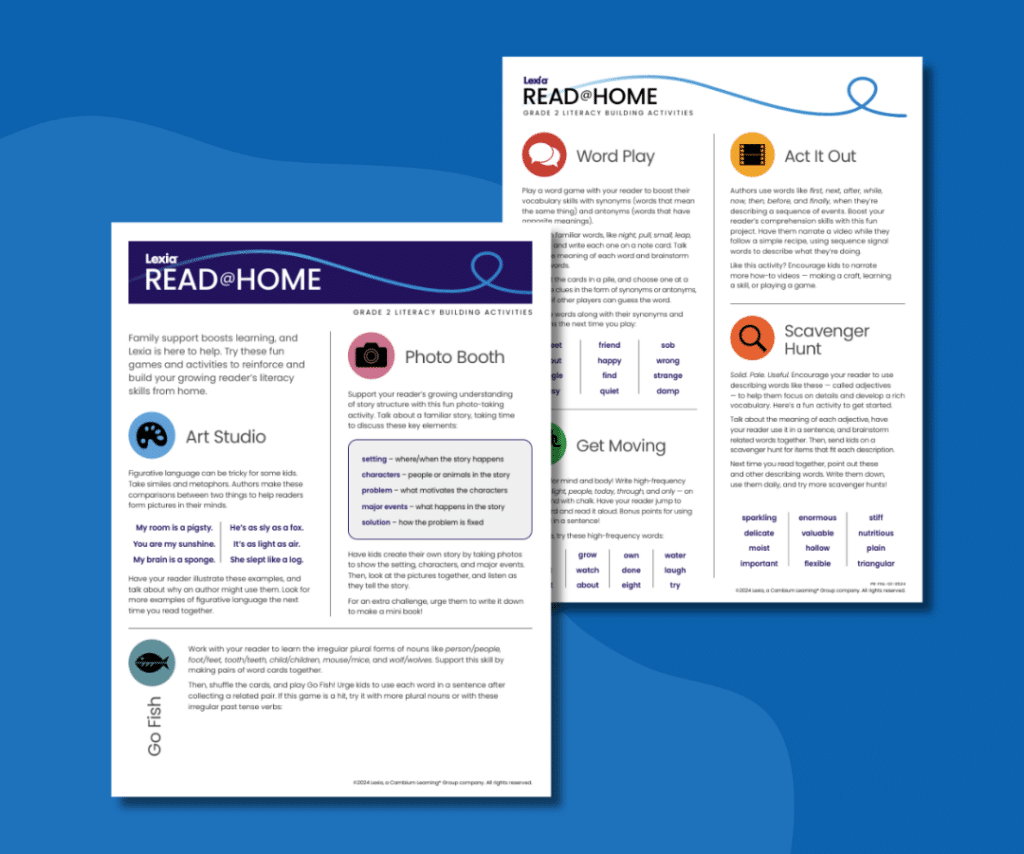
The Lexia Read at Home resources are designed to help families support literacy though simple, engaging activities that can easily fit into everyday routines.
Available through the Resource Hub, these activities encourage pupils to build vocabulary, develop comprehension skills , and use language creatively in real-world contexts. Activities include ideas such as vocabulary scavenger hunts, photo story challenges and literacy-inspired art projects that encourage conversation and creativity alongside reading and writing practice.
Because the activities are quick and accessible, they can help families create positive literacy experiences at home without requiring lots of preparation or specialist resources.
You can find these activities in the School to Home section of the myLexia Resource Hub.
Reading fluency is an important part of literacy development, helping pupils improve accuracy, confidence, pacing and comprehension. Lexia’s Fluency Passage Packs provide short, levelled texts that allow pupils to practise reading regularly over the summer break.
These passages are matched to pupils’ reading levels, making them suitable for independent reading practice or shared reading with parents and carers. The short format also makes them manageable for families who want to support literacy in small, consistent ways throughout the holidays.
While you may already use these resources during term time, they can also be an effective way to encourage continued reading practice over the summer months. Fluency Passage Packs can be accessed in the Support for Instruction section of the myLexia Resource Hub.
Summer literacy support can be most effective when built around small and consistent opportunities to read, talk, explore vocabulary and engage with language. These fun and relaxed activities can make a meaningful difference to pupils’ confidence and readiness for the new school year.
By sharing practical, accessible resources with families, you can help make literacy support feel manageable and enjoyable throughout the holidays while continuing to nurture positive reading habits beyond the classroom.
If you need any further support or guidance regarding Lexia in school or at home, get in touch with our dedicated Implementation and Support Team.


As the academic year draws to a close, many schools begin preparing pupils for the exciting changes ahead. Whether students are moving into a new year group, transitioning to secondary school or joining a completely new setting, this period can bring a mix of excitement and uncertainty.
Creating positive transition experiences is an important part of helping pupils feel confident, settled and ready to learn from the start of term, reducing anxiety, strengthening relationships and building continuity.
Here are five practical ways schools can support successful transitions this half term and beyond.
One of the most effective ways to ease worries about change is by giving younger pupils the opportunity to hear directly from students who have already experienced the transition themselves.
Inviting older peers to share their experiences can help normalise common concerns and provide reassurance in a relatable and authentic way. Pupils are often more likely to engage with advice from someone closer to their own age, especially when it comes to practical questions about routines, expectations and school life.
This could include:
These activities not only support younger pupils but also help older students develop leadership, empathy and communications skills, strengthening your wider school community in the process.
Transition days are a valuable opportunity to introduce pupils to the learning experiences they will encounter in the new academic year.
By familiarising students with classroom routines, expectations and learning programmes ahead of time, schools can help create a smoother and more confident start in September. Early exposure can also reduce cognitive overload during those first few weeks back, allowing pupils to focus on building relationships and engaging with learning.
For example, introducing incoming Year 7 pupils to Lexia PowerUp Literacy before the summer break can help ensure literacy interventions and independent learning routines feel familiar from the outset. This means less time spent navigating the new systems in September and more time focused on meaningful progress.
Every cohort bring a unique range of strengths, interests and learning needs. Taking time to gather meaningful information about your incoming pupils can help staff tailor support more effectively and build positive relationships from the beginning.
Understanding pupils’ academic profiles alongside their personal interests can also help create a stronger sense of belonging during those first few weeks in a new environment.
Assessment and diagnostic tools can play an important role here. For example, Lexia’s Auto Placement activity provides a quick and efficient way to identify areas where students may require additional support, helping educators make informed decisions and target interventions early.
When teacher begin the new year with a clearer understanding of their pupils, it becomes easier to target teaching and support, making learning accessible and engaging for everyone.
In addition to building new classroom routines, transition activities can also build trust and familiarity with the adults who will support them..
Providing transition materials with photographs, welcome messages and information about the classroom environment can help pupils feel more comfortable even before they arrive. This simple approach helps reduce uncertainty and allows students to begin forming connections ahead of September.
You might include:
These small touches can have a big impact, particularly for pupils who may feel anxious about change or unfamiliar environments.
Providing optional, accessible activities over the summer encourages continued engagement with literacy and learning in a low-pressure way. It also gives families an opportunity to feel involved in supporting the transition process at home.
Resources such as the Summer Reading Bingo challenges and Reading at Home activities are available in the myLexia Resource Hub. Theses quick, low pressure activities can help keep reading enjoyable and purposeful throughout the break, while reinforcing key literacy skills before pupils return in September.
Transitions can be a significant milestone in a child’s educational journey, but with the right support in place, they can also be a positive and empowering experience.
If you’d like to explore how Lexia can support smoother transitions in your setting, our team is here to help. Get in touch to discuss your school’s needs, see how other schools are using Lexia effectively during transition periods or arrange a short walkthrough of the programmes and reports in action.

Backed by independent research and trusted by thousands of educators, our literacy programmes are research-proven.

Find out how we are helping schools to accelerate their literacy progress.

Keep up to date with the latest industry news from LexiaUK.

The final weeks of term often feel like a constant balancing act. Alongside assessments, reports and celebrations, school leaders are already looking ahead, planning for September while ensuring pupils remain engaged in learning right to the end of term.
At the same time, literacy continues to sit high on the national agenda. For many schools, improving engagement and closing attainment gaps remains an ongoing challenge, particularly as pupil needs become more complex.
While time is limited, this point in the year offers a valuable opportunity. Small, focused actions taken now can make a meaningful difference to how effectively your literacy strategy lands in the new academic year.
Here are five practical ways to make that time count:
One of the most impactful things you can do before the summer is build a clear picture of your pupils’ literacy needs heading into September.
Reading age can provide a useful overview, but it rarely tells you why a pupil is struggling. A deeper understanding of the underlying skill gaps, whether in phonics, fluency, vocabulary or comprehension, allows you to plan support that is both targeted and effective.
Investing time in this now means that interventions in the autumn term can begin with clarity and purpose, rather than delay.
Further reading: Why Reading Age isn’t everything, and what to focus on instead
Transition is a key moment to gather insight and build momentum and continuity in learning.
Transition days can be used to introduce light-touch diagnostic activities that help you better understand incoming pupils. This early insight can inform planning, grouping and support strategies before the new term begins.
Similarly, the summer holidays, while often associated with learning loss, can also be an opportunity to maintain momentum. Simple, accessible approaches such as reading challenges, structured home activities or flexible online learning can help pupils stay connected to literacy in a manageable and engaging way.
The goal is consistency: Keeping literacy ticking over so September starts from solid foundation, not just focused on recovery.

Further Reading: 5 Tips to Support School Transitions
Literacy has the greatest impact when it is embedded across the school, rather than positioned as a standalone initiative.
Taking time now to reflect on how your literacy strategy aligns with wider priorities, whether that is raising attainment, closing gaps or supporting SEND pupils, can help ensure it becomes a consistent thread running through teaching and learning.
When literacy is positioned as a foundation rather than an add-on, it becomes easier to secure staff buy-in, allocate time effectively and embed consistent practice across the school.

A strong strategy depends on confident, well-supported staff.
Before the end of term, consider where additional guidance or professional development may be most beneficial. This might include strengthening subject knowledge, improving consistency in classroom approaches or ensuring staff feel confident using available tools and data.
Providing clarity and support at this stage helps reduce pressure in September, enabling staff to focus on implementation rather than preparation.
Further Reading: Building Teachers’ Capacity and Confidence: Empowering Educators Through Literacy Tools
Effective literacy improvement relies on consistency over time. Having the right structures and tools in place can make that consistency easier to achieve.
Approaches that combine accurate assessment, targeted support, and ongoing progress monitoring can help ensure that no pupil falls behind, and that staff have the data they need to respond quickly.
Putting the right tools in place before the summer means you can start September with systems already working in the background, supporting both pupils and teachers from day one.
The steps you take now can shape how confidently your literacy strategy begins in September. With the right insight, preparation and support in place, you can move into the new academic year focused not on catching up, but on moving forward.
If you’re exploring ways to strengthen your approach, Lexia’s programmes are designed to support schools with exactly this challenge. Its adaptive approach combines assessment, targeted intervention and independent practice in one place.
You can trial Lexia free for 30 days to see how it could support your pupils and staff in the year ahead.
Simply complete the form below to request your trial and we’ll get you set up and ready to start before the holidays.
"*" indicates required fields

We spoke to Suzanne Abram, SENCO of St Joseph’s Primary School in East Belfast. Suzanne tells us of how a chance encounter with our program nearly a decade ago has led to over two years of closing literacy gaps in her school, and how Core5 Reading transformed one boy’s perspective of education.
We are an urban school in East Belfast and we have about 400 pupils on our register at the minute, with two classes in each year group. There’s a wide range of abilities across the school. We have a lot of newcomer pupils, and about 16–17% of pupils on our register have a special educational need. Within that group, we have children with specific literacy difficulties.
I was away on a career break and, when I came back, the numbers of children with literacy difficulties really had shot up. I had heard about Lexia before, and we really felt there was a need to put some sort of intervention in place to help these pupils. Differentiation obviously works within the classroom, but there are those pupils who need that one-to-one, targeted approach that’s consistent and progressive.
I thought Lexia was kind of perfect for that, because you could deliver it to a lot of pupils all at the same time.
Well, I had heard about it probably about seven or eight years ago when I was working with another local school. I had met up with their SENCO and we were walking through the school, and all these computers were set up in the assembly hall. I was like, ‘Oh, what’s this?’ And she explained that this was where they delivered Lexia.
It was really good because it could be facilitated for a big group of children, all working individually. Her classroom assistants could help, and it was targeted at spelling. They have a similar demographic of children to us and a similar size of school, and I sort of had thought about that, but obviously the budget wouldn’t allow for it at the time.
Then I went away and, when I came back, it just came into my head again. I remembered that and thought, this is something we could use. So we decided, with the okay from the principal, to go and trial it. And within a few weeks, the staff had said they’d already seen an impact. The children were engaged, and it was able to be targeted at each individual level for them.
Within a few weeks, we were like, ‘Yes, that’s for us. Thank you very much!’
Well, I think to start with it’s the number of children that you can actually target, because we are a large school and we need to be able to deliver something to large groups of children at different levels. So it’s not a one-size-fits-all kind of approach.
It also uses technology, along with any Skill Builders or any lessons that could be delivered by the teachers or the classroom assistants. Every child loves technology and they don’t feel like they’re doing spellings. When you’re trying to do spellings with them, they don’t want to do spellings, but if you put it on a computer, they’re happily going to sit and do it and engage with it. Even as low down as P2 are doing it now.
So, I think that blended approach of technology, and being able to deliver it at different levels, really works. We can see the data really quickly. The teachers do the five-minute check-ins, so they’re able to see exactly that week who needs more time, who hasn’t been on it, and whether there are any lessons that need to be delivered. It’s very fast.
Well, initially in September, I start screening all the children from P3 to P7. Any children that fall below their age-related expectations then get issued a licence.
Initially, I had to be very picky because we had a lot of children who were two years below or more, you know. Now we’ve seen the impact (this is the second year we’re running it) so I’ve been able to increase that to children within six months of the age-related expectations. So, we use it that way.
After talking with an Implementation Adviser at LexiaUK, I’m going to screen all the P2s in Term 3 so that they’re ready for September. That way, I don’t have do that in September when it is busier.
So, if I know exactly who’s going to have a licence, they can start doing it in class because we have iPads and they can use them during those times as well.
With our initial training it was recommended and encouraged to timetable it in. I know from visiting the another school, that’s what they did, because school days are really busy. There’s lots of activities happening, and the daily routine can change. Sometimes interventions can be the first thing to be bumped off that list because it’s easy to say, ‘Okay, we won’t do it that day.’ But then that has a snowball effect.
So, what I did was timetable it, in conjunction with our ICT coordinator, for four mornings a week for Key Stage 2 pupils, and then four afternoons a week with our Key Stage 1 pupils. That way, even if they didn’t hit every single session for those four days, there’s still a minimum of two or three that they’re getting every single day.
With children with specific literacy difficulties, it’s little and often, and repetition and overlearning is key. It’s not going to be one day a week that they’re going to have any kind of impact, it has to be constant.
Even with the Primary 2 pupil that I work with one-to-one, he gets it every single day. Whilst the first level took nearly a month or two to get through, he’s working far quicker now because he’s getting that every day and he’s getting used to the activities and learning how to work the program.
Yeah, well, I think it’s had a positive impact, particularly in Key Stage 2. If they see me in the corridor, they actually ask, ‘Is Lexia on today? When am I coming?’ So, the fact that they actually want to go and do it is a big plus.
Sometimes getting children to do spellings is very difficult, and especially if they have a difficulty in literacy, they’re more resistant or reluctant to take part in a session focused on something they find challenging.
They love to get the certificates, so we find those really beneficial. In Key Stage 1, we would have our weekly assemblies, and the teachers have decided to give those certificates out during assembly to really highlight their achievement.
We also look at their GL data three times a year. You can see an impact, especially with those children who have specific literacy difficulties. For those we were specifically targeting with spelling, they are able to transfer those skills from the intervention into their daily writing. You can see an impact on their daily writing and then in their GL assessments as well.
I would say yes, one of our P6 boys. This is our second year of running the Lexia programme, so he would have started when he was in Primary 5. He had quite significant spelling difficulties in his literacy, and that impacted on his confidence. There was actually school-based anxiety as well, which would have been an issue for him too. He would have held a lot of that in during the school day.
Towards the end of the last term in Primary 5, I actually got an email from his parent, and she had pinpointed the Lexia programme as the defining feature in why he suddenly did not hate coming to school. We didn’t even know he was having meltdowns about coming to school, but he didn’t want to come. He didn’t want to be participating in lessons, and he would have masked all of that in school.
She had really great difficulty getting him to school, and by the end of the year, he was happy to come. He loved school. She actually wrote in black and white that it was the Lexia programme that had been the change for him, because it had been P5, so that was the only thing that had changed for him in school. He’d been with us for five years.
He has completed Lexia. He’s completely finished it!
It is done as a daily practice within the classroom. The teachers all know the timetable, they’re given that in August before we start, so they know when their pupils are going, and throughout the year we might add pupils to it.
They’re always very positive about the certificates and about the pupils doing it. They can see every week how their pupils are doing in relation to the progress they’re making, and it’s that positive praise. Children love positive praise and that verbal feedback, and it’s every week. It’s not just one week and then you forget about it for months – it’s constant.
It reminds the children that other staff members, who maybe aren’t their teacher or directly involved are able to see what’s going on. Then at assemblies it’s highlighted as well, with the certificates alongside the verbal feedback.
The first year was about implementing it, getting it into the timetable and teachers remembering to send their pupils. But this year it’s embedded. We’re tweaking it, the children know the routine, and it’s become part of the school culture and daily life.
I think they’ve been really valuable. Obviously, I would be on it every other day, checking the different classes and the SEN cohort, and after speaking with Chris, I’m going to change how I classify the children as well, so I can see reports for the SEN children or newcomer children, as well as the main body of children who are working on it.
I’m in and out of it every day, but the teachers are also logging in as regularly as they can and they can see the data. If Skill Builders need to be done or there are lessons to deliver, they can see that exactly. We’re lucky enough to have classroom assistants, and I got them trained last year. They’re familiar with the programme and how to deliver the lessons, and they’re on it as staff as well, so they can see the data too.
We’re using that real-time data to really see who’s struggling and what they’re struggling with. The children can see that it’s not a standalone lesson every day in the ICT room, it filters into the classroom routine and into all aspects of the curriculum really. It’s transferable skills. It’s not just, ‘I go to the computer room for Lexia,’ and then I never think about it for the rest of the day.
I think I would have two main pieces of advice really. The first would be to avail of the training – not just the initial training, and not just for teachers. Get the classroom assistants trained as well, because they can facilitate it too.
Also, take up the training throughout the year. I was able to do the training again last year as the SENCO, and to include other staff as well. It refreshes your memory about what you need to do and helps you implement it properly and get the most out of it. It’s an expensive programme and you want to get as much out of it as you can, and you get as much out of it as you put into it.
The second thing would be to timetable it, because as we all know, schools are very busy and it could be the first thing to go. But if it’s timetabled and it’s part of the daily routine, it’s going to be beneficial for the children and valuable for them.
Yes, they like using it. They love that aspect of playing with the technology, it doesn’t really feel like learning for them, and it’s gamified a wee bit. They can play the games, and even after individual units within a level, they get the little on-screen reward.
As I say, in the corridor they’ll ask me, ‘Is Lexia on today? What’s happening?’ Especially at times when assessments are taking place, and they know it’s not happening, they’re all eager to find out when it’s going to start again. I think if the pupils are asking when it’s going to be, you know it’s valuable and you keep it!
Is there anything else you would like to add?I knew from speaking with that teacher that Lexia was very valuable, and there’s a reason why it’s been used in so many schools for so long. Things come and go. Education can be very fad-based. One year there’s a new intervention, and the next year it’s gone and there’s a different one.
But Lexia has been around for a good few years, and if something’s around that long, there’s a reason for it. It’s the impact on the children that’s the most important thing.
I would say definitely engaging for the children and valuable for the staff. And effective, because we can see the impact back in the classroom on their literacy work and on them being able to access the curriculum, especially at Key Stage 2, when some of them were maybe reading three or four years below their level.
Some of these children weren’t on my SEND register, so they weren’t able to access provision at Stage One or Stage Two of the Code of Practice. This is a whole-school provision and it’s on our provision map. So, if a child has any kind of barrier to their literacy, they don’t have to have a special educational need to access it, they can access it as part of whole-school provision

For many primary school leaders, Key Stage 2 can feel like a careful balancing act. Pupils are expected to draw on years of prior learning, apply their reading and writing skills with increasing independence, and prepare for both statutory assessments and the transition to secondary school.
At this stage in the year, literacy gaps often become more visible, and more urgent. What may have once been small inconsistencies can now present as more significant barriers to progress.
The good news is that we are not short of guidance. The real opportunity lies in how we translate that guidance into focused, practical action, especially in the final term. This is where the Education Endowment Foundation’s (EEF) ‘Reading House’ offers something particularly valuable: a clear, shared way of understanding reading that helps leaders move from broad concerns to precise next steps.
One of the challenges with providing literacy support is that it can sometimes feel difficult to pin down what skills need to be addressed. When a pupil is described as a “struggling reader”, it doesn’t always tell us what the issue(s) are and what needs to happen next.
The Reading House helps to bring clarity. It reminds us that reading is not a single skill, but a structure built over time. Strong foundations in phonics and early language support everything that follows. As pupils move through Key Stage 2, fluency, vocabulary and comprehension become increasingly important, working together to enable confident, independent reading.
A similar model, Scarborough’s Reading Rope, illustrates how these components (or strands) become increasingly interwoven over time. As pupils develop fluency and automaticity, these strands tighten, leading to skilled and confident reading.
For school leaders and teachers, this shift in thinking is helpful. It moves conversations away from general attainment to specific skill gaps. Rather than asking “Who is behind?”, we can ask:
This is where meaningful intervention begins. Guidance from the Education Endowment Foundation consistently highlights that strong literacy outcomes are built through a combination of high-quality teaching and carefully targeted support. What the Reading House adds is a way to ensure that this support is not only evidence-informed, but also precisely aligned to how reading actually develops.
It encourage a more joined-up approach. Teaching, assessment and intervention are no longer separate conversations, but part of the same picture which each contribute to strengthening the overall reading structure.

As the summer term approaches, this is not about introducing something entirely new. Instead, it is about sharpening focus and making the most of the time that remains.
Start with Diagnostic Assessment
A helpful starting point is assessment, but not just in terms of scores or outcomes. At this stage, the most valuable insights are diagnostic. When teachers can see which part of the Reading House is less secure, their teaching can become more precise and limited time can be allocated more effectively. A pupil struggling with comprehension may, in fact, be held back by limited vocabulary. Another may understand a text well but lack the fluency to access it efficiently. These distinctions matter, particularly as pupils prepare for transition.
Strengthen Formative Assessment
Alongside this, there is real value in strengthening formative assessment within the classroom. In the final weeks of term, small instructional adjustments can have a significant impact. When teachers are continually checking understanding and responding in the moment, pupils are more likely to secure the skills they need before moving on. The Reading House provides a shared language for these decisions, helping to keep teaching focused and consistent across the school.
Focus on Evidence-Informed Interventions
Intervention, too, becomes more effective when viewed through this lens. The Education Endowment Foundation reminds us that impact comes from coherence rather than isolated initiatives. When support is directly matched to the specific component of reading that needs strengthening, it is far more likely to make a difference. Without that alignment, even well-intentioned interventions can miss the mark.
Leverage Technology to Support Targeted Teaching
Technology can also play a supportive role in this picture. In a busy Key Stage 2 classroom, meeting a wide range of needs can be challenging. Used thoughtfully, technology can provide targeted practice across different aspects of reading, while allowing teachers to focus their time where it is needed most. The key is ensuring that any tool used reflects the full structure of reading, rather than narrowing the focus to just one element.
For schools looking for a structured and scalable approach to literacy, Lexia® Core5® Reading has been designed to meet these needs. It goes beyond focusing on a single skill, supporting pupils across the full spectrum of reading development from phonological awareness through to comprehension. This helps ensure that gaps are identified and addressed wherever they appear.
Adaptive Learning For Every Pupil
One of the features that schools often highlight is Core5’s adaptive nature. As pupils work through the programme, the level of challenge adjusts automatically. Pupils who are struggling receive extra scaffolding and practice, while those ready to progress can move on without being held back. This ensures that learning remains both efficient and appropriately challenging for every individual.
Blended Learning That Connects to the Classroom
Core5 is not just an online programme. Its blended approach combines digital learning with teacher-led resources, making it easier to link independent practice to classroom teaching. This connection helps ensure that what pupils are learning online reinforces (and is reinforced) by the work happening in lessons.
Engaging Pupils and Building Confidence
Engagement is a key part of Core5’s design. Game-based elements, progress tracking and a clear sense of achievement help motivate pupils and build confidence, even for those who have previously struggled with reading. By making literacy enjoyable and rewarding, the programme supports pupils in developing not just skills, but a positive attitude towards reading.
At Herrick Primary School, Lexia Core5 Reading has become an integral part of daily literacy routines, supporting pupils across the full spectrum of reading development. Pupils take ownership of their learning, independently tracking progress, completing activities and receiving immediate feedback through the programme’s adaptive system.
This approach has been particularly valuable for English Language Learners and those who initially struggle with literacy, allowing them to develop essential skills such as phonics, sentence construction and comprehension while also building confidence and motivation. Teachers have noticed that pupils frequently transfer what they learn in Lexia directly into classroom tasks, demonstrating both fluency and understanding in reading and writing.
The programme’s blended approach and engagement features, game-based activities, progress tracking and personalised rewards, have helped embed consistent routines and sustained motivation across Key Stage 2.
Herrick’s experience highlights the importance of structured, targeted support, informed by ongoing assessment, that complements high-quality teaching. By combining diagnostic insights, adaptive practice and opportunities for pupils to take ownership of their learning, the school has been able to close skill gaps, enhance fluency, and prepare pupils effectively for end-of-year assessments and the transition to secondary school.
As the summer term approaches, there is a real opportunity to put these ideas into action. Even a short period of focused, targeted support can begin to close gaps and build momentum ahead of the next academic year.
A 30-day evaluation of Core5 Reading offers schools the chance to explore this approach in their own context. It provides time to identify key needs, establish routines and begin to see how targeted, adaptive support can fit alongside existing teaching.
With evidence suggesting that meaningful impact can be seen in as little as 12 weeks, acting now can help to set pupils up not only for end-of-year assessments, but for a more confident start to what comes next.
If you’re considering how best to strengthen literacy provision in Key Stage 2, complete the form below to begin.
"*" indicates required fields

It’s awards season! Over the next term, we’re celebrating The Lexia Awards, recognising the pupils, classes and educators who are delivering exceptional Lexia progress this year!
We are looking to shine a light on outstanding individual progress, creative classroom routines, dedicated Lexia Coordinators and whole-school achievement, so there are lots of ways to celebrate the impact of Lexia in your school.
This is your chance to nominate those who go above and beyond. Awards categories include:
For Learners:
For Educators and Schools:

Nominating is quick and easy, simply use the form link below to celebrate Lexia achievements in your school. Winners will receive book vouchers, certificates and digital badges, plus a special place in our Lexia community spotlight!

Ensuring that every child develops confident reading skills is a priority for primary schools, yet pupils with special educations needs and disabilities (SEND) often face additional barriers to literacy.
For SENDCOs and school leaders, providing effective reading intervention requires a strategic, evidence-based approach that addresses diverse learning needs while working within the realities of curriculum demands and resource constraints.
Literacy for All: Strategies for Primary Pupils with SEND is a practical guide designed to support educators in implementing inclusive, research-informed literacy strategies. It explores key approaches to improving reading outcomes for SEND learners, with a focus on adaptive instruction, targeted support, and data-driven decision-making.
This guide will help you:
By embedding these approaches into literacy provision, schools can take meaningful steps towards closing the attainment gap and ensuring equitable access to reading development.

Want to experience the impact of Lexia Core5 in your school? We’re offering a free 30-day evaluation for schools interested in seeing how Lexia Core5 can support their students’ literacy skills development.
Simply fill out the form below to enquire about a 30-day evaluation of Lexia Core5 Reading.

Reading remains one of the most powerful gateways to learning, wellbeing and future opportunity. It is no surprise, then, that literacy continues to sit high on the national agenda. With initiatives such as the National Literacy Trusts’ National Year of Reading, there is renewed focus on ensuring all young people develop the reading skills they need to thrive, both in school and beyond.
For secondary schools, this challenge is particularly complex. Each year, pupils arrive from a wide range of primary settings with hugely varied experiences, abilities and needs. Some students transition confidently into the demands of the secondary curriculum, while others struggle to access subject content because of underlying literacy difficulties that may not be immediately visible.
To identify pupils who need support, most secondary schools already undertake some form of standardised reading assessment. Reading age is by far the most commonly used measure, offering a quick snapshot of attainment. However, once schools have this data, a familiar question often follows: What can we actually do with it?
In this article, we explore why many secondary educators find Reading Age data difficult to act on and what can be done instead to gain a clearer, more useful picture of pupils’ reading ability, one that genuinely informs teaching and interventions.
Reading Age scores are popular because they appear simple and concrete. They allow for easy comparison between students and can quickly highlight those reading below their chronological age. In busy secondary settings, this clarity can feel reassuring.
But reading is far more complex than a single number suggests. It is not one skill that can be neatly captured by one data point.
The Simple View of Reading provides a helpful framework here. It explains that reading comprehension, the ultimate goal of reading, is the product of two broad skill sets: Word Recognition and Language Comprehension. Both are essential, and weakness in either can significantly limit a pupil’s ability to understand text.
Dig a little deeper, and each of these areas breaks down further into more specific component skills. These include phonemic awareness, phonics, reading fluency, vocabulary, background knowledge, inference and other comprehension strategies. Together, these skills enable pupils to become fluent, confident, curriculum-ready readers.
Reading Age assessments rarely allow teachers to explore these components in enough detail. While a score may tell us that a pupil is reading below expectations, it does not explain why. Is the difficulty rooted in decoding? Slow or inaccurate fluency? Limited vocabulary? Weak comprehension strategies? Many assessments focus heavily on a pupil’s functional ability to read words, rather than their deeper understanding of meaning, structure and purpose. Without this insight, it becomes challenging to plan effective support.
There are also broader limitations to consider. Reading Age scores can imply that there is a single ‘normal’ level of reading for each age, when in reality, there is a wide and natural range of ability, particularly in adolescence.
Finally, an over-reliance on Reading Age can unintentionally affect pupils’ confidence and engagement. Labelling texts (or pupils) by age can limit book choice, discourage risk-taking and undermine motivation to engage with a wider range of challenging and interesting material.
Backed by independent research and trusted by thousands of educators, our literacy programmes are research-proven.
Find out how we are helping schools to accelerate their literacy progress.
Keep up to date with the latest industry news from LexiaUK.
We spoke to Martin Byrne and Jo Stevenson at Kings International College. A non-selective secondary school, Kings International College have been a Lexia customer for over 6 years. Martin and Jo share with us how they implement PowerUp Literacy across a broad student cohort, share myLexia reports with concerned parents and keep students motivated on the programme.
Martin: I know in the early stages; we weren’t using Lexia effectively. I think during that time it was used for very small, group SEN interventions only. Part of the challenge for us is that we didn’t have a very robust set to cohort level reading age data. As our use of Lexia started to develop we became better at benchmarking and assessing the whole school literacy in our incoming cohorts. Once we understood it more, we began to recognise the great value it provided in our interventions. We started on a small scale, felt the impact, and felt like it was worth investing in.
Jo: We use the NGRT to initially assess the student’s reading age in Year 7, and regularly as they progress through Key Stage 3. We use that to determine what type of intervention they need. Obviously, we’re looking directly at students that need support with the relevant lexia strands of Word Study, Grammar and Comprehension. Once we’ve determined those students, I then run 3x 50-minute sessions with those students in a classroom. This usually goes on for a ter.
Martin: The actual selection of student we vary on the intake. We look at a combination of the NGRT data, standardised reading score and a difference between chronological reading age and reading age. This identifies a gap. Depending on how many student we’ve got in different cohorts, typically we’ll classify students’ literacy abilities as “wave one” in a similar way we would with SEND.
Wave one are students that can access the curriculum and are at their reading age. Wave two are between 18 months and 2 years below their chronological age and here is where Lexia intervention begins. Finally, wave three is where there is a much bigger gap, and we use Lexia here amongst other literacy interventions. Lexia we find gets students on track quickly. We use Lexia to arrest the narrow gaps.
Martin: It’s impactful, it’s evidence-based and it has built in diagnostic tools that help track student progress. The reports get quite granular in terms of student engagement, what progress they’re making, and what areas they need to target to make meaningful improvement. Lexia isn’t a broad-brush approach. Once you’ve got students on this intervention, it’s tailored to their individual need.
Jo: The ability to pick out individual needs and how they need to be addressed. The myLexia reports are absolutely invaluable. Every Friday I run reports on each individual student, and this allows us to monitor students on an ongoing basis and have these conversations of “you need help in this area i.e. comprehension”
Martin: I’ve found that we see less anxiety about attending lessons, more willingness to engage and really give it a go in mainstream lessons once the students return from the intervention. There is less regression and backsliding too, year on year the data comes through and we find that once a student has been through Lexia they hold ground better than they did with other previous interventions.
Jo: It’s the increase in confidence too. For example, I was in a lesson the other day that involved reading aloud, and one of the last year’s Lexia cohort had the confidence to stand up and read aloud. Sometimes this gets lost in you’re only looking at the data, but to see it in practice that they have increased confidence in the classroom is really good to see.
Jo: I think with this it’s important to start with the context of when they start on Lexia. Often the students are quite concerned – “Oh does this mean I have low reading ability” – so that knocks their confidence a little. The Year 11’s I’m working with now started Lexia when they were in Year 8, and some of them begrudgingly admit that “Yes Lexia did have an impact, and it was worthwhile”!
Martin: When the student has been through the Lexia programme, and the programme has been delivered with integrity, then it has lasting impact. There are a lot of variables that affect educational outcomes, and a lot of barriers. In our school, Lexia removes on of our barriers. What stands out about the students on Lexia is that there isn’t really a standout. The become the standard.
Jo: As part of our school award system, we have achievement points, and when students on Lexia hit their targets then they receive an achievement point. What we’re careful to do is avoid only rewarding those students that have completed the most work, because quite often we find that lower ability students may have only completed a few units a week. We look more for if time has been well spent on Lexia and reward that instead, so we like to reward effort as well as achievement.
Motivation changes from year group to year group too. The Year 7’s really like the more gamified aspects and the streaks and comparing who has done the most work. They’re very eager to know if they’ve made the most progress! We have a boy at the moment that has a streak of 1200!
We have other rewards too; it’s a silly thing but having my chair, the teachers chair, is rewarded to the student that I feel has made the most effort that session!
Jo: In terms of informing planning, the autoplacement at the beginning of the Lexia process is invaluable. All of the planning at early stages is built around that feature. It allows us to easily see what we’re dealing with.
The reports are great for feedback for parents too. We find that parents tend to get quite interested when they’re told their child is being given literacy intervention, and voice concern of “Oh gosh, I wasn’t aware there was an issue!”. We can then use the data in the reports to reassure them that we’re doing 100% of what we can for their child and show them their progress as the student moves through Lexia. It helps us to establish a relationship with the parent that feels more like a team.
Martin: What we’ve learned over the past six years, and the past three years of implementing the programme impactfully, is that it’s vital to get your student selection correct. Your Lexia cohort needs to be based on rigorous data. This is key.
We look not only at reading gaps, but attendance too. In secondary schools you need to be asking the question “Are they actually going to turn up and be present, or will we just be wasting our resources?”. Sometimes that is a hard call to make, but we have learned through experience over the years that it is necessary.
Lexia implementation staff do advise what works, and how to implement the course effectively. With any intervention there is a cost implication, be staffing or time. Trying to deliver Lexia without dedicated, well-trained staff will not deliver the full impact that the programme can have – that is recognised by the EEF.
I think that for any school leadership out there thinking about trying Lexia, I would recommend that you take the hit, invest financially in staffing and protect the time in the school day for it. If you ensure this from the beginning, then in pays dividends.

Engaging reluctant readers in Key Stage 2 can feel like an ongoing challenge. Many pupils approach longer texts with hesitation, lack confidence when faced with unfamiliar vocabulary, or struggle to retain key information. Yet strong comprehension skills are essential, not only for reading success, but for accessing the full curriculum and achieving their potential in SATs examinations.
To support teachers in building confidence, motivation, and mastery for every learner, we’ve put together ten practical, classroom-ready comprehension activities. These approaches offer structure, repetition and visual scaffolds to help even the most reluctant readers engage meaningfully with texts.
To make things even easier, we’ve created a free downloadable KS2 Comprehension Activity Pack, featuring sample passages at a range of ability levels and accompanying tasks to build comprehension and writing skills.
A simple and highly effective structure for supporting focus and independence.
This framework helps pupils develop the habits of active, reflective reading.
Provide pupils with:
Students match them up or create new examples. This builds crucial exam readiness and helps reluctant readers feel more prepared for SATs question wording.
Write the key plot points of a text on separate cards.
After reading, pupils organise them into the correct sequence.
This offers a hands-on way to support working memory and reinforces the sequencing skills often assessed in SATs questions.
Use a simple thermometer visual to show a character’s emotional intensity.
Pupils justify the character’s position using evidence from the text. A great scaffold for inference and emotional literacy.
Give pupils a short non-fiction text and a checklist of features to locate, such as:
This develops pupils’ understanding of text structure and prepares them for non-fiction comprehension tasks across subjects
Present a set of cards showing author intentions such as to inform, to persuade, to entertain, or to build tension.
Pupils choose the most appropriate intention and justify their choice. The repetition builds confidence and helps reluctant readers quickly recognise common text purposes.
Turn retrieval and inference into a fun detective challenge! Provide magnifying glass cut-outs or “evidence badges” alongside comprehension texts and questions and ask pupils to:
This reinforces systematic, structured thinking.
Pupils write their own SATs-style comprehension questions about a text, swap with a partner, and answer each other’s.
This encourages metacognition, deepens understanding and builds familiarity with common question formats.
After reading an extract, pupils create a 4–6 frame comic strip summarising the key events.
The visual nature of the task makes it particularly supportive for reluctant readers and helps solidify sequencing and summarisation skills.
Provide a range of emoji cards and ask pupils to choose those that best match:
Pupils then justify their choices using clues from the text. This low-barrier activity offers an accessible entry point into inference.
To help you put these ideas into practice, we’ve created a free downloadable comprehension pack. It includes:
