Proven Results
Backed by independent research and trusted by thousands of educators, our literacy programmes are research-proven.



For reading and literacy, particularly for pupils who may face barriers to learning, these changes bring renewed attention to how consistently and effectively schools support progress. While the framework continues to evolve in response to feedback from the sector, one thing remains clear: strong, joined-up literacy provision is essential for ensuring all pupils can access the curriculum.
This blog offers a clear overview of the reforms now in place and provides practical strategies to help your staff and wider literacy provision feel confident and well-prepared for the months ahead.
From December 2025, all routine school inspections transitioned to the updated Education Inspection Framework (EIF). Key developments affecting reading include:
Schools are no longer defined by a single headline judgement. Instead, each setting receives:
This more detailed approach gives leaders richer feedback, but it also means inspectors are looking more closely at the quality and consistency of provision.

ding and literacy now contributes evidence across multiple areas, most notably:
Because reading and literacy underpins curriculum access, practices in this one area now influences outcomes in several parts of the report card.
The scale is designed to recognise sustained excellence and identify improvement needs more transparently:
The expected standard reflects effective, consistent teaching aligned with statutory guidance. Most schools are likely to sit between expected and strong.
The introduction of a standalone Inclusion evaluation area signals a national commitment to addressing gaps in attainment and curriculum access. Inspectors are paying close attention to:
With reading and literacy threaded throughout the new evaluation areas, leaders have a clear opportunity to make literacy a central strength of their school. Strong literacy provision directly impacts Curriculum and Teaching, by ensuring pupils can access lessons across all subjects; Achievement, by supporting measurable progress in reading and comprehension; and Inclusion, by addressing barriers faced by disadvantaged or SEND pupils. In practice, inspectors will look at how well reading is taught and supported, how gaps are identified and addressed and how all pupils are supported to make meaningful progress, making literacy a key factor in multiple aspects of a school’s report card.
Inspectors are looking for:
Inconsistency between classes or phases will be more visible under the new toolkit.

Because outcomes are reported across multiple categories, leaders need:
Being able to talk confidently about how your pupils are reading and how quickly they improve supports several inspection areas at once.
The new framework also recognises teacher workload and wellbeing. Approaches to literacy need to be:
Teacher confidence is a key part of demonstrating a strong standard. When staff know what to prioritise, pupils benefit and inspectors notice.
While digital tools are not always required, many schools are now turning to technology to help manage the increased emphasis on evidence, early identification and targeted support.
Technology can help by:
Used thoughtfully, technology enhances teacher effectiveness and ensures pupils receive consistent, well-targeted support.
The new Ofsted framework introduces more detailed reporting and new evaluation areas, but the fundamentals remain consistent: clear, structured reading provision supports pupil progress, including for disadvantaged learners.
Focusing on reliable routines, targeted early identification, and consistent teaching allows schools to manage inspection expectations effectively. The reforms provide a framework to demonstrate the quality and consistency of your reading provision and the practical impact of your teaching and support.

Backed by independent research and trusted by thousands of educators, our literacy programmes are research-proven.

Find out how we are helping schools to accelerate their literacy progress.

Keep up to date with the latest industry news from LexiaUK.

We are thrilled to publish the 2025 Data Report into the efficacy of Lexia Core5 Reading – our comprehensive, research proven literacy skills program aimed at KS1/2.
Our latest data report contains findings from the 2024/25 academic year, with a sample size of 600 schools that have implemented the program. Based on consistent, structured usage, we have found pupils achieving up to 17 months’ average reading progress.
Download the report today to see how Lexia Core5 can make an impact in your school.
Want to experience the impact of Lexia Core5 in your school? We’re offering a free 30-day evaluation for schools interested in seeing how Lexia Core5 can support their students’ literacy skills development.

Secondary schools face complex challenges, from growing academic pressures and stretched resources, to managing student wellbeing and behaviour. Among the most difficult to support are the pupils who appear disengaged from learning altogether.
These learners often arrive in Year 7 already on the back foot. They may have struggled throughout primary school, fallen behind in reading, and developed a deeply rooted belief that school isn’t a place where they can succeed. By the time they reach secondary education, their refusal to engage, especially with reading, isn’t just a behaviour issue. It is often a sign of a much deeper problem: significant gaps in literacy.
And when reading becomes a barrier, it limits access to every area of the curriculum. In effect, they’re shut out of learning before they’ve had a chance to catch up.
It is easy to label these pupils as ‘disruptive’ or ‘unmotivated’. But for many, what looks like defiance is actually a defence mechanism. For years, they’ve struggled with the foundational literacy skills needed to access schoolwork. They’ve experienced early failure, and often repeatedly, which chips away at their self-esteem.
By the time they arrive at secondary school, they’ve already learned ways to cope with the shame and frustration:
These aren’t pupils who won’t engage, they’re often pupils who can’t. After years in this cycle, they carry a mindset of disengagement with them into secondary school, believing that no matter how hard they try, success is out of reach.
To break this cycle, these learners need more than just good intentions and extra support. They need targeted, consistent, and compassionate intervention that tackles the root cause of their disengagement, their literacy gaps, while also rebuilding their confidence.
Re-engaging struggling readers in secondary school starts with creating the right environment, one that removes barriers, supports confidence, and allows learners to rebuild their skills at a pace that works for them. While the right technology can support this process, it’s the principles behind the approach that make the real difference.
Autonomy
Pupils who’ve struggled with reading often prefer to work independently, away from the pressure of performing in front of others. Giving them space to learn at their own pace, in a structured but self-guided way, helps reduce anxiety and gives them control over their progress. In practice, this might involve timetabled sessions using adaptive tools or online programmes, where pupils can quietly work through literacy tasks suited to their current level.
Quick Wins
When learners experience early success, however small, it builds momentum. Literacy interventions that focus on building blocks, such as decoding or sentence structure, can help pupils achieve small but meaningful progress quickly. Over time, these wins can start to shift a pupil’s mindset from “I can’t” to “Maybe I can.” Recognising these milestones, even informally, can go a long way in restoring confidence.
Low-Stakes, High-Impact Practice
Struggling readers may associate literacy tasks with failure, especially when they’ve had to repeatedly perform in high-pressure environments. Instead, regular opportunities for low-stakes practice, such as short, independent exercises with immediate feedback, can help reinforce skills without triggering fear of failure. Pupils benefit from being able to revisit and retry tasks without judgement, building fluency in a supportive way.
Bitesize Challenges
Literacy activities that are broken into manageable, skill-focused segments can make reading and writing feel more approachable. Many schools embed this approach into the day by offering short, structured literacy sessions. For example, during form time, as part of intervention periods, or in catch-up lessons. Keeping tasks concise helps reduce cognitive load and supports learners with lower attention spans or processing challenges.
Age-Appropriate Design
Engagement is closely tied to how relevant and respectful pupils find the content. For older students, intervention materials that feel too simplistic or “babyish” can be a significant barrier. It’s important that literacy tasks use age-appropriate language, themes, and visuals that reflect the interests and maturity of KS3 and KS4 learners. This helps ensure that pupils feel included and valued, rather than singled out.
Data to Inform, Not Overwhelm
Teachers supporting disengaged readers need timely insight into what’s working and where further support is needed, without adding to their workload. Digital tools that provide real-time data can support staff in identifying gaps, tracking progress, and offering timely intervention. This approach enables a more responsive and efficient use of staff time, helping schools reach the pupils who need the most targeted support.
Lexia PowerUp Literacy was developed specifically for struggling readers in secondary school. It’s not a one-size-fits-all programme, it adapts to each pupil’s needs across word study, grammar, and comprehension, filling in the foundational gaps that are holding them back.
What makes PowerUp different?
And crucially, it supports pupils in developing the skills they need not just to read, but to thrive across the curriculum.
If you’re seeing pupils switching off, acting out, or falling behind across the board, it’s time to look deeper. Disengagement is often not about attitude, it’s about ability. And for many pupils, that ability hinges on literacy.
By closing the literacy gap, we can unlock access to learning, restore confidence, and re-engage the pupils who’ve been left behind for too long.
Backed by independent research and trusted by thousands of educators, our literacy programmes are research-proven.
Find out how we are helping schools to accelerate their literacy progress.
Keep up to date with the latest industry news from LexiaUK.

The Education Endowment Foundation (EEF) recently commissioned a large-scale, randomised controlled trial to test the impact of Lexia® Core5® Reading with groups of Year 2 pupils across multiple regions of England.
With a high evidence security rating, and the intervention deemed very low cost to implement, the trial provides trusted, independent insight into the role of adaptive technology in supporting reading development.
Download the free summary PDF to discover the study’s design, key findings and what teachers said about using Core5 in their classrooms.

Time is one of the rarest resources in education. Between teaching, supporting in class and or leading interventions, there’s often little space left in the week to dive into data. Yet, those insights are key to understanding pupil needs and planning next steps.
That’s why myLexia is designed to work with your workflow, not add to it. With just a few minutes each week, it can help highlight where to focus, who needs support and how best to use your time and resources.
To help you make the most of it, our Literacy Impact Coaches have shared three of their top tips, drawn from hundreds of conversations with teachers across the country.
Rather than saving everything up for an end-of-term review, taking five minutes a week to check myLexia can give you a clear sense of how things are going and where your time can make the biggest difference.
The Action Plan tab is particularly useful. It automatically organises pupils into helpful groups, helping you to quickly answer questions like:
This quick snapshot makes it easy to act early and positively.
“We always say: small, consistent check-ins win the race. Even just five minutes in the Action Plan tab can help you catch issues early, or recognise when a pupil is ready to be challenged further.”
– Denise, Literacy Impact Coach
When time is tight, class-level reports offer a quick and efficient way to check in on your whole cohort. You’ll find these reports to the right of the Class Overview screen in myLexia – just a couple of clicks, and you have a full picture of progress and usage at your fingertips.
Start with the Usage Report, which looks slightly different depending on whether you’re using Core5 or PowerUp:
Once you’ve reviewed usage, the Skills Progress Report can give further insight into overall progress. Look at the units gained column on the right-hand side of the report. By sorting pupils from most to least units gained, you can quickly see who’s making strong progress and who might benefit from additional support.
“Class-level reports give you a smart starting point. Sorting by units gained lets you spot patterns across the group and highlight any pupils who might otherwise slip under the radar.”
– Michael, Literacy Impact Coach
Paper-based resources like Skill Builders and Lesson Plans can be a valuable part of supporting pupils, but they’re most effective and time-efficient, when used at the right moment. Instead of printing packs for every pupil, use individual pupil data in myLexia to decide where these resources will have the most impact.
Here’s how to approach it:
This report provides a detailed breakdown of each pupil’s performance within a unit.
Within the same report, you can also see the number of attempts a pupil has made on each step in a unit by clicking into the level name, this will open the Detailed Skill Report.
In many cases, you can act even earlier. If you notice a pupil struggling after just a few attempts on a step, try offering brief, over-the-shoulder support. A short check-in or prompt while they’re working independently can often help them move past the barrier without the need for a full lesson plan.
“Skill Builders and Lesson Plans are brilliant when used with purpose. By checking just one or two key indicators, you can be confident that your support is timely, targeted and not adding to your workload unnecessarily.”
– Mark, Literacy Impact Coach
When used purposefully, myLexia can help you stay one step ahead without spending hours on admin or analysis. By setting aside just a few minutes each week to check in, you can spot issues early, celebrate progress and direct your support where it’s needed most.
Small, consistent actions, like reviewing usage patterns, sorting pupils by progress or checking skill-level data, can have a big impact on outcomes. Most importantly, they allow you to spend less time working out what to do and more time doing what works.
Remember that you are not alone. Our Literacy Impact Coaches are here to help you interpret your data, plan next steps and ensure Lexia is working as hard as possible for your pupils and your team.
If you’d like support with implementation, training or getting more from myLexia, we’re ready to help.
Contact Us to book an Online Review & Support Session to talk through your school’s data and next steps with a member of our team. These sessions are included as part of your Lexia subscription so there’s no extra cost.
Backed by independent research and trusted by thousands of educators, our literacy programmes are research-proven.
Find out how we are helping schools to accelerate their literacy progress.
Keep up to date with the latest industry news from LexiaUK.

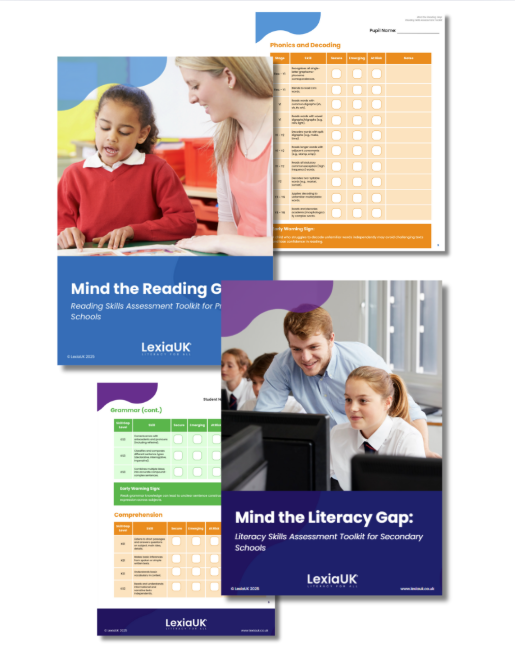
At LexiaUK, we know that reading proficiency is the gateway to academic success, and that every learner’s journey is unique. Whether you’re supporting early readers in Key Stage 1 or helping students navigate the demands of the GCSE curriculum, our Reading Assessment Toolkits are designed to help educators quickly identify skills gaps, understand literacy challenges and implement targeted, effective interventions.
Each toolkit is tailored to the needs of either primary or secondary educators, but both include:
These resources are designed to support:

The start of a new school year is brimming with opportunity. Fresh books, sharpened pencils and new opportunities for every learner. But the first term is more than just a settling-in period. It represents a critical window to identify and close literacy gaps before they widen, impacting confidence, motivation, and long-term success.
From teaching phonics and early reading strategies in Year 1 to supporting Year 7s as they navigate more complex secondary texts, acting early is crucial. Here’s why.
Research consistently shows that timely intervention is one of the most effective ways to support struggling readers. The Education Endowment Foundation (EEF) highlights that early literacy approaches deliver, on average, an additional four months’ progress (Education Endowment Foundation, 2023). Meanwhile, Ofsted (2022) stresses that “reading is the key to unlocking the curriculum,” urging schools not to delay support.
Catch issues early, and pupils are more likely to stay engaged and motivated. Miss that window, and literacy fatigue can set in: the demoralising sense of always being behind. By autumn half-term, gaps that might have been closed with targeted support can start to feel entrenched, leading to a cycle of avoidance and low confidence.
In primary classrooms, the early signs of reading gaps often appear as issues with decoding and fluency. Many teachers tell us that as texts grow more complex in Key Stage 2, children who once managed simpler books start to struggle, leading to a noticeable drop in comprehension and enthusiasm. Schools often report that it’s common to see some Year 3 pupils who can sound out words accurately but still lack the fluency to keep pace, and who begin to shy away from reading tasks as a result.
In secondary schools, the challenges for pupils with reading difficulties often become even more pronounced. Many schools tell us they see new Year 7s arriving with gaps that were manageable in primary but now hold them back across the curriculum. Limited vocabulary, weak inference skills, and poor reading stamina make it hard to tackle the dense, subject-specific texts that secondary learning demands. Pupils who struggled to keep up with reading in primary often find these demands overwhelming, impacting not just English, but their ability to access science, history, and even problem-solving in maths.
Delaying targeted reading support until later in the year can have far-reaching consequences for pupils and for schools. By the time gaps are fully recognised in the spring term, they’ve often widened considerably. Struggling readers may have spent months masking difficulties, losing confidence, and quietly disengaging. Meanwhile, the pace of the curriculum continues, widening the gap between those who read fluently and those who are still grappling with the basics.
This isn’t just about literacy lessons. When pupils lack the reading skills to access age-appropriate texts, it places a barrier across every subject. Left unaddressed, small gaps in September can become entrenched barriers by June, impacting progress, self-esteem, and long-term outcomes.
Many schools find that “catching up by Christmas” is far more realistic than trying to close extensive gaps from scratch in the spring or summer. Early intervention not only lifts reading ability but also rebuilds pupils’ belief in themselves as learners. The earlier schools act, the more time pupils have to develop fluency, deepen comprehension, and engage fully with the curriculum.
Fortunately, there are effective, evidence-based tools available that help teachers respond quickly and efficiently, providing targeted support exactly where it’s needed, without adding to workload.
In today’s busy school environment, literacy interventions need to be both effective and manageable for teachers. The best approaches provide timely insights into each pupil’s reading skills, allowing staff to tailor support without adding unnecessary workload.
Adaptive programmes that automatically assess learners’ strengths and areas for development can be particularly valuable. They reduce the need for lengthy baseline testing and make it easier to group pupils according to their specific needs. Built-in differentiation helps ensure that every child receives appropriate challenge and support, while engaging activities maintain motivation and build essential reading skills.
At secondary level, supporting vocabulary development, inference skills, and reading stamina is crucial for pupils transitioning from primary school. Interventions that offer personalised learning pathways and clear progress data help teachers focus on the areas that will make the biggest difference for each student, while integrating smoothly into existing teaching routines.
By using tools that combine adaptability, clear data, and ease of use, schools can respond quickly to emerging literacy needs. This not only helps close gaps early but also supports sustainable, whole-school approaches to improving reading outcomes.
School leaders aiming to close reading gaps early can take decisive, practical steps immediately. Here’s how to get started:
Taking these steps positions your school to act swiftly and strategically, closing gaps early, boosting pupil confidence, and ultimately raising attainment across the curriculum. With the right tools and a clear plan, you can make this critical start to the academic year your most impactful yet.
Ofsted (2022) ‘Now the whole school is reading’: supporting struggling readers in secondary school.
Education Endowment Foundation (EEF) (2023) Early literacy approaches. Early Years Toolkit.
Backed by independent research and trusted by thousands of educators, our literacy programmes are research-proven.
Find out how we are helping schools to accelerate their literacy progress.
Keep up to date with the latest industry news from LexiaUK.
One of the most important tasks and school leaders face is ensuring that every student, regardless of their learning needs, receives the right support to thrive in literacy. However, with the diverse range of challenges that learners can face—whether it’s dyslexia, language delays, decoding or comprehension difficulties—tailoring needs to meet these can feel overwhelming.
In this post, we’ll explore practical, adaptive approaches to reading intervention. These strategies aim to empower you to adjust interventions for supporting pupils with SEND as well as those in need from disadvantaged backgrounds.
Learners with SEND often face a wide range of challenges that impact their ability to develop literacy skills. These may include:
For these students, it’s crucial that interventions are adaptive and flexible. There’s no one-size-fits-all solution, so the key is to tailor your approach to each learner’s unique needs. This requires not only adjusting the content but also pacing and resources to ensure that every student has the right level of challenge and support.
The speed at which students advance through reading materials is critical, especially for pupils with SEND. A pace that is too fast can overwhelm, while one that is too slow can lead to disengagement. The goal is to find a pace that challenges the student while allowing them to build confidence and competence.
For example, break down tasks into manageable steps and allow students to revisit concepts as needed. Regularly assess progress to determine if the pace needs adjusting. The key is to provide just enough challenge to keep students engaged, while ensuring they are not overwhelmed by complex tasks too soon.
Students may also benefit from frequent breaks, particularly when they are working on new or difficult concepts. These breaks can help reset focus and provide time for students to reflect on what they’ve learned.
The resources you use play a significant role in how effectively students can progress in their literacy journey. It’s important to match the difficulty of resources to the learner’s level and needs. For learners with SEND, the resources should not only align with their current skills but also be motivating and engaging.
When selecting materials, consider the following:
By selecting materials that are the right level of difficulty, you can ensure that students are constantly progressing and building new skills, while also keeping them engaged and motivated to continue learning.
Scaffolding is an essential strategy for all learners but is particularly important in promoting independence in learners with SEND. Scaffolding allows pupils to build skills incrementally while still receiving the support they need to succeed. The goal of scaffolding is to help learners become more independent by providing targeted support that can be gradually removed as the student gains confidence and ability.
For example, when teaching a pupil to read a difficult text, start by reading aloud together and discussing the content. Over time, ask them to take over more of the reading, then support them with comprehension questions, and eventually let them read and answer questions independently.
Scaffolding allows learners to progress at their own pace, ensuring they have the tools to succeed even as the level of challenge increases.
Monitoring progress is essential to ensuring that the interventions you are using are working. Without regular assessments, it’s impossible to know whether a student is making the desired progress or if adjustments are needed. Ongoing progress monitoring also allows you to celebrate small victories, boosting students’ confidence and motivation.
Regularly track your students’ performance through formative assessments and observations. By collecting data on areas such as phonics, fluency, and comprehension, you can determine whether the pace and resources are appropriate or if adjustments need to be made.
If a student is struggling in a particular area—such as decoding or fluency—it may be necessary to adjust the focus of the intervention, providing more targeted support. Conversely, if a student is excelling, the level of challenge can be increased to ensure continued development.
SENCOs play a vital role in shaping how literacy interventions are implemented in school. Here are some practical tips to help maximise the impact of interventions:
Supporting learners with SEND in developing crucial literacy skills is an ongoing challenge. With the right strategies in place, you can help your students develop the skills they need to succeed. Tailoring interventions to suit each learner’s pace, selecting the right resources, scaffolding learning for independence and regularly monitoring progress are essential components of a successful literacy strategy.
By integrating these approaches into your practice, you can ensure that every student receives the support they need to build confidence and competence in reading, regardless of their learning needs. However, implementing these strategies effectively takes time and can be complex, requiring careful planning and adaptation. Utilising research-evidenced technology can help streamline this process, equipping teachers with the tools they need to provide targeted, effective support for SEND learners.
If you’re looking for a solution to streamline and personalise your reading interventions, Lexia Core5 Reading and Lexia PowerUp Literacy offer tools that can help. These programmes adapt to each learner’s needs, offering a flexible, data-driven approach to literacy development.
Request a Demo to learn more about how Lexia can support your pupils. We are proud to partner with schools ensure every student reaches their literacy goals, no matter their learning journey.

For many pupils with special educational needs and disability (SEND), learning to read and write can be a significant challenge. Difficulties with phonics, comprehension, and spelling often lead to frustration, disengagement, and low confidence. Traditional, one-size-fits-all approaches may not provide the flexibility or reinforcement these learners need.
This is where multisensory learning can play a transformative role. By engaging multiple senses—sight, sound, movement, and touch—multisensory strategies help embed literacy skills in a way that feels natural and meaningful to pupils with SEND. In this article, we’ll explore how multisensory learning works, practical strategies that can be used in the classroom, and how technology can enhance these approaches to break down barriers for learners with SEND.
Multisensory learning involves using visual, auditory, and kinaesthetic-tactile pathways simultaneously to support literacy development. This approach is particularly beneficial for pupils with SEND, such as those with dyslexia, dyspraxia, ADHD, or speech and language difficulties. This tactile approach to learning through a wide range of modalities makes it more likely to work with the pupil.
Multisensory instruction is not just a theory—it is backed by research and widely used in evidence-based literacy programmes to support struggling learners.
Engaging the visual sense can help learners understand and remember literacy concepts more effectively. Some simple techniques include:
Many learners benefit from hearing information repeated and reinforced through sound-based activities, such as:
For many pupils, movement and touch-based activities can make literacy learning more engaging and memorable:
The most effective multisensory strategies often combine two or more senses at once. For example:
By incorporating multisensory techniques, teachers can create an inclusive, high quality classroom environment where all pupils can thrive in literacy learning.
While hands-on activities are highly effective, digital tools can also provide valuable multisensory learning experiences.
At LexiaUK, we understand the importance of adaptive, multisensory learning in literacy development. Lexia Core5 Reading is designed with evidence-based multisensory techniques, supporting pupils through a structured, personalised programme that integrates visual, auditory, and kinaesthetic-tactile elements. Schools using Lexia have reported increased engagement, improved reading confidence, and measurable progress among their SEND learners.
Would you like to see how an adaptive, personalised and multisensory approach can support your pupils?
"*" indicates required fields

Literacy is the foundation for success across all subjects, yet gaps in reading comprehension and writing can often go unnoticed. These gaps can hinder their ability to engage with subject content, complete coursework, and succeed in exams. Because literacy difficulties do not always present in obvious ways, students may develop coping mechanisms that mask their struggles. This means that by the time gaps are identified, they may already be limiting academic potential.
This article explores how hidden literacy gaps can affect secondary students, the long-term consequences of leaving them unaddressed, and practical strategies to ensure that all learners can access and succeed in their education.
Secondary schools naturally focus on subject-specific learning, assuming students have already acquired foundational literacy skills. However, literacy underpins success in all subjects such as understanding exam questions in maths, evaluating sources in history, or structuring an argument in science.
Some literacy gaps may also go unnoticed due to the way primary assessments are structured. For example, the heavy weighting of spelling in the SPAG SATs paper means that students who are strong spellers but have grammatical deficits may fly under the radar. As a result, secondary students with undiagnosed literacy difficulties may struggle with:
Because secondary students often develop strategies to work around these issues—such as avoiding reading aloud or memorising content without fully understanding it—literacy gaps may not become apparent until exam results or disengagement highlight a deeper problem.
Literacy difficulties don’t just affect academic achievement; they can have a lasting impact on a student’s future. Challenges include:
Addressing literacy challenges in secondary schools requires a whole-school approach that prioritises early identification, personalised intervention, and cross-curricular literacy development. A well-structured intervention programme can make a significant difference, ensuring that students receive the support they need to develop essential reading, vocabulary, and writing skills.
Every student deserves the opportunity to succeed, regardless of their starting point. By recognising and addressing hidden literacy gaps, educators can empower students with the skills they need to access the full curriculum, achieve their potential, and build brighter futures.
To learn more about how Lexia PowerUp Literacy can support your students, visit our product page.