Proven Results
Backed by independent research and trusted by thousands of educators, our literacy programmes are research-proven.



It’s one of the most common questions we hear from schools—and now, we want to hear directly from you.
Take part in The Big Lexia Survey 2025 to share how your school has been using Lexia this year—and help us better understand what’s working, where extra support is needed, and how we can improve our guidance, training, and resources to help you get the most from your programme.
Whether it’s your approach to targeting, timetabling, or tracking progress, your feedback will help shape the future of Lexia support across the UK.
And as a thank you, you’ll be entered into a prize draw to win £250 of National Book Tokens for your school library.
Join the conversation and help strengthen the LexiaUK community—one voice at a time.
Click below to take part. It only takes 15 minutes, but your insights will make a lasting impact.
To Enter, participants must:

One of the most important tasks and school leaders face is ensuring that every student, regardless of their learning needs, receives the right support to thrive in literacy. However, with the diverse range of challenges that learners can face—whether it’s dyslexia, language delays, decoding or comprehension difficulties—tailoring needs to meet these can feel overwhelming.
In this post, we’ll explore practical, adaptive approaches to reading intervention. These strategies aim to empower you to adjust interventions for supporting pupils with SEND as well as those in need from disadvantaged backgrounds.
Learners with SEND often face a wide range of challenges that impact their ability to develop literacy skills. These may include:
For these students, it’s crucial that interventions are adaptive and flexible. There’s no one-size-fits-all solution, so the key is to tailor your approach to each learner’s unique needs. This requires not only adjusting the content but also pacing and resources to ensure that every student has the right level of challenge and support.
The speed at which students advance through reading materials is critical, especially for pupils with SEND. A pace that is too fast can overwhelm, while one that is too slow can lead to disengagement. The goal is to find a pace that challenges the student while allowing them to build confidence and competence.
For example, break down tasks into manageable steps and allow students to revisit concepts as needed. Regularly assess progress to determine if the pace needs adjusting. The key is to provide just enough challenge to keep students engaged, while ensuring they are not overwhelmed by complex tasks too soon.
Students may also benefit from frequent breaks, particularly when they are working on new or difficult concepts. These breaks can help reset focus and provide time for students to reflect on what they’ve learned.
The resources you use play a significant role in how effectively students can progress in their literacy journey. It’s important to match the difficulty of resources to the learner’s level and needs. For learners with SEND, the resources should not only align with their current skills but also be motivating and engaging.
When selecting materials, consider the following:
By selecting materials that are the right level of difficulty, you can ensure that students are constantly progressing and building new skills, while also keeping them engaged and motivated to continue learning.
Scaffolding is an essential strategy for all learners but is particularly important in promoting independence in learners with SEND. Scaffolding allows pupils to build skills incrementally while still receiving the support they need to succeed. The goal of scaffolding is to help learners become more independent by providing targeted support that can be gradually removed as the student gains confidence and ability.
For example, when teaching a pupil to read a difficult text, start by reading aloud together and discussing the content. Over time, ask them to take over more of the reading, then support them with comprehension questions, and eventually let them read and answer questions independently.
Scaffolding allows learners to progress at their own pace, ensuring they have the tools to succeed even as the level of challenge increases.
Monitoring progress is essential to ensuring that the interventions you are using are working. Without regular assessments, it’s impossible to know whether a student is making the desired progress or if adjustments are needed. Ongoing progress monitoring also allows you to celebrate small victories, boosting students’ confidence and motivation.
Regularly track your students’ performance through formative assessments and observations. By collecting data on areas such as phonics, fluency, and comprehension, you can determine whether the pace and resources are appropriate or if adjustments need to be made.
If a student is struggling in a particular area—such as decoding or fluency—it may be necessary to adjust the focus of the intervention, providing more targeted support. Conversely, if a student is excelling, the level of challenge can be increased to ensure continued development.
SENCOs play a vital role in shaping how literacy interventions are implemented in school. Here are some practical tips to help maximise the impact of interventions:
Supporting learners with SEND in developing crucial literacy skills is an ongoing challenge. With the right strategies in place, you can help your students develop the skills they need to succeed. Tailoring interventions to suit each learner’s pace, selecting the right resources, scaffolding learning for independence and regularly monitoring progress are essential components of a successful literacy strategy.
By integrating these approaches into your practice, you can ensure that every student receives the support they need to build confidence and competence in reading, regardless of their learning needs. However, implementing these strategies effectively takes time and can be complex, requiring careful planning and adaptation. Utilising research-evidenced technology can help streamline this process, equipping teachers with the tools they need to provide targeted, effective support for SEND learners.
If you’re looking for a solution to streamline and personalise your reading interventions, Lexia Core5 Reading and Lexia PowerUp Literacy offer tools that can help. These programmes adapt to each learner’s needs, offering a flexible, data-driven approach to literacy development.
Request a Demo to learn more about how Lexia can support your pupils. We are proud to partner with schools ensure every student reaches their literacy goals, no matter their learning journey.

Literacy is the foundation for success across all subjects, yet gaps in reading comprehension and writing can often go unnoticed. These gaps can hinder their ability to engage with subject content, complete coursework, and succeed in exams. Because literacy difficulties do not always present in obvious ways, students may develop coping mechanisms that mask their struggles. This means that by the time gaps are identified, they may already be limiting academic potential.
This article explores how hidden literacy gaps can affect secondary students, the long-term consequences of leaving them unaddressed, and practical strategies to ensure that all learners can access and succeed in their education.
Secondary schools naturally focus on subject-specific learning, assuming students have already acquired foundational literacy skills. However, literacy underpins success in all subjects such as understanding exam questions in maths, evaluating sources in history, or structuring an argument in science.
Some literacy gaps may also go unnoticed due to the way primary assessments are structured. For example, the heavy weighting of spelling in the SPAG SATs paper means that students who are strong spellers but have grammatical deficits may fly under the radar. As a result, secondary students with undiagnosed literacy difficulties may struggle with:
Because secondary students often develop strategies to work around these issues—such as avoiding reading aloud or memorising content without fully understanding it—literacy gaps may not become apparent until exam results or disengagement highlight a deeper problem.
Literacy difficulties don’t just affect academic achievement; they can have a lasting impact on a student’s future. Challenges include:
Addressing literacy challenges in secondary schools requires a whole-school approach that prioritises early identification, personalised intervention, and cross-curricular literacy development. A well-structured intervention programme can make a significant difference, ensuring that students receive the support they need to develop essential reading, vocabulary, and writing skills.
Every student deserves the opportunity to succeed, regardless of their starting point. By recognising and addressing hidden literacy gaps, educators can empower students with the skills they need to access the full curriculum, achieve their potential, and build brighter futures.
To learn more about how Lexia PowerUp Literacy can support your students, visit our product page.

Last year, over 120,000 students from disadvantaged backgrounds entered secondary school below the expected standard for reading. Students arrive with different skill levels, and factors such as SEND, socio-economic barriers, and EAL can further widen gaps in spelling, grammar, and comprehension. Without the right support, these challenges can affect access to the curriculum, engagement in learning, and success in GCSEs.
By understanding the diverse needs of secondary students and applying evidence-based strategies, schools can create a more inclusive, effective approach to literacy support.
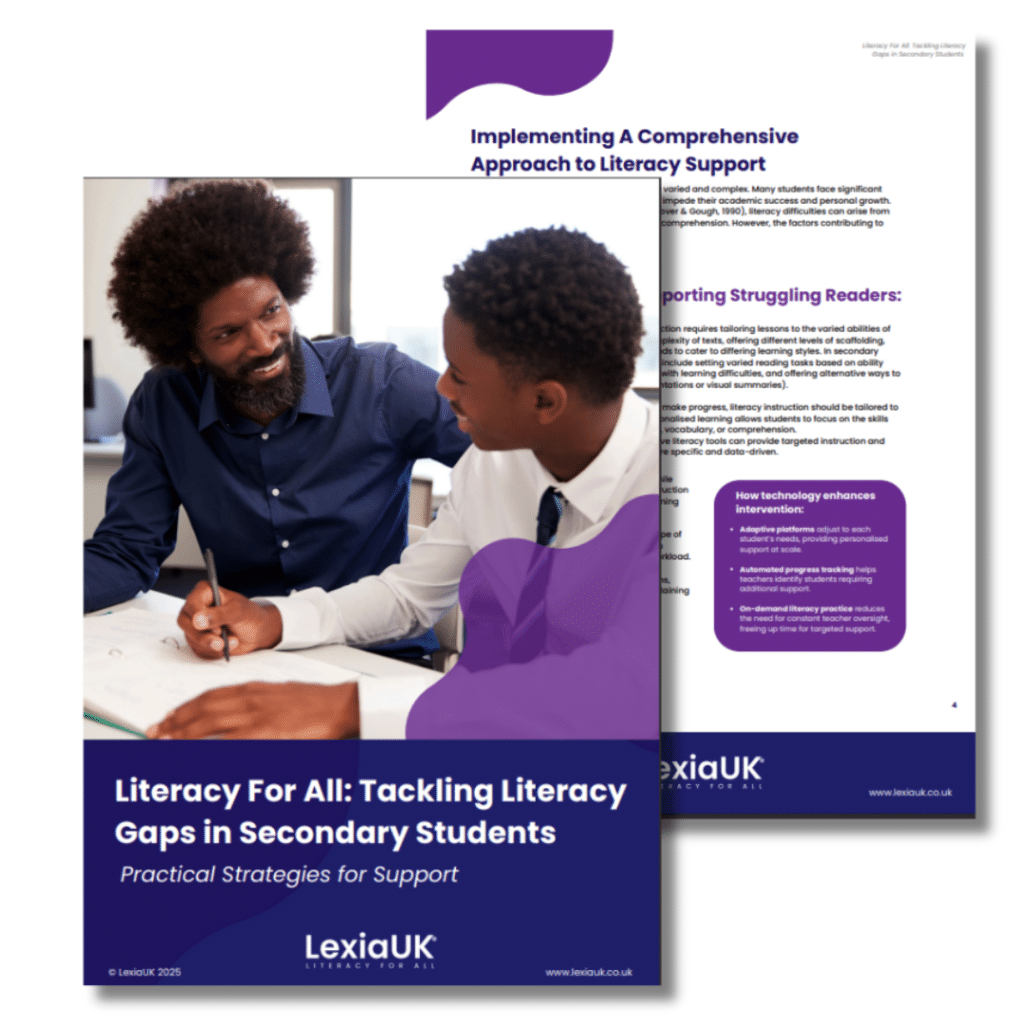
Want to experience the impact of Lexia PowerUp in your school? We’re offering a free 30-day evaluation for schools interested in seeing how Lexia PowerUp Literacy can support their students’ literacy skills development.

At LexiaUK, we’re privileged to partner with schools that are committed to transforming literacy outcomes for their pupils. Hearing their success stories not only inspires us but also reinforces the impact of a thoughtfully implemented literacy program. In this post, we share how three schools have used Lexia to achieve remarkable results, and what we can learn from their approaches.
The Compton School in North Finchley, London has successfully integrated Lexia into its whole-school literacy strategy, led by Assistant Headteacher Emily Walker-Nolan and Lexia Lead Deeya Sharma. Initially introduced to support with COVID catch-up, Lexia has now become central to Compton’s three-tier literacy approach, which includes staff training, targeted interventions, and comprehensive screening for Key Stage 3 students with reading difficulties.
Lexia’s adaptive features have proven effective in motivating students. The school enhances engagement by rewarding students with incentives like chocolates and postcards. Lexia is also used creatively across various settings, including transition programs for Year 6 students and daily routines such as breakfast clubs.
The program has led to impressive results, including a 20% increase in students meeting reading benchmarks. The school emphasises the importance of early implementation and actively involves parents through workshops and home-school communication.
Through these combined efforts, The Compton School has set a high standard for effective literacy intervention, ensuring all students experience progress and success.
The Compton School’s approach highlights the importance of early intervention. By identifyihttps://youtu.be/7FE5T_1WtU4ng struggling readers early, the school ensures they receive targeted support before gaps widen.
By integrating Lexia into their Year 6 transition, the school supports students in starting their secondary education with stronger literacy skills, potentially avoiding years of struggle. Early intervention not only helps address foundational gaps but also boosts student motivation and engagement, ensuring ongoing progress and success in literacy.
Watch The Compton School’s Full Interview
At Herne Junior School, Hampshire, Lexia has become a cornerstone of the school’s reading intervention strategy, particularly under the leadership of Lynne Tandy, the school’s SEN Assistant and Lexia Coordinator. Initially used as an early morning intervention for Year 4 and Year 5 pupils, the program evolved during the COVID-19 lockdown into a daily routine across the whole school.
By providing personalised learning experiences, Lexia helps close reading gaps, boosting students’ confidence. Lynne creatively integrates Lexia into the school day, offering morning sessions that include breakfast, and rewards that ensure engagement and motivation.
Her approach, which combines consistency, positive reinforcement and tailored support, has led to impressive improvements. For example, one pupil gained confidence after completing over 1,000 minutes on Lexia and advancing three levels. Lynne advises other schools to thoroughly explore Lexia’s features to ensure effective implementation.
Herne Junior’s success with Lexia is a testament to the programme’s potential when used creatively and consistently, making a lasting impact on pupils’ reading development.
Herne Junior School demonstrates the power of building pupil motivation and consistency. By embedding Lexia into the school day with consistent morning sessions, the school fosters a routine that encourages daily engagement with the program. This regular practice ensures that pupils see continuous improvement, building their confidence over time.
The reward system, including house points, stickers, and special reward activities, reinforces positive behaviour and celebrates small achievements, making learning feel rewarding and enjoyable. Lynne’s focus on creating a positive, supportive environment where learners are motivated to share their progress also plays a crucial role in maintaining high levels of engagement.
Herne Junior’s approach shows that when students are consistently encouraged, given clear goals, and rewarded for their efforts, they are more likely to stay committed and succeed in their reading development.
Watch Herne Junior School’s Full Interview
At St Alban’s Academy, located in an area with high deprivation and significant learning gaps, Lexia Core5 was implemented as a whole-class solution rather than a small-group tool. This innovative adaptation ensured all pupils benefited from the program’s design of offering targeted support, regardless of their starting point.
The school adopted an effective routine: while some pupils worked independently on Lexia’s personalised online tasks, teachers focused on smaller groups to address specific learning needs. This model allowed for both individualised practice and focused intervention. Teachers also used Lexia’s detailed reports to inform lesson planning, ensuring that classroom teaching addressed areas where pupils struggled most.
The impact was transformative. Within five weeks, most pupils had gained two months’ progress, with the school’s most vulnerable learners making particularly notable strides. Teachers reported a significant reduction in workload stress, as Lexia’s adaptive technology provided vital support.
Beyond academic gains, the school saw an uplift in pupils’ enthusiasm for reading. Children began sharing their progress and favourite moments from Lexia, while teachers noted improvements in writing because of exposure to richer vocabulary and texts.
St. Alban’s Academy’s approach offers valuable lessons for other schools looking to maximise the impact of reading interventions. Their decision to implement Lexia Core5 as a whole-class intervention demonstrates the power of inclusivity in reading progress. By ensuring that every pupil, regardless of their starting point, could benefit from personalised support, the school effectively reduced learning gaps and promoted equity.
The integration of Lexia with targeted teacher interventions also highlights the importance of a blended approach that combines technology with teacher expertise. The use of Lexia’s detailed reports to inform lesson planning demonstrates how data-driven decision-making can enhance teaching strategies.
Read St Alban’s Academy’s Full Interview

Backed by independent research and trusted by thousands of educators, our literacy programmes are research-proven.

Find out how we are helping schools to accelerate their literacy progress.

Keep up to date with the latest industry news from LexiaUK.

Engaging secondary students in reading can be a challenge for educators. At this stage of the learning process, some students may have developed a reluctance to engage with reading due to past struggles, while others might find traditional approaches uninspiring. However, with the right strategies, these barriers can be overcome. Gamified learning is one such strategy—one that taps into the natural instincts for play and achievement to reframe reading as an enjoyable and rewarding activity.
At LexiaUK, we are passionate about fostering literacy for all. By leveraging innovative, equitable approaches, like gamification, we aim to empower educators to create inclusive learning environments where every student can succeed.
One of the key principles of gamified learning is chunking tasks into bite-sized, achievable goals. For struggling readers, the thought of tackling an entire novel or lengthy article can be overwhelming. Gamification breaks the process into smaller, digestible steps, such as decoding a paragraph, mastering a set of vocabulary words, or answering a few comprehension questions.
Each small success contributes to a sense of progress, reducing anxiety and building confidence in students who may have previously felt defeated by reading challenges.
Games thrive on rapid feedback loops—moments where players see the direct results of their actions. When applied to literacy, this might look like immediate feedback on a comprehension quiz or unlocking a new level after completing a set of vocabulary challenges. These quick wins provide a dopamine boost, motivating students to keep engaging and improving.
Gamified learning helps students track their progress in a visual and tangible way. Badges, progress bars, and rewards show learners how far they’ve come, encouraging them to push further. For secondary readers, these features help shift their mindset from “I can’t” to “I can” and eventually to “I am successful”.
Incorporate Game Mechanics into Daily Activities: Add elements such as leader boards, timed challenges, or reward systems to regular reading tasks. Introduce a “mystery reader” challenge where students earn clues about a famous author or character after completing reading tasks. Once all the clues are collected, they can guess the identity for a reward or bonus activity.
Use Technology to Your Advantage: Digital platforms like Lexia PowerUp Literacy integrate gamification seamlessly, making it easy for teachers to implement these techniques. These tools often include built-in progress tracking, goal-setting features, and interactive tasks that engage students.
Make Success Visible: Celebrate small wins openly in the classroom. Display a progress chart or award badges for milestones reached, such as mastering a new set of vocabulary words or completing a series of comprehension challenge.
Encourage Collaboration and Healthy Competition: Use group activities or team challenges to foster collaboration among peers. A reading scavenger hunt, where groups work together to solve questions based on assigned texts, combines teamwork with literacy skills.
Provide Differentiated Challenges: Not all students are at the same reading level, so tailor gamified activities to suit varying needs. Adaptive platforms like Lexia PowerUp Literacy automatically adjust to students’ abilities, ensuring that every learner is working at an appropriate challenge level.
Lexia PowerUp Literacy is designed specifically for struggling and reluctant readers at the secondary level, blending innovative gamification techniques with evidence-based learning strategies.
Personalised Learning Paths: The program adapts to each student’s strengths and areas for growth, ensuring that they receive content that is both challenging and achievable.
Engaging Skill Practice: Activities are presented as interactive, game-based learning, such as sight word racing, sentence building, and comprehension quizzes.
Progress Tracking and Rewards: Lexia PowerUp literacy includes game elements such as streaks, unlockable levels and competitive, beat-the-clock activities. The learning experience is further enhanced by high quality visual indicators of progress, motivating students to keep advancing.
Real-Time Data Insights: While students engage independently, educators gain access to detailed reports, helping them provide targeted support where it’s needed most. Tracking student progress throughout your secondary school is simple with our myLexia administration tool.
At LexiaUK, we believe in the power of literacy to transform lives. By introducing gamified learning into the classroom, you can spark a love for reading in even the most reluctant students, fostering skills that will support them far beyond their school years.
Ready to explore how Lexia PowerUp Literacy can elevate reading engagement in your school?
Get in touch with our team to discuss your goals and discover how we can support your journey towards literacy for all.
Backed by independent research and trusted by thousands of educators, our literacy programmes are research-proven.
Find out how we are helping schools to accelerate their literacy progress.
Keep up to date with the latest industry news from LexiaUK.

Reading is much more than a skill—it’s a gateway to understanding the world, unlocking potential, and building a foundation for lifelong learning. For school leaders and educators alike, prioritising literacy is key to fostering both academic success and personal growth in pupils. Confident readers often become confident learners, and in turn, this confidence supports better engagement, wider progress, and positive outcomes across the curriculum.
In this post, we’ll explore the link between literacy and learning confidence, discuss its impact on pupil outcomes, and provide actionable strategies to promote reading at the school and classroom levels.
Children who are confident in their reading abilities tend to carry that confidence into other areas of their learning. The ability to read fluently allows pupils to engage with texts across all subjects, from science experiments to history lessons. This understanding fosters a sense of achievement and autonomy, empowering pupils to participate more actively in discussions and group activities.
The ripple effect is profound. A child who feels capable when tackling a challenging book will often approach other tasks, such as solving maths problems or writing essays, with the same belief in their abilities. Confidence in reading equips children with the self-assurance to persevere, problem-solve, and explore independently.

For many pupils, the ability to read and comprehend written materials is essential for accessing the full breadth of the curriculum. From deciphering exam questions to following instructions for a science experiment, reading underpins success in every subject.
Yet, pupils with low literacy levels face significant barriers. A lack of reading confidence can lead to disengagement, frustration, and a widening gap in achievement. The good news is that focused reading interventions can transform not only a pupil’s academic outcomes but also their overall attitude towards learning.
By prioritising literacy, schools can create an environment where all pupils—regardless of their starting point—have the tools they need to thrive.
Equity in literacy means ensuring that every pupil—regardless of background, ability, or starting point—can develop strong reading skills. For many schools, this requires a shift from a one-size-fits-all approach to a more personalised and inclusive strategy. To achieve this, the following steps can be taken:
Embedding reading across all subjects is essential to fostering confident learners. Disciplinary Literacy, which focuses on the specific reading and writing skills required within each subject, can help children make connections between their literacy skills and their understanding of various subjects.
Here’s how to integrate reading seamlessly into every subject across the curriculum:
Adapt Reading Strategies for Each Subject: Each subject has its own language and methods of communication. For example, history often involves analysing text with a focus on cause and effect while science relies on reading technical vocabulary.

Create Cross-Curricular Reading Opportunities: Incorporate reading tasks into various subjects to show pupils how literacy skills apply beyond English lessons. For example, use non-fiction texts in science to explore topics like habitats or forces, or historical letters and diary entries in history to bring key events to life. By embedding reading into different areas of the curriculum, pupils develop a deeper understanding of subject content while strengthening their comprehension and critical thinking skills.
Foster Vocabulary Development Across Subjects: Teach subject-specific vocabulary explicitly, incorporating morphology to help pupils understand and use academic language. For example, break down terms like “photosynthesis” into its Greek roots—photo (light) and synthesis (putting together)—to deepen understanding. This approach not only builds confidence in using complex vocabulary but also equips pupils with tools to decode unfamiliar words independently.
Embedding reading across all subjects is essential to fostering confident learners. Disciplinary Literacy, which focuses on the specific reading and writing skills required within each subject, can help children make connections between their literacy skills and their understanding of various subjects.
Here’s how to integrate reading seamlessly into every subject across the curriculum:
Schools that prioritise literacy see a profound impact on their pupils’ outcomes. When reading is embedded in the school’s culture, pupils gain not only the skills to access the curriculum but also the confidence to be curious, explore and express themselves.
This transformation often starts with leadership. By championing literacy initiatives, school leaders can create a school-wide focus on reading that benefits every child, fostering a thriving, inclusive community where all learners can succeed.
At LexiaUK, we believe in Literacy for All. Our mission is to empower schools with evidence-based tools and strategies to transform reading outcomes for every pupil. From targeted interventions to whole-school solutions, we provide the support schools need to make literacy a priority.
If you’re ready to unlock your school’s potential through reading, we’d love to hear from you. Contact us today to discuss your needs and discover how LexiaUK can help you achieve your vision for school-wide literacy success.
Backed by independent research and trusted by thousands of educators, our literacy programmes are research-proven.
Find out how we are helping schools to accelerate their literacy progress.
Keep up to date with the latest industry news from LexiaUK.

Allocating a dedicated Lexia Coordinator is one of the most effective ways your school can get the most out of Lexia Core5 Reading or Lexia PowerUp Literacy. A Lexia Coordinator oversees the day-to-day running of the program, making sure it’s been implemented effectively. But what does that look like in practice, and how can schools ensure this role has the impact it deserves? In this post, we’ll explore the benefits of having a Lexia Coordinator and offer practical tips for success.
A Lexia Coordinator is the key link between your Lexia program and your school’s operations. Their primary responsibilities include:
Assigning a Lexia Coordinator is the first step, but how do you make sure the role is as effective as possible? Here are five practical tips:
Allocating a Lexia Coordinator is a practical way to maximise the benefits of Lexia programs in your school. With a Coordinator in place, you ensure that Lexia is being used effectively, student progress is regularly tracked, and teachers have the support they need to succeed.
If your school has already appointed a Lexia Coordinator or is thinking about doing so, we’re here to help. LexiaUK offers comprehensive training designed to empower your Coordinator, helping them to thrive in their role and ensure your school gets the most out of our programs.
To learn more about how LexiaUK can support your Lexia Coordinator with training and resources, reach out to our team today. Whether it’s through our webinars, one-to-one support sessions, or detailed guidance on data usage, we’re here to ensure your Lexia Coordinator is fully equipped to make a lasting impact.

As secondary school educators work to close literacy gaps and raise academic achievement, the increasing complexity of the curriculum often leaves some students struggling to keep up. Literacy challenges don’t just impact English lessons; they affect learning across all subjects. Addressing these gaps is essential for ensuring every student can access the full curriculum. However, with tight schedules, limited resources, and the broad range of ability among students, providing tailored literacy support is a significant challenge.
So, how can schools efficiently support diverse student needs without overwhelming teachers or stretching resources?
When students enter secondary school, they are expected to handle more complex texts and subject-specific vocabulary. Students still developing basic literacy skills often have trouble engaging with the curriculum, hindering their performance across many subjects. This makes it critical to ensure that students continue building foundational literacy skills alongside developing more advanced ones.
Providing consistent, individualised literacy support within the constraints of a packed school timetable is a common struggle. Teachers need strategies that are practical, efficient, and capable of addressing varied learning needs in the classroom. This is where technology can step in to provide a meaningful solution.
Many schools are finding that digital tools offer valuable ways to extend support to students without overburdening staff. Technology provides a way to supplement classroom instruction and support self-directed learning, particularly with literacy interventions.
One key advantage of using educational technology is that it allows students to learn at their own pace. Adapting to individual learning needs, technology-based programs can target specific gaps in a student’s skills, helping them make progress without falling behind their peers. This personalised approach also frees up time for teachers to focus on students who require more direct intervention.
When it comes to literacy, no two students are the same. Some may struggle with basic reading skills, while others need help refining their comprehension of complex texts. Schools are often aware of these literacy challenges among their students, but find it daunting to identify specific issues then implement tailored solutions—especially with limited time and resources. Furthermore, delivering a one-size-fits-all solution is often ineffective and can lead to students falling further behind.

Here are some practical steps for schools looking to implement technology in their literacy strategies:
4. Engage students with interactive content: Digital literacy programs often include interactive activities that keep students engaged and motivated to improve their skills. These features frequently offer effective reward schemes that enable progress milestones to be celebrated.
By adopting these strategies, schools can provide more tailored support to students, helping them build the literacy skills needed for academic success.
At LexiaUK, we recognise the importance of personalised literacy interventions that support a range of needs in secondary students. This is why we offer Lexia PowerUp Literacy. Designed for secondary school students, PowerUp offers personalised literacy support in three key areas—word study, grammar, and comprehension.
Using adaptive technology, PowerUp adjusts to meet the unique needs of each student, whether they’re struggling with foundational skills or working on higher-level comprehension. Lexia is backed by trusted research and has been proven effective in real-world classroom settings, providing educators with confidence in its ability to deliver results.
The program provides real-time data and progress monitoring, helping teachers identify where additional support is needed without adding to their workload. By integrating technology like PowerUp, schools can enhance their literacy strategies, ensuring every student gets the right support to thrive academically.
Leveraging the right technology can make a significant difference in how schools address literacy gaps. Lexia PowerUp Literacy offers a scalable, effective solution for delivering tailored, impactful interventions, making it a valuable tool for secondary schools aiming to raise achievement and ensure literacy for all students.
Discover more about Lexia PowerUp Literacy

Backed by independent research and trusted by thousands of educators, our literacy programmes are research-proven.
Find out how we are helping schools to accelerate their literacy progress.
Keep up to date with the latest industry news from LexiaUK.

Faced with the diverse literacy needs of their students, secondary schools are grappling with the challenge of delivering the right level of support to every pupil. With tightening budgets and a shortage of literacy specialists, many secondary schools are facing significant challenges in providing the literacy support their students need.
Lack of funding means schools often struggle to hire enough teachers, teaching assistants, or literacy specialists, which in turn limits the scope for tailored literacy interventions. In response, some schools have turned to hiring primary staff to address literacy gaps in secondary students, but these staff are not always readily available or equipped for the complexities of secondary-level literacy demands. This highlights a critical need for innovative solutions.
Leveraging technology can offer a time-efficient and cost-effective way to meet these literacy challenges, enabling schools to provide personalised, adaptive support without the need for additional specialist staff. When literacy is prioritised across the whole school, it becomes a powerful tool for unlocking students’ potential in every subject—from interpreting complex instructions in maths to comprehending scientific texts. By integrating technology-driven solutions, schools can bridge the gap and ensure literacy remains a foundation for academic success, for all students, even in resource-constrained environments.
Most students arrive at Secondary having been taught to read through Systematic Synthetic Phonics (SSP). However, when pupils reach Key Stage 3 and face the challenges of the secondary curriculum, it often becomes clear that not all have fully developed the foundational reading skills necessary to progress. In many cases, reading deficiencies are masked and the underlying issues are not always related to phonic knowledge. Some pupils may appear to be decoding words correctly but still struggle with comprehension, fluency or vocabulary.
When literacy is at the core of learning, students are better equipped to engage with complex materials in subjects like maths, science, and history. For example, understanding word problems in maths or grasping technical language in science depends heavily on strong reading skills. School leaders can play a vital role by promoting literacy as a key driver of academic achievement in every subject area.
Building a literacy-rich environment doesn’t just mean focusing on reading during English lessons. It’s about integrating literacy support into all subjects, helping students develop the ability to interpret and analyse text, communicate effectively, and understand subject-specific vocabulary. This is where the concept of disciplinary literacy becomes essential.
Disciplinary literacy—the ability to read, write, and communicate effectively within different subject areas—has become increasingly important in secondary education. Each subject has its own specific language, texts, and conventions. Whether it’s understanding historical documents, interpreting literary texts, or solving word problems in maths, students need to develop subject-specific literacy skills to succeed.
One way to support disciplinary literacy is through interventions that expose students to a wide range of texts spanning multiple subjects. This approach helps students not only improve their reading comprehension but also learn how to apply these skills across the curriculum. In addition, explicit instruction in morphology—particularly in Greek and Latin roots—can be highly effective in building subject-specific vocabulary.
By understanding the structure of words, students are better equipped to decode unfamiliar terms, which enhances their ability to grasp complex concepts in subjects like science, history, and geography. For example, teaching a student the Greek form, ‘poly’ unlocks the meaning of several subject-specific words such as polygon, polysyllabic and polymer.
When schools integrate these literacy strategies, they empower students to navigate academic texts in any subject, helping them build the skills and confidence needed to succeed across the board.
For many secondary school leaders, a major challenge is finding the time and resources to dedicate to literacy support. As secondary schools face tight scheduled and a full curriculum, it can be difficult to allocate the focused time and attention needed to support every struggling reader. On top of this, the shortage of literacy specialists means that many schools lack the staff needed to provide targeted interventions.
While some secondary schools are turning to primary-trained staff to address this gap, these individuals are not always available or prepared for the complexities of secondary-level literacy challenges.
However, technology offers a way to make literacy support more accessible and efficient. Digital literacy tools can provide personalised learning paths for students, allowing them to work on the specific areas where they need improvement. These tools can also reduce the planning burden on teachers by offering ready-made resources and progress monitoring tools. By leveraging technology, schools can ensure that more students receive the literacy support they need without requiring additional staffing or class time.
Secondary schools often have a wide range of literacy abilities within each year group. Some students may still struggle with basic reading skills, while others are ready for more advanced content. Meeting these diverse needs requires an adaptive approach, ensuring that each student receives the right level of support to make progress.
One strategy to address this is through personalised learning, where students are assessed on their specific skills, and targeted interventions are provided based on their individual gaps. This kind of adaptive teaching can help all learners, regardless of their starting point, to make meaningful gains in literacy.

For schools looking to implement a practical and effective solution, Lexia PowerUp Literacy offers a research-proven approach that integrates disciplinary literacy, personalisation, and adaptive technology. PowerUp helps secondary schools support a wide range of literacy abilities by providing targeted instruction in reading comprehension, decoding, vocabulary, grammar, and fluency. Through its use of personalised learning paths, PowerUp allows students to work at their own pace while teachers receive actionable data to inform classroom instruction.
By integrating PowerUp into your school’s literacy strategy, you can take practical steps toward closing attainment gaps and ensuring every student has the literacy skills needed to succeed across the curriculum.
Discover more about Lexia PowerUp Literacy
Backed by independent research and trusted by thousands of educators, our literacy programmes are research-proven.
Find out how we are helping schools to accelerate their literacy progress.
Keep up to date with the latest industry news from LexiaUK.