Proven Results
Backed by independent research and trusted by thousands of educators, our literacy programmes are research-proven.



The festive season is upon us, and what better way to celebrate than by infusing the festive spirit into your classroom literacy activities? Christmas-themed literacy exercises not only engage students but also make learning more enjoyable.
Here are 5 Christmas-themed literacy activities to keep your pupils reading all the way up to the end of term:
Transform your classroom into Santa’s Spelling Workshop by organising a spelling competition with a festive twist. Include words related to Christmas, winter and festive traditions. To add an extra layer of excitement, you can offer small rewards or certificates to the winners.
Encourage creativity and imagination by hosting a Christmas story writing contest. Students can craft their own festive tales, incorporating characters like Rudolph, Santa, or even mischievous elves. Display the winning stories in the school library to showcase the budding literary talents of your students.
Introduce the art of poetry by organising a seasonal poetry contest. Students can compose and perform poems that capture the essence of Christmas, winter landscapes, or their own experiences. This activity not only hones their literacy skills but also builds confidence in public speaking.
Start a festive book club where students can choose and read Christmas-themed books together. This not only promotes reading but also encourages thoughtful discussions about the plot, characters, and themes. Consider inviting local authors or storytellers to share their festive tales with the students.
Create an “Elf on the Shelf” inspired grammar game. Place a mischievous elf figurine in different spots around the classroom, each time with a note containing a sentence with a grammatical error. Challenge students to find and correct the error, turning it into a fun and interactive grammar lesson.
Embracing the festive season in your literacy activities adds a touch of joy and enthusiasm to the learning environment. These Christmas-themed activities not only promote literacy skills but also foster a love for reading and writing.
As you plan next year’s curriculum, don’t forget include Lexia Core5 Reading and Lexia PowerUp Literacy in your plans to support students in their literacy journey.
Merry Christmas and happy reading!

Backed by independent research and trusted by thousands of educators, our literacy programmes are research-proven.

Find out how we are helping schools to accelerate their literacy progress.

Keep up to date with the latest industry news from LexiaUK.

Thousands of schools across the UK and Ireland trust Lexia Core5 Reading to help pupils build strong reading skills. Lexia provides a structured, evidence-based approach that delivers measurable progress, regardless of whether you are supporting early literacy acquisition or providing targeted intervention.
We’ve gathered voices from educators nationwide, sharing how Lexia has transformed reading outcomes, increased pupil confidence and supported teachers with actionable data.
These schools are closing reading gaps and seeing real impact, and your school can too. Hear first-hand how Lexia helps teachers turn assessment into action.
Discover how Lexia Core5 Reading can help your pupils build confidence, develop key reading skills and achieve measurable progress.
Fill in the form below, and one of our Literacy Programme Consultants will get in touch to offer personalised advice, guidance and a 30-day free trial of Lexia Core5.
At Moyle Primary School, Larne, Northern Ireland, Hannah Henry (P1 Teacher & Lexia Coordinator) and Allison Perry (Lexia Support Teacher) have been seeing remarkable literacy growth from Lexia’s Core5 Reading programme. As our Star School for November 2025, Hannah and Allison discuss why they chose Lexia to support pupils flagged through dyslexia screening. They share how they organise daily routines to make the programme work, and what makes Lexia different from other literacy tools.
Their inspiring story shows how a structured, engaging, and effective approach can make a real difference in literacy outcomes.
Hannah: I was part of the curriculum team at the time, and we were researching how we could best support children who had been flagged through the dyslexia screener. We were researching different options, what interventions we could use, and that’s when I first heard about Lexia.
It actually came through a contact at another school who recommended it to me. We arranged a demonstration and started trialling it with small groups to see how it worked in practice.
We absolutely loved it. The individual learning paths, the teacher-friendly reports, and the fact that the pupils really enjoyed it made such a difference. That’s really what led us to the decision to go ahead with it.
Allison: After doing some training with LexiaUK around May last year, I learned a lot more about the admin side. Things like adding pupils, assigning them to classes, and even about the PowerUp programme, which I hadn’t realised we had access to before.
Hannah: It really is real-time monitoring of the children. Alison’s brilliant at picking up if a child is flagged, she can identify them straight away, and then we can get individual lessons sorted. Any difficulties are nipped in the bud, and we can feed that back to teachers so they know where a child might be struggling.
Allison: That’s one of the things I really like: not only do you get immediate feedback if a child hasn’t understood something, but you can also print out a one-to-one lesson and deliver it right away. You’re addressing the skill they struggled with on the same day, not waiting six months and hoping they remember.
Sometimes when I go to deliver a lesson, the children will say, ‘Oh, I was doing that on Lexia!’ In fact, there have been times when a pupil has even explained the spelling rule back to me perfectly, and I’ve thought, ‘Right, you clearly get this now, we don’t even need to continue with the lesson.’
Hannah: There’s also a nice bit of healthy competition. Pupils will almost challenge each other to see how many units they can complete. I love that energy.
Hannah: Every half term, teachers meet with the principal, vice principal and senior leaders to identify children they feel would benefit from Lexia. From there I pass them on to Allison and that’s when we set up the timetable.
Allison: We run three sessions a day, Monday to Friday, in the mornings. I also keep two afternoons each week as ‘mop-up’ sessions. That’s when I monitor who hasn’t met their unit target, who needs extra support or who might need a one-to-one lesson. I encourage the children to focus on their unit goal rather than just the time goal. The aim is that every student gets at least three 30-minute sessions a week, which is enough time to meet both their unit and time goals. If they don’t, they go into a mop-up session.
Hannah: Some children work better in smaller nurture groups, especially in Alison’s room, where we have the therapy dog, Nessa, while others do fine in larger groups. Some are too tired in the afternoon, others don’t arrive at school until later, so we avoid putting them in early sessions. And a small number prefer working in class rather than group sessions, but they’re monitored just as closely.
Allison: We’re very lucky to have a dedicated literacy coordinator, supportive leadership and extra staff to share the workload, whether that’s delivering lessons or helping with admin like printing and preparation.
If you want Lexia to be successful, you do need to put staff into it. The best way to make it work is to create a specific role for someone to deliver and manage the programme, rather than giving it as an extra responsibility. That’s essentially what’s been done for me, and it makes all the difference.
Hannah: Yeah, I think the impact has just been amazing. Even from my own experience in P5 and P4, I’ve noticed a real difference. A lot of the pupils who had been struggling with reading now have so much more confidence. Their fluency has improved, and they enjoy seeing their own progress. They love that sense of achievement.
We present Lexia certificates in assembly, which really helps celebrate success. You can see how much it means to them. They know exactly when they’re due one and will be waiting eagerly to go up.
Hannah: Our principal even said he should rename assembly the ‘Lexia Assembly’ because so many certificates were being awarded. It’s brilliant, though, because the children absolutely love it. And what’s been really encouraging is seeing those pupils who normally freeze at the word ‘literacy’ actually enjoying Lexia. For them, it doesn’t even feel like literacy, it feels different and that’s powerful.
Hannah: Yes, so there’s one child I’m thinking of. He was in Primary 5, and in a single year he went up nine levels. It was amazing! He was just so motivated.
Because I’d taught him the year before, I knew him well, and even when I saw him outside class he’d be saying, ‘Guess what? Guess how many levels I’ve done? Guess how many units I’ve got today?’
Allison: He was just so excited. You couldn’t get rid of him, he was always at the door saying, ‘Do you need me this afternoon?’ If there was a space, I’d let him come in, because he just loved it so much.
Allison: We track who gets the highest number of units each week. Those pupils get to come down to our little Lexia classroom, where they can see Nessa, our therapy dog, and pick a treat from the box of goodies.
Hannah: Yeah, it’s been really, really useful. At the end of the year we were printing out the overview, and Alison and I looked at it together. It was so detailed, and very interesting to see the levels.
I’ve also found it helpful that teachers can see very clearly where a student might be struggling. I keep a shared resource for staff, so if a child is flagged in a certain area, teachers can go in and see relevant support materials. We also have the workbooks for children, which teachers can use too.
Allison: The key is getting all staff on board. Timetables are busy and nobody wants ‘something extra.’ But once I’d done the training with LexiaUK, I realised how important it was for everyone to know what’s available and how to access it. It doesn’t just have to be children on Lexia who benefit, the Skill Builders and worksheets can be used by any member of staff. If a teacher wants to cover, say, “Magic E”, the resources are already there.
It helps keep everything joined up, and stops us reinventing the wheel. The information is already there, and using it just makes life so much easier.
Hannah: I think the key is to start with a really clear plan. At the beginning it can feel a bit overwhelming, so make sure from the start that staff understand how to use the reports and the resources.
It also helps to have a clear Lexia lead. Not too many people all doing the same thing, but also not leaving it all to one person either.
Allison: We’re also very lucky to have a dedicated space where children can come out of class for Lexia. We have tried running it within classrooms, and that can work for a few pupils, but it really needs a classroom assistant there to keep children on track.
Hannah: Finally, with the children themselves, I’d say celebrate them early on. Build engagement right from the start. Those small wins really matter, get the certificates printed and handed out quickly, and make them feel excited and invested.
Hannah: Yeah, so the feedback’s very positive. They like the fact that they get this time that’s just for them. They have their own login, they can see everything so clearly, and it’s theirs to do. It adapts to their level, so they’re working on things suited to them, and they also have choice in it.
Allison: They’ve also become very au fait with checking their progress. They’ll quickly go back to the home screen to see how many units they’ve done and how much time they’ve spent. They’ll often say things like, ‘Oh, I’ve done 40 minutes more than I should have,’ or ‘My unit wheel is complete.’ They really know where they’re at. It’s empowering for them, putting them in control.
Hannah: And a lot of the kids love having Nessa, our therapy dog, in the room. Even when she’s just walking around, they stay focused and engaged.
Allison: You’ll see them with their headphones on, working on their iPad, while patting the dog with the other hand. It’s very sweet.
Hannah: I think one reason it’s been so successful is because we’ve got clear responsibilities and good communication. We check in with each other regularly, how are things going, what needs to change and we’re adaptable. If something’s not working, we adjust.
We also talk a lot with class teachers. They’ll tell us if a pupil is struggling a bit, or finding it hard to come out of class, and we’ll think about ways to change things.
Both: We’ll go with “3 E’s”: Engaging, effective and empowering!

In March 2025, the Department for Education (DfE) published its Curriculum and Assessment Review: Interim Report, the first major review of the education framework in more than a decade. Its aim is to ensure the curriculum remains “fit for purpose,” equipping learners with the skills and knowledge they need for the future.
The government has since responded, reaffirming ambitions for a curriculum that is rich, inclusive and aspirational. Literacy remains central, with strong foundations in reading, writing and comprehension highlighted as essential for lifelong learning.
While the response provides direction, many of the practical challenges, such as delivering the curriculum effectively in busy classrooms and supporting pupils with diverse needs, will still fall on schools to address.
At Key Stage 1, the Review reinforces the importance of phonics as the cornerstone of early reading. The phonics screening check remains statutory and early decoding skills continue to be critical. However, the report recognises that a crowded curriculum can sometimes prevent pupils from achieving true depth before progressing.
What this could mean for schools:
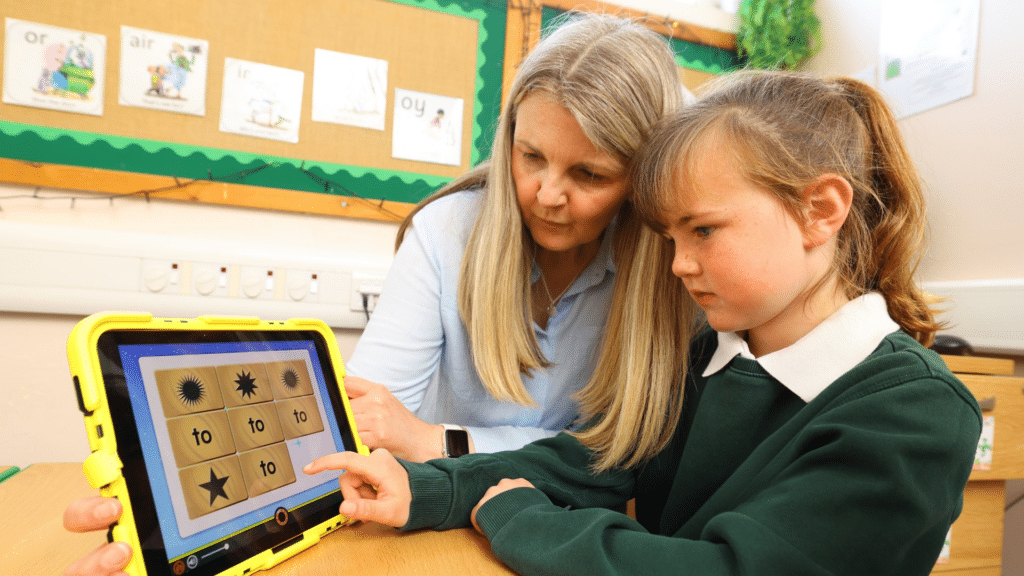
The DfE has set an ambitious target that 90% of Year 1 pupils meet the phonics screening benchmark. Schools are expected to adopt systematic synthetic phonics programmes, supported by up-to-date training and resources. For pupils at risk of falling behind, the government highlights early identification and intervention, alongside the expansion of the “Reading Ambition for All” professional development programme.
While promising, these measures may still require schools to adapt resources to ensure every child, including those with SEND, achieves mastery.
Lexia Core5 Reading helps schools translate these priorities into classroom impact. Its sequenced, adaptive pathways guide pupils from phonics through to fluent reading, reinforcing comprehension, vocabulary and automaticity.
For pupils needing extra support, Lexia delivers targeted, personalised practice, allowing early intervention. Teachers receive real-time data to track progress, pinpoint gaps and plan instruction efficiently, ensuring government priorities are realised.
At Key Stage 2, literacy challenges persist. In 2024, only 61% of pupils achieved the expected standard in reading, writing, and maths combined. Assessment approaches may not fully capture the breadth of literacy skills, particularly in writing.
What this could mean for schools:
The DfE acknowledges that mastering literacy foundations is essential. They desire greater clarity and specificity in English, particularly in speaking, listening and drama. Furthermore, a new oracy framework will be introduced. Grammar teaching will be reviewed to ensure it is taught in context rather than in isolation, and some complex concepts may be moved into KS3 to allow more time for mastery at primary level.
Lexia Core5 helps upper-primary pupils develop deeper comprehension, vocabulary, and critical thinking, while reinforcing grammar and composition skills in context. Its sequenced pathways support secondary transition, closing literacy gaps before Year 6 ends. Teachers benefit from real-time insights for personalised instruction, ensuring pupils achieve both fluency and depth regardless of curriculum change.
The Review emphasises that the system is “not working for all pupils”, with persistent gaps for disadvantaged learners and those with SEND.
The government supports inclusion and highlights the need for a rich, sequenced curriculum for all pupils, alongside resources and professional development. However, much of the responsibility remains with schools, and additional support may not reach every setting, particularly for pupils with more complex needs.
Lexia Core5 ensures all learners, including those with SEND, work at the right level through personalised, adaptive pathways. Pupils build confidence and literacy skills, while teachers receive actionable data to target support, bridging gaps even where broader system support is limited.
The Review and government response emphasise the importance of professional development focused on mastery, progression and inclusion. Schools may want to:
While the government sets the strategic direction, schools will need strong leadership, strategic planning and effective tools to deliver these outcomes.
The Curriculum and Assessment Review and government response provide a clear vision for literacy, but schools remain central to making it work in practice.
By prioritising mastery, comprehension, and reading for pleasure, schools can ensure pupils develop confidence, fluency, and lifelong reading habits. Lexia Core5 offers the structure, adaptive practice, and insights to help schools deliver this vision effectively, supporting teachers and learners every step of the way.

Backed by independent research and trusted by thousands of educators, our literacy programmes are research-proven.
Find out how we are helping schools to accelerate their literacy progress.
Keep up to date with the latest industry news from LexiaUK.

We are thrilled to publish the 2025 Data Report into the efficacy of Lexia Core5 Reading – our comprehensive, research proven literacy skills program aimed at KS1/2.
Our latest data report contains findings from the 2024/25 academic year, with a sample size of 600 schools that have implemented the program. Based on consistent, structured usage, we have found pupils achieving up to 17 months’ average reading progress.
Download the report today to see how Lexia Core5 can make an impact in your school.
Want to experience the impact of Lexia Core5 in your school? We’re offering a free 30-day evaluation for schools interested in seeing how Lexia Core5 can support their students’ literacy skills development.

Secondary schools face complex challenges, from growing academic pressures and stretched resources, to managing student wellbeing and behaviour. Among the most difficult to support are the pupils who appear disengaged from learning altogether.
These learners often arrive in Year 7 already on the back foot. They may have struggled throughout primary school, fallen behind in reading, and developed a deeply rooted belief that school isn’t a place where they can succeed. By the time they reach secondary education, their refusal to engage, especially with reading, isn’t just a behaviour issue. It is often a sign of a much deeper problem: significant gaps in literacy.
And when reading becomes a barrier, it limits access to every area of the curriculum. In effect, they’re shut out of learning before they’ve had a chance to catch up.
It is easy to label these pupils as ‘disruptive’ or ‘unmotivated’. But for many, what looks like defiance is actually a defence mechanism. For years, they’ve struggled with the foundational literacy skills needed to access schoolwork. They’ve experienced early failure, and often repeatedly, which chips away at their self-esteem.
By the time they arrive at secondary school, they’ve already learned ways to cope with the shame and frustration:
These aren’t pupils who won’t engage, they’re often pupils who can’t. After years in this cycle, they carry a mindset of disengagement with them into secondary school, believing that no matter how hard they try, success is out of reach.
To break this cycle, these learners need more than just good intentions and extra support. They need targeted, consistent, and compassionate intervention that tackles the root cause of their disengagement, their literacy gaps, while also rebuilding their confidence.
Re-engaging struggling readers in secondary school starts with creating the right environment, one that removes barriers, supports confidence, and allows learners to rebuild their skills at a pace that works for them. While the right technology can support this process, it’s the principles behind the approach that make the real difference.
Autonomy
Pupils who’ve struggled with reading often prefer to work independently, away from the pressure of performing in front of others. Giving them space to learn at their own pace, in a structured but self-guided way, helps reduce anxiety and gives them control over their progress. In practice, this might involve timetabled sessions using adaptive tools or online programmes, where pupils can quietly work through literacy tasks suited to their current level.
Quick Wins
When learners experience early success, however small, it builds momentum. Literacy interventions that focus on building blocks, such as decoding or sentence structure, can help pupils achieve small but meaningful progress quickly. Over time, these wins can start to shift a pupil’s mindset from “I can’t” to “Maybe I can.” Recognising these milestones, even informally, can go a long way in restoring confidence.
Low-Stakes, High-Impact Practice
Struggling readers may associate literacy tasks with failure, especially when they’ve had to repeatedly perform in high-pressure environments. Instead, regular opportunities for low-stakes practice, such as short, independent exercises with immediate feedback, can help reinforce skills without triggering fear of failure. Pupils benefit from being able to revisit and retry tasks without judgement, building fluency in a supportive way.
Bitesize Challenges
Literacy activities that are broken into manageable, skill-focused segments can make reading and writing feel more approachable. Many schools embed this approach into the day by offering short, structured literacy sessions. For example, during form time, as part of intervention periods, or in catch-up lessons. Keeping tasks concise helps reduce cognitive load and supports learners with lower attention spans or processing challenges.
Age-Appropriate Design
Engagement is closely tied to how relevant and respectful pupils find the content. For older students, intervention materials that feel too simplistic or “babyish” can be a significant barrier. It’s important that literacy tasks use age-appropriate language, themes, and visuals that reflect the interests and maturity of KS3 and KS4 learners. This helps ensure that pupils feel included and valued, rather than singled out.
Data to Inform, Not Overwhelm
Teachers supporting disengaged readers need timely insight into what’s working and where further support is needed, without adding to their workload. Digital tools that provide real-time data can support staff in identifying gaps, tracking progress, and offering timely intervention. This approach enables a more responsive and efficient use of staff time, helping schools reach the pupils who need the most targeted support.
Lexia PowerUp Literacy was developed specifically for struggling readers in secondary school. It’s not a one-size-fits-all programme, it adapts to each pupil’s needs across word study, grammar, and comprehension, filling in the foundational gaps that are holding them back.
What makes PowerUp different?
And crucially, it supports pupils in developing the skills they need not just to read, but to thrive across the curriculum.
If you’re seeing pupils switching off, acting out, or falling behind across the board, it’s time to look deeper. Disengagement is often not about attitude, it’s about ability. And for many pupils, that ability hinges on literacy.
By closing the literacy gap, we can unlock access to learning, restore confidence, and re-engage the pupils who’ve been left behind for too long.
Backed by independent research and trusted by thousands of educators, our literacy programmes are research-proven.
Find out how we are helping schools to accelerate their literacy progress.
Keep up to date with the latest industry news from LexiaUK.

The Education Endowment Foundation (EEF) recently commissioned a large-scale, randomised controlled trial to test the impact of Lexia® Core5® Reading with groups of Year 2 pupils across multiple regions of England.
With a high evidence security rating, and the intervention deemed very low cost to implement, the trial provides trusted, independent insight into the role of adaptive technology in supporting reading development.
Download the free summary PDF to discover the study’s design, key findings and what teachers said about using Core5 in their classrooms.
Time is one of the rarest resources in education. Between teaching, supporting in class and or leading interventions, there’s often little space left in the week to dive into data. Yet, those insights are key to understanding pupil needs and planning next steps.
That’s why myLexia is designed to work with your workflow, not add to it. With just a few minutes each week, it can help highlight where to focus, who needs support and how best to use your time and resources.
To help you make the most of it, our Literacy Impact Coaches have shared three of their top tips, drawn from hundreds of conversations with teachers across the country.
Rather than saving everything up for an end-of-term review, taking five minutes a week to check myLexia can give you a clear sense of how things are going and where your time can make the biggest difference.
The Action Plan tab is particularly useful. It automatically organises pupils into helpful groups, helping you to quickly answer questions like:
This quick snapshot makes it easy to act early and positively.
“We always say: small, consistent check-ins win the race. Even just five minutes in the Action Plan tab can help you catch issues early, or recognise when a pupil is ready to be challenged further.”
– Denise, Literacy Impact Coach
When time is tight, class-level reports offer a quick and efficient way to check in on your whole cohort. You’ll find these reports to the right of the Class Overview screen in myLexia – just a couple of clicks, and you have a full picture of progress and usage at your fingertips.
Start with the Usage Report, which looks slightly different depending on whether you’re using Core5 or PowerUp:
Once you’ve reviewed usage, the Skills Progress Report can give further insight into overall progress. Look at the units gained column on the right-hand side of the report. By sorting pupils from most to least units gained, you can quickly see who’s making strong progress and who might benefit from additional support.
“Class-level reports give you a smart starting point. Sorting by units gained lets you spot patterns across the group and highlight any pupils who might otherwise slip under the radar.”
– Michael, Literacy Impact Coach
Paper-based resources like Skill Builders and Lesson Plans can be a valuable part of supporting pupils, but they’re most effective and time-efficient, when used at the right moment. Instead of printing packs for every pupil, use individual pupil data in myLexia to decide where these resources will have the most impact.
Here’s how to approach it:
This report provides a detailed breakdown of each pupil’s performance within a unit.
Within the same report, you can also see the number of attempts a pupil has made on each step in a unit by clicking into the level name, this will open the Detailed Skill Report.
In many cases, you can act even earlier. If you notice a pupil struggling after just a few attempts on a step, try offering brief, over-the-shoulder support. A short check-in or prompt while they’re working independently can often help them move past the barrier without the need for a full lesson plan.
“Skill Builders and Lesson Plans are brilliant when used with purpose. By checking just one or two key indicators, you can be confident that your support is timely, targeted and not adding to your workload unnecessarily.”
– Mark, Literacy Impact Coach
When used purposefully, myLexia can help you stay one step ahead without spending hours on admin or analysis. By setting aside just a few minutes each week to check in, you can spot issues early, celebrate progress and direct your support where it’s needed most.
Small, consistent actions, like reviewing usage patterns, sorting pupils by progress or checking skill-level data, can have a big impact on outcomes. Most importantly, they allow you to spend less time working out what to do and more time doing what works.
Remember that you are not alone. Our Literacy Impact Coaches are here to help you interpret your data, plan next steps and ensure Lexia is working as hard as possible for your pupils and your team.
If you’d like support with implementation, training or getting more from myLexia, we’re ready to help.
Contact Us to book an Online Review & Support Session to talk through your school’s data and next steps with a member of our team. These sessions are included as part of your Lexia subscription so there’s no extra cost.
Backed by independent research and trusted by thousands of educators, our literacy programmes are research-proven.
Find out how we are helping schools to accelerate their literacy progress.
Keep up to date with the latest industry news from LexiaUK.

The start of a new school year is brimming with opportunity. Fresh books, sharpened pencils and new opportunities for every learner. But the first term is more than just a settling-in period. It represents a critical window to identify and close literacy gaps before they widen, impacting confidence, motivation, and long-term success.
From teaching phonics and early reading strategies in Year 1 to supporting Year 7s as they navigate more complex secondary texts, acting early is crucial. Here’s why.
Research consistently shows that timely intervention is one of the most effective ways to support struggling readers. The Education Endowment Foundation (EEF) highlights that early literacy approaches deliver, on average, an additional four months’ progress (Education Endowment Foundation, 2023). Meanwhile, Ofsted (2022) stresses that “reading is the key to unlocking the curriculum,” urging schools not to delay support.
Catch issues early, and pupils are more likely to stay engaged and motivated. Miss that window, and literacy fatigue can set in: the demoralising sense of always being behind. By autumn half-term, gaps that might have been closed with targeted support can start to feel entrenched, leading to a cycle of avoidance and low confidence.
In primary classrooms, the early signs of reading gaps often appear as issues with decoding and fluency. Many teachers tell us that as texts grow more complex in Key Stage 2, children who once managed simpler books start to struggle, leading to a noticeable drop in comprehension and enthusiasm. Schools often report that it’s common to see some Year 3 pupils who can sound out words accurately but still lack the fluency to keep pace, and who begin to shy away from reading tasks as a result.
In secondary schools, the challenges for pupils with reading difficulties often become even more pronounced. Many schools tell us they see new Year 7s arriving with gaps that were manageable in primary but now hold them back across the curriculum. Limited vocabulary, weak inference skills, and poor reading stamina make it hard to tackle the dense, subject-specific texts that secondary learning demands. Pupils who struggled to keep up with reading in primary often find these demands overwhelming, impacting not just English, but their ability to access science, history, and even problem-solving in maths.
Delaying targeted reading support until later in the year can have far-reaching consequences for pupils and for schools. By the time gaps are fully recognised in the spring term, they’ve often widened considerably. Struggling readers may have spent months masking difficulties, losing confidence, and quietly disengaging. Meanwhile, the pace of the curriculum continues, widening the gap between those who read fluently and those who are still grappling with the basics.
This isn’t just about literacy lessons. When pupils lack the reading skills to access age-appropriate texts, it places a barrier across every subject. Left unaddressed, small gaps in September can become entrenched barriers by June, impacting progress, self-esteem, and long-term outcomes.
Many schools find that “catching up by Christmas” is far more realistic than trying to close extensive gaps from scratch in the spring or summer. Early intervention not only lifts reading ability but also rebuilds pupils’ belief in themselves as learners. The earlier schools act, the more time pupils have to develop fluency, deepen comprehension, and engage fully with the curriculum.
Fortunately, there are effective, evidence-based tools available that help teachers respond quickly and efficiently, providing targeted support exactly where it’s needed, without adding to workload.
In today’s busy school environment, literacy interventions need to be both effective and manageable for teachers. The best approaches provide timely insights into each pupil’s reading skills, allowing staff to tailor support without adding unnecessary workload.
Adaptive programmes that automatically assess learners’ strengths and areas for development can be particularly valuable. They reduce the need for lengthy baseline testing and make it easier to group pupils according to their specific needs. Built-in differentiation helps ensure that every child receives appropriate challenge and support, while engaging activities maintain motivation and build essential reading skills.
At secondary level, supporting vocabulary development, inference skills, and reading stamina is crucial for pupils transitioning from primary school. Interventions that offer personalised learning pathways and clear progress data help teachers focus on the areas that will make the biggest difference for each student, while integrating smoothly into existing teaching routines.
By using tools that combine adaptability, clear data, and ease of use, schools can respond quickly to emerging literacy needs. This not only helps close gaps early but also supports sustainable, whole-school approaches to improving reading outcomes.
School leaders aiming to close reading gaps early can take decisive, practical steps immediately. Here’s how to get started:
Taking these steps positions your school to act swiftly and strategically, closing gaps early, boosting pupil confidence, and ultimately raising attainment across the curriculum. With the right tools and a clear plan, you can make this critical start to the academic year your most impactful yet.
Ofsted (2022) ‘Now the whole school is reading’: supporting struggling readers in secondary school.
Education Endowment Foundation (EEF) (2023) Early literacy approaches. Early Years Toolkit.
Backed by independent research and trusted by thousands of educators, our literacy programmes are research-proven.
Find out how we are helping schools to accelerate their literacy progress.
Keep up to date with the latest industry news from LexiaUK.

The Lexia® team are dedicated to evolving our literacy programmes to meet the needs of today’s educators and learners. This year’s new enhancements will deliver even more effective, engaging, and accessible learning experiences.
Core5 is an adaptive literacy program that accelerates the development of literacy skills for all students from Reception to Year 6. It supports reading success by helping students with both word recognition and comprehension.
Enhanced Autoplacement Experience
To create a more supportive experience we’ve added engaging new visuals and audio, such as enhanced Language Support. This now plays before and after the competition of placement, so the learner knows what to expect when working through the programme.
Data-Driven Updates to Skills Checks
Skill Checks have been refined using data-driven insights, boosting student engagement while preserving assessment accuracy.
Audio Updates to Passage Fluency Units
The updated intro and directional audio in Passage Fluency activities provide clear guidance and a more immersive experience for learners.
Core5 Instructional Resources: Empowering Educators and Learners
The Comprehension and Vocabulary Lexia Lessons® have been updated with a new format that aligns with the science of reading and research-based best practices. Core5 Digital Lexia Lessons for Phonological Awareness, Fluency, and Phonics also now reflect these changes.
We’ve expanded language accessibility with the addition of Bengali translations for several key caregiver materials, including the General Achievement Certificate and General Home Use Letter, ensuring more families can stay informed and engaged.
Core5 Accessibility Enhancements
Recent enhancements to Core5 strengthen alignment with Web Content Accessibility Guidelines (WCAG), making the program increasingly accessible, inclusive, and user- friendly for all learners. Updates include:
PowerUp is designed specifically for students in Years 7 to 11 who need support with literacy to fully access the wider secondary curriculum. The program focuses on accelerating literacy gains through an personalised learning experience that enhances reading, writing, and comprehension skills. PowerUp enables students to make multiple years of growth in a single academic year.
New: Units Goals
PowerUp students now have weekly Unit Goals that display directly on the Home Screen. Each strand card features a progress meter showing how many units the student has completed during the week, along with their weekly time goal.
Each strand has its own specific unit goal, balancing achievability and progress, with these resetting at the start of each week. Students are encouraged to meet, and exceed, their unit goals on their way to improving their reading proficiency.
Flexible Strand Management Option
Educators have the ability to turn off automatic strand management, ensuring all learning units remain active even after students meet their weekly usage goals. This flexibility supports a wider range of instructional models and implementation strategies.
Boosting Student Engagement
PowerUp introduces the following exciting new features designed to create a more engaging, efficient, and motivating experience for students.
Engaging Content and Stronger Vocabulary Support
As part of PowerUp’s ongoing commitment to delivering research-driven, student-centred literacy instruction, we’ve made the following updates to strengthen comprehension and vocabulary support across the program:
myLexia is a platform and reporting tool designed to support educators using Lexia’s Core5 and PowerUp. The platform provides real-time student performance data, allowing teachers to monitor individual and classroom progress while equipping school leaders with progress and usage monitoring tools.
Usability Improvements for Educators in myLexia
Core5-Specific Enhancements in myLexia
See When Core5 Students Were Flagged for Instruction
In the Core5 Needs Instruction tab of the Class Action Plan, educators can now view the date each student was flagged. This added detail helps educators more effectively prioritise and plan timely interventions.
PowerUp-Specific Enhancements in myLexia
PowerUp Unit Goals and Usage Report Enhancements
Weekly unit goals have been added for students using PowerUp. Educators can now monitor student progress toward these goals in the Class Usage Report within myLexia. To support this, we’ve improved the report layout, making it easier to find key information at a glance. Updates include a clearer display of student usage and unit progress, now organised by strand.


A structured and adaptive literacy programme for primary schools. Developing reading skills from phonological awareness and phonics to SATS-ready comprehension skills. One solution – perfect for reading intervention in schools to support and encourage pupils of all ages and abilities.


Bridging the gap from learning to read, to reading to learn – building missed early skills and advancing literacy for GCSE readiness and secondary school success


myLexia™ is your educator dashboard – designed to enhance literacy instruction through data-driven insights and personalised support. Built to work seamlessly with Lexia’s literacy programmes. With features like Assessment Without Testing® and a rich Resource Hub, myLexia helps schools save planning time, close learning gaps, and elevate student outcomes.