Proven Results
Backed by independent research and trusted by thousands of educators, our literacy programmes are research-proven.



It’s awards season! Over the next term, we’re celebrating The Lexia Awards, recognising the pupils, classes and educators who are delivering exceptional Lexia progress this year!
We are looking to shine a light on outstanding individual progress, creative classroom routines, dedicated Lexia Coordinators and whole-school achievement, so there are lots of ways to celebrate the impact of Lexia in your school.
This is your chance to nominate those who go above and beyond. Awards categories include:
For Learners:
For Educators and Schools:

Nominating is quick and easy, simply use the form link below to celebrate Lexia achievements in your school. Winners will receive book vouchers, certificates and digital badges, plus a special place in our Lexia community spotlight!

Ensuring that every child develops confident reading skills is a priority for primary schools, yet pupils with special educations needs and disabilities (SEND) often face additional barriers to literacy.
For SENDCOs and school leaders, providing effective reading intervention requires a strategic, evidence-based approach that addresses diverse learning needs while working within the realities of curriculum demands and resource constraints.
Literacy for All: Strategies for Primary Pupils with SEND is a practical guide designed to support educators in implementing inclusive, research-informed literacy strategies. It explores key approaches to improving reading outcomes for SEND learners, with a focus on adaptive instruction, targeted support, and data-driven decision-making.
This guide will help you:
By embedding these approaches into literacy provision, schools can take meaningful steps towards closing the attainment gap and ensuring equitable access to reading development.

Want to experience the impact of Lexia Core5 in your school? We’re offering a free 30-day evaluation for schools interested in seeing how Lexia Core5 can support their students’ literacy skills development.
Simply fill out the form below to enquire about a 30-day evaluation of Lexia Core5 Reading.

Reading remains one of the most powerful gateways to learning, wellbeing and future opportunity. It is no surprise, then, that literacy continues to sit high on the national agenda. With initiatives such as the National Literacy Trusts’ National Year of Reading, there is renewed focus on ensuring all young people develop the reading skills they need to thrive, both in school and beyond.
For secondary schools, this challenge is particularly complex. Each year, pupils arrive from a wide range of primary settings with hugely varied experiences, abilities and needs. Some students transition confidently into the demands of the secondary curriculum, while others struggle to access subject content because of underlying literacy difficulties that may not be immediately visible.
To identify pupils who need support, most secondary schools already undertake some form of standardised reading assessment. Reading age is by far the most commonly used measure, offering a quick snapshot of attainment. However, once schools have this data, a familiar question often follows: What can we actually do with it?
In this article, we explore why many secondary educators find Reading Age data difficult to act on and what can be done instead to gain a clearer, more useful picture of pupils’ reading ability, one that genuinely informs teaching and interventions.
Reading Age scores are popular because they appear simple and concrete. They allow for easy comparison between students and can quickly highlight those reading below their chronological age. In busy secondary settings, this clarity can feel reassuring.
But reading is far more complex than a single number suggests. It is not one skill that can be neatly captured by one data point.
The Simple View of Reading provides a helpful framework here. It explains that reading comprehension, the ultimate goal of reading, is the product of two broad skill sets: Word Recognition and Language Comprehension. Both are essential, and weakness in either can significantly limit a pupil’s ability to understand text.
Dig a little deeper, and each of these areas breaks down further into more specific component skills. These include phonemic awareness, phonics, reading fluency, vocabulary, background knowledge, inference and other comprehension strategies. Together, these skills enable pupils to become fluent, confident, curriculum-ready readers.
Reading Age assessments rarely allow teachers to explore these components in enough detail. While a score may tell us that a pupil is reading below expectations, it does not explain why. Is the difficulty rooted in decoding? Slow or inaccurate fluency? Limited vocabulary? Weak comprehension strategies? Many assessments focus heavily on a pupil’s functional ability to read words, rather than their deeper understanding of meaning, structure and purpose. Without this insight, it becomes challenging to plan effective support.
There are also broader limitations to consider. Reading Age scores can imply that there is a single ‘normal’ level of reading for each age, when in reality, there is a wide and natural range of ability, particularly in adolescence.
Finally, an over-reliance on Reading Age can unintentionally affect pupils’ confidence and engagement. Labelling texts (or pupils) by age can limit book choice, discourage risk-taking and undermine motivation to engage with a wider range of challenging and interesting material.

Backed by independent research and trusted by thousands of educators, our literacy programmes are research-proven.

Find out how we are helping schools to accelerate their literacy progress.

Keep up to date with the latest industry news from LexiaUK.
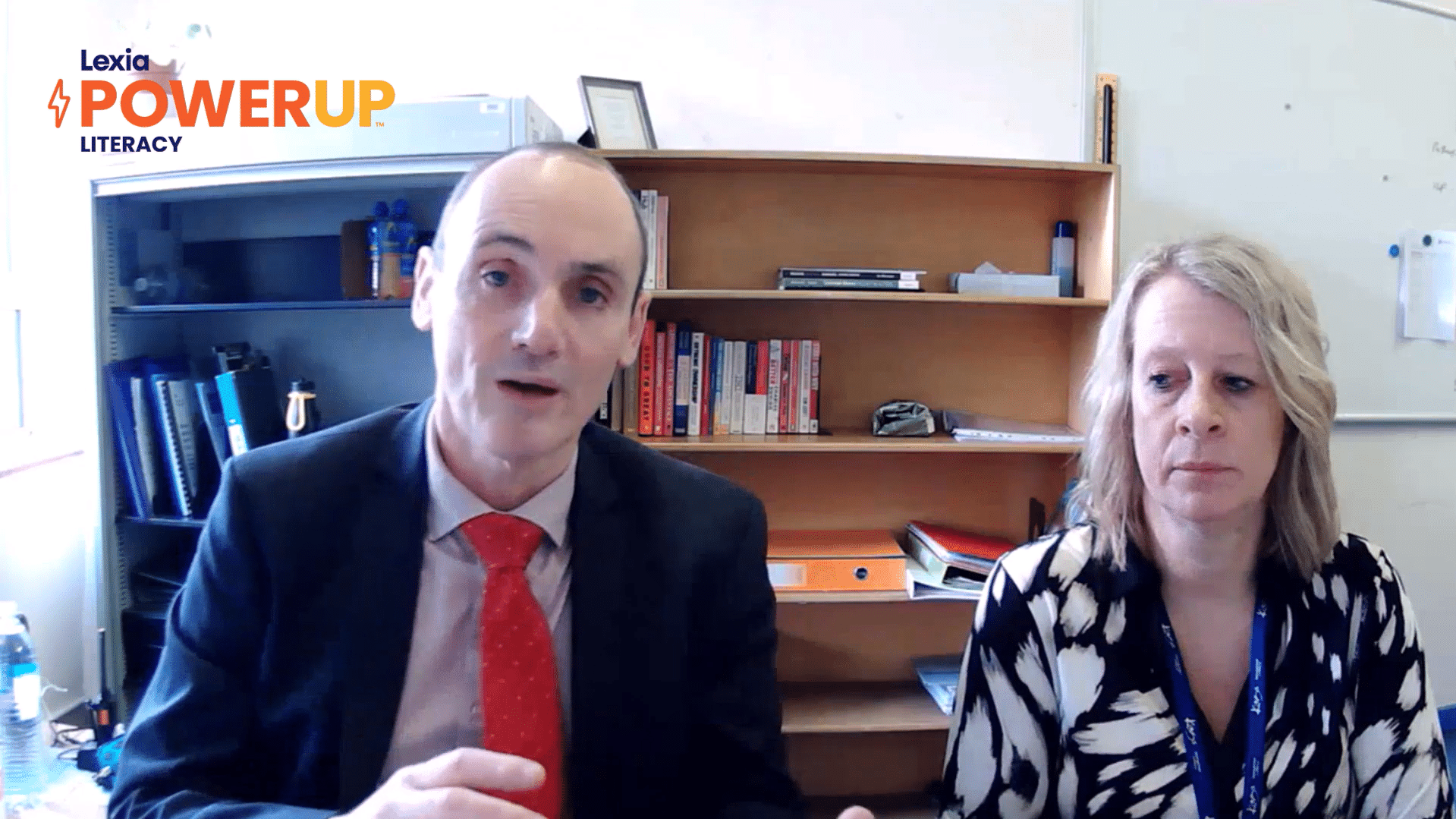
We spoke to Martin Byrne and Jo Stevenson at Kings International College. A non-selective secondary school, Kings International College have been a Lexia customer for over 6 years. Martin and Jo share with us how they implement PowerUp Literacy across a broad student cohort, share myLexia reports with concerned parents and keep students motivated on the programme.
Martin: I know in the early stages; we weren’t using Lexia effectively. I think during that time it was used for very small, group SEN interventions only. Part of the challenge for us is that we didn’t have a very robust set to cohort level reading age data. As our use of Lexia started to develop we became better at benchmarking and assessing the whole school literacy in our incoming cohorts. Once we understood it more, we began to recognise the great value it provided in our interventions. We started on a small scale, felt the impact, and felt like it was worth investing in.
Jo: We use the NGRT to initially assess the student’s reading age in Year 7, and regularly as they progress through Key Stage 3. We use that to determine what type of intervention they need. Obviously, we’re looking directly at students that need support with the relevant lexia strands of Word Study, Grammar and Comprehension. Once we’ve determined those students, I then run 3x 50-minute sessions with those students in a classroom. This usually goes on for a ter.
Martin: The actual selection of student we vary on the intake. We look at a combination of the NGRT data, standardised reading score and a difference between chronological reading age and reading age. This identifies a gap. Depending on how many student we’ve got in different cohorts, typically we’ll classify students’ literacy abilities as “wave one” in a similar way we would with SEND.
Wave one are students that can access the curriculum and are at their reading age. Wave two are between 18 months and 2 years below their chronological age and here is where Lexia intervention begins. Finally, wave three is where there is a much bigger gap, and we use Lexia here amongst other literacy interventions. Lexia we find gets students on track quickly. We use Lexia to arrest the narrow gaps.
Martin: It’s impactful, it’s evidence-based and it has built in diagnostic tools that help track student progress. The reports get quite granular in terms of student engagement, what progress they’re making, and what areas they need to target to make meaningful improvement. Lexia isn’t a broad-brush approach. Once you’ve got students on this intervention, it’s tailored to their individual need.
Jo: The ability to pick out individual needs and how they need to be addressed. The myLexia reports are absolutely invaluable. Every Friday I run reports on each individual student, and this allows us to monitor students on an ongoing basis and have these conversations of “you need help in this area i.e. comprehension”
Martin: I’ve found that we see less anxiety about attending lessons, more willingness to engage and really give it a go in mainstream lessons once the students return from the intervention. There is less regression and backsliding too, year on year the data comes through and we find that once a student has been through Lexia they hold ground better than they did with other previous interventions.
Jo: It’s the increase in confidence too. For example, I was in a lesson the other day that involved reading aloud, and one of the last year’s Lexia cohort had the confidence to stand up and read aloud. Sometimes this gets lost in you’re only looking at the data, but to see it in practice that they have increased confidence in the classroom is really good to see.
Jo: I think with this it’s important to start with the context of when they start on Lexia. Often the students are quite concerned – “Oh does this mean I have low reading ability” – so that knocks their confidence a little. The Year 11’s I’m working with now started Lexia when they were in Year 8, and some of them begrudgingly admit that “Yes Lexia did have an impact, and it was worthwhile”!
Martin: When the student has been through the Lexia programme, and the programme has been delivered with integrity, then it has lasting impact. There are a lot of variables that affect educational outcomes, and a lot of barriers. In our school, Lexia removes on of our barriers. What stands out about the students on Lexia is that there isn’t really a standout. The become the standard.
Jo: As part of our school award system, we have achievement points, and when students on Lexia hit their targets then they receive an achievement point. What we’re careful to do is avoid only rewarding those students that have completed the most work, because quite often we find that lower ability students may have only completed a few units a week. We look more for if time has been well spent on Lexia and reward that instead, so we like to reward effort as well as achievement.
Motivation changes from year group to year group too. The Year 7’s really like the more gamified aspects and the streaks and comparing who has done the most work. They’re very eager to know if they’ve made the most progress! We have a boy at the moment that has a streak of 1200!
We have other rewards too; it’s a silly thing but having my chair, the teachers chair, is rewarded to the student that I feel has made the most effort that session!
Jo: In terms of informing planning, the autoplacement at the beginning of the Lexia process is invaluable. All of the planning at early stages is built around that feature. It allows us to easily see what we’re dealing with.
The reports are great for feedback for parents too. We find that parents tend to get quite interested when they’re told their child is being given literacy intervention, and voice concern of “Oh gosh, I wasn’t aware there was an issue!”. We can then use the data in the reports to reassure them that we’re doing 100% of what we can for their child and show them their progress as the student moves through Lexia. It helps us to establish a relationship with the parent that feels more like a team.
Martin: What we’ve learned over the past six years, and the past three years of implementing the programme impactfully, is that it’s vital to get your student selection correct. Your Lexia cohort needs to be based on rigorous data. This is key.
We look not only at reading gaps, but attendance too. In secondary schools you need to be asking the question “Are they actually going to turn up and be present, or will we just be wasting our resources?”. Sometimes that is a hard call to make, but we have learned through experience over the years that it is necessary.
Lexia implementation staff do advise what works, and how to implement the course effectively. With any intervention there is a cost implication, be staffing or time. Trying to deliver Lexia without dedicated, well-trained staff will not deliver the full impact that the programme can have – that is recognised by the EEF.
I think that for any school leadership out there thinking about trying Lexia, I would recommend that you take the hit, invest financially in staffing and protect the time in the school day for it. If you ensure this from the beginning, then in pays dividends.

Engaging reluctant readers in Key Stage 2 can feel like an ongoing challenge. Many pupils approach longer texts with hesitation, lack confidence when faced with unfamiliar vocabulary, or struggle to retain key information. Yet strong comprehension skills are essential, not only for reading success, but for accessing the full curriculum and achieving their potential in SATs examinations.
To support teachers in building confidence, motivation, and mastery for every learner, we’ve put together ten practical, classroom-ready comprehension activities. These approaches offer structure, repetition and visual scaffolds to help even the most reluctant readers engage meaningfully with texts.
To make things even easier, we’ve created a free downloadable KS2 Comprehension Activity Pack, featuring sample passages at a range of ability levels and accompanying tasks to build comprehension and writing skills.
A simple and highly effective structure for supporting focus and independence.
This framework helps pupils develop the habits of active, reflective reading.
Provide pupils with:
Students match them up or create new examples. This builds crucial exam readiness and helps reluctant readers feel more prepared for SATs question wording.
Write the key plot points of a text on separate cards.
After reading, pupils organise them into the correct sequence.
This offers a hands-on way to support working memory and reinforces the sequencing skills often assessed in SATs questions.
Use a simple thermometer visual to show a character’s emotional intensity.
Pupils justify the character’s position using evidence from the text. A great scaffold for inference and emotional literacy.
Give pupils a short non-fiction text and a checklist of features to locate, such as:
This develops pupils’ understanding of text structure and prepares them for non-fiction comprehension tasks across subjects
Present a set of cards showing author intentions such as to inform, to persuade, to entertain, or to build tension.
Pupils choose the most appropriate intention and justify their choice. The repetition builds confidence and helps reluctant readers quickly recognise common text purposes.
Turn retrieval and inference into a fun detective challenge! Provide magnifying glass cut-outs or “evidence badges” alongside comprehension texts and questions and ask pupils to:
This reinforces systematic, structured thinking.
Pupils write their own SATs-style comprehension questions about a text, swap with a partner, and answer each other’s.
This encourages metacognition, deepens understanding and builds familiarity with common question formats.
After reading an extract, pupils create a 4–6 frame comic strip summarising the key events.
The visual nature of the task makes it particularly supportive for reluctant readers and helps solidify sequencing and summarisation skills.
Provide a range of emoji cards and ask pupils to choose those that best match:
Pupils then justify their choices using clues from the text. This low-barrier activity offers an accessible entry point into inference.
To help you put these ideas into practice, we’ve created a free downloadable comprehension pack. It includes:

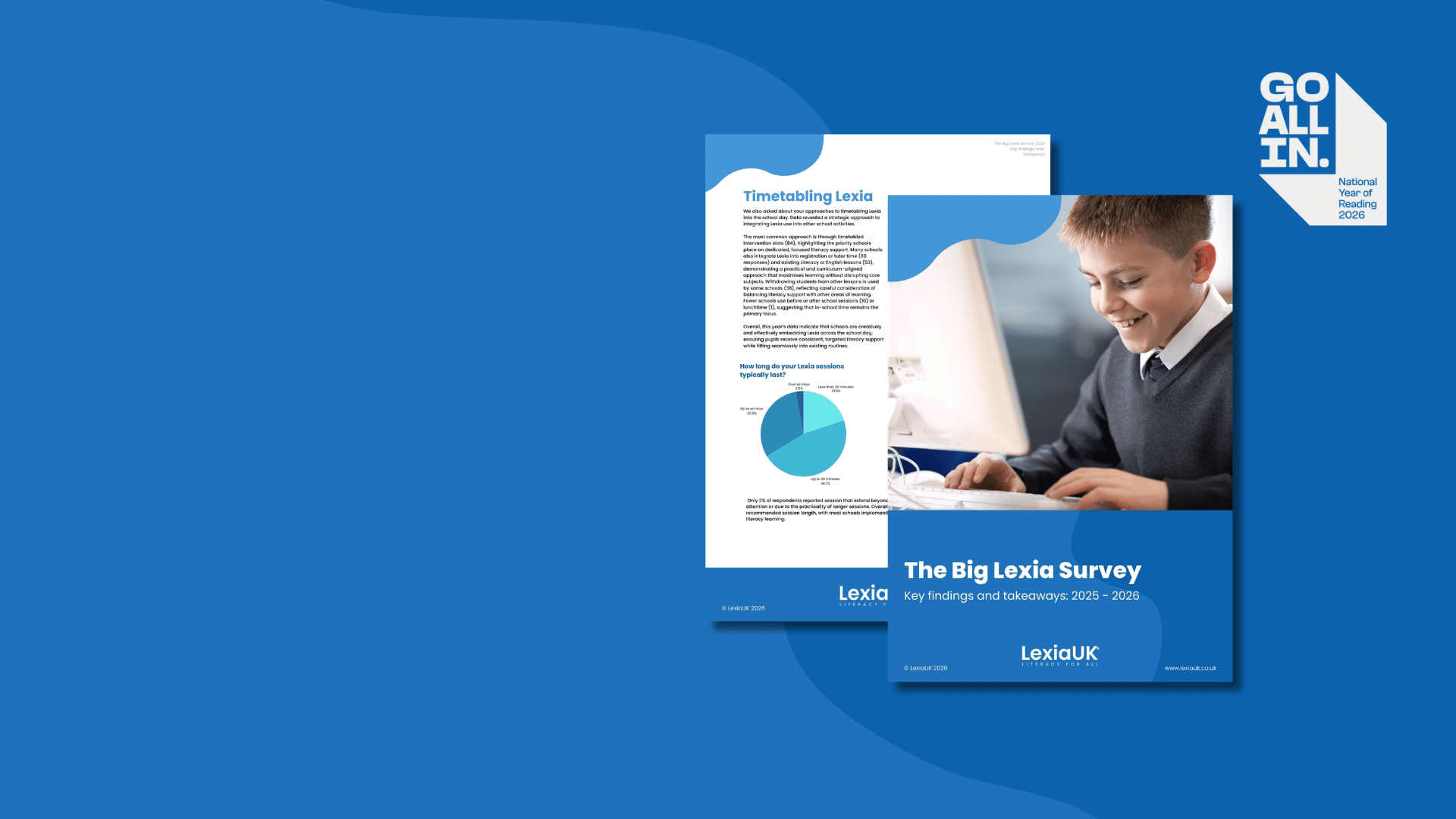
It’s a question we hear often from schools looking to maximise their impact on reading.
During the National Year of Reading, it feels like the perfect time to ask a wider question too:
How are schools supporting reading and what challenges are they facing along the way?
That’s why we’d love to hear from you.
Take part in The Big Lexia Survey 2026 and help us better understand how reading is being supported in your school, how Lexia fits within that approach and where the biggest pressures and priorities lie. From targeting and timetabling to tracking progress and overcoming reading barriers, we’re keen to learn what’s working well and where you’d value more support.
In return, you’ll be entered into our prize draw to win £250 of National Book Tokens for your school library.
Your feedback will help shape future resources, guidance and support, ensuring Lexia continues to support schools effectively during the National Year of Reading and beyond.
Click below to take part. It only takes 15 minutes, but your insights will make a lasting impact.
To Enter, participants must:
Backed by independent research and trusted by thousands of educators, our literacy programmes are research-proven.
Find out how we are helping schools to accelerate their literacy progress.
Keep up to date with the latest industry news from LexiaUK.

Reading engagement plays a vital role in nurturing a lifelong love of learning and supporting literacy development across school. By focusing on the factors that spark intrinsic motivation, we can better understand how to encourage active engagement in the learning process and help pupils become confident, motivated readers.
Research has consistently shown that students who are deeply engaged in their own learning not only adapt better to the classroom environment but also perform significantly higher academically. Fredricks, Blumenfeld, & Paris (2004) highlight the pivotal role of internal motivation in successful learning, emphasising the need for students to be both motivated by and deeply engaged in their educational journey.
Before we can develop strategies for motivating our students, we must first understand that not all strategies are created equal. One common way in which motivational strategies are categorised is intrinsic and extrinsic motivation. Intrinsic motivation refers to motivation that comes from within the student such as the activity being personally rewarding or enjoyable, while extrinsic motivation may come from factors such as an external reward scheme or incentives.
Delving into the debate of intrinsic versus extrinsic motivation, a meta-analysis of over 100 studies by Deci et al. (1999) revealed that intrinsic motivation is correlated with higher levels of effort, satisfaction, and learning. But how can we inspire intrinsic motivation in our students?
Pillars of intrinsically motivated behaviour include:
How can we guide our students towards intrinsic motivation when engaging with the Lexia program? Here are some different ways that you can employ these key drivers of intrinsic motivation in your Lexia sessions:
To ensure a holistic approach to fostering Autonomy, Competence, and Relatedness, consider creating a Lexia Engagement Plan for your school to ensure that these strategies are tailored to your unique environment. Follow the steps below to begin:
By implementing these strategies, your school can unlock the full potential of Lexia programs, creating an environment where students are not only motivated but deeply engaged in their learning journey. If you require any support in developing your Implementation Plan for Lexia, get in touch with our knowledgeable and friendly Customer Care team.
"*" indicates required fields

For reading and literacy, particularly for pupils who may face barriers to learning, these changes bring renewed attention to how consistently and effectively schools support progress. While the framework continues to evolve in response to feedback from the sector, one thing remains clear: strong, joined-up literacy provision is essential for ensuring all pupils can access the curriculum.
This blog offers a clear overview of the reforms now in place and provides practical strategies to help your staff and wider literacy provision feel confident and well-prepared for the months ahead.
From December 2025, all routine school inspections transitioned to the updated Education Inspection Framework (EIF). Key developments affecting reading include:
Schools are no longer defined by a single headline judgement. Instead, each setting receives:
This more detailed approach gives leaders richer feedback, but it also means inspectors are looking more closely at the quality and consistency of provision.

ding and literacy now contributes evidence across multiple areas, most notably:
Because reading and literacy underpins curriculum access, practices in this one area now influences outcomes in several parts of the report card.
The scale is designed to recognise sustained excellence and identify improvement needs more transparently:
The expected standard reflects effective, consistent teaching aligned with statutory guidance. Most schools are likely to sit between expected and strong.
The introduction of a standalone Inclusion evaluation area signals a national commitment to addressing gaps in attainment and curriculum access. Inspectors are paying close attention to:
With reading and literacy threaded throughout the new evaluation areas, leaders have a clear opportunity to make literacy a central strength of their school. Strong literacy provision directly impacts Curriculum and Teaching, by ensuring pupils can access lessons across all subjects; Achievement, by supporting measurable progress in reading and comprehension; and Inclusion, by addressing barriers faced by disadvantaged or SEND pupils. In practice, inspectors will look at how well reading is taught and supported, how gaps are identified and addressed and how all pupils are supported to make meaningful progress, making literacy a key factor in multiple aspects of a school’s report card.
Inspectors are looking for:
Inconsistency between classes or phases will be more visible under the new toolkit.

Because outcomes are reported across multiple categories, leaders need:
Being able to talk confidently about how your pupils are reading and how quickly they improve supports several inspection areas at once.
The new framework also recognises teacher workload and wellbeing. Approaches to literacy need to be:
Teacher confidence is a key part of demonstrating a strong standard. When staff know what to prioritise, pupils benefit and inspectors notice.
While digital tools are not always required, many schools are now turning to technology to help manage the increased emphasis on evidence, early identification and targeted support.
Technology can help by:
Used thoughtfully, technology enhances teacher effectiveness and ensures pupils receive consistent, well-targeted support.
The new Ofsted framework introduces more detailed reporting and new evaluation areas, but the fundamentals remain consistent: clear, structured reading provision supports pupil progress, including for disadvantaged learners.
Focusing on reliable routines, targeted early identification, and consistent teaching allows schools to manage inspection expectations effectively. The reforms provide a framework to demonstrate the quality and consistency of your reading provision and the practical impact of your teaching and support.
Backed by independent research and trusted by thousands of educators, our literacy programmes are research-proven.
Find out how we are helping schools to accelerate their literacy progress.
Keep up to date with the latest industry news from LexiaUK.

Building strong phonics skills is essential not only for passing the check but for fostering confident, independent readers.
Here, we’ve gathered a range of tried-and-tested phonics activities designed to support sound recognition, blending, segmenting and spelling, all while keeping learning fun and interactive. Plus, we’ve included a free phonics tracker template to help you monitor pupils’ progress and plan targeted support.
Helping pupils identify and blend sounds is a crucial step in developing early reading skills. Try these activities in your classroom:
Sound-to-Letter Matching: Use flashcards of letters and sounds. Pupils match the correct sound to the letter or digraph.
Sound Boxes (Elkonin Boxes): Pupils segment words into individual phonemes by placing counters or tokens in boxes as they say each sound.
Robot Talk: Teachers say words slowly, separating the phonemes (e.g., /c/ /a/ /t/), and pupils blend them to read the word.
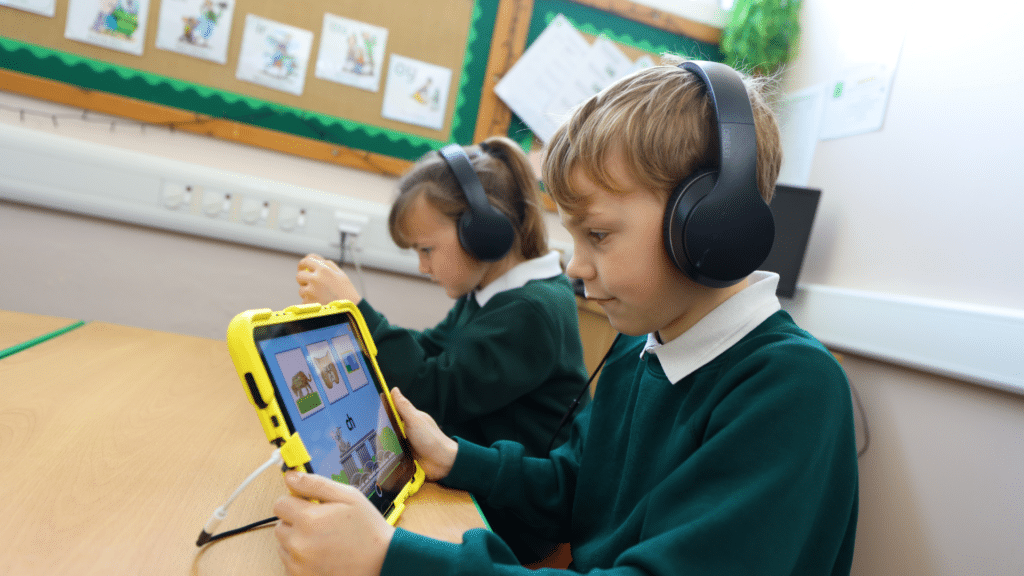
Once pupils can hear and blend sounds, segmenting and spelling helps solidify their understanding:
Segment and Spell: Pupils hear a word, segment the phonemes and write each sound in order.
Sound Swap Games: Pupils use letter tiles to change a phoneme in a word to create a new word (e.g., swap /c/ in “cat” with /h/ → “hat”).
Word Ladders: Start with one word, pupils change one sound at a time to make a new word and see how high they can make their word latter!
Once pupils can hear and blend sounds, segmenting and spelling helps solidify their understanding:
Segment and Spell: Pupils hear a word, segment the phonemes and write each sound in order.
Sound Swap Games: Pupils use letter tiles to change a phoneme in a word to create a new word (e.g., swap /c/ in “cat” with /h/ → “hat”).
Word Ladders: Start with one word, pupils change one sound at a time to make a new word and see how high they can make their word latter!
Make phonics practice more interactive with games that focus on graphemes and phonemes:
Phonics Snap: Pupils play snap with cards showing graphemes or words.
Phoneme Fishing: Pupils “fish” for words or letters that match a particular phoneme.
Odd-One-Out: Pupils listen to or read a set of words and identify the word that doesn’t share the target phoneme.
The phonics screening check includes ‘alien’ or nonsense words, so it’s essential pupils are comfortable reading unfamiliar words:
Alien Word Games: Pupils read nonsense words aloud to find out the name of the alien, use visuals like “alien characters” to make it fun.
Alien Word Sorting: Pupils sort nonsense words by phoneme or spelling pattern.
Developing pupils’ listening skills ensures they can discriminate between similar sounds:
Phoneme Spotting: Pupils listen to a sentence and identify the target sound.
Odd Sound Out: Pupils hear three words and identify the one with a different initial, medial, or final sound.
Sound Detective: Pupils distinguish between words that differ by only one sound (e.g., “pin” vs “pen”).
Finally, make phonics practice engaging with activities that feel like play:
Phonics Treasure Hunt: Hide cards with words or phonemes around the classroom for pupils to find and read.
Interactive Whiteboard Activities: Use the interactive phonics activities in Lexia Core5 Reading on the whiteboard to engage the whole class
Phonics Board Games: Create simple board games where pupils read words to move spaces forward
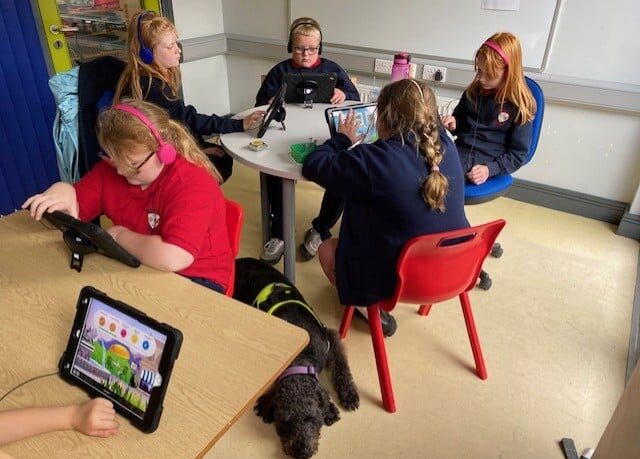
Finally, make phonics practice engaging with activities that feel like play:
Phonics Treasure Hunt: Hide cards with words or phonemes around the classroom for pupils to find and read.
Interactive Whiteboard Activities: Use the interactive phonics activities in Lexia Core5 Reading on the whiteboard to engage the whole class
Phonics Board Games: Create simple board games where pupils read words to move spaces forward

This term, we invited schools across the UK to take part in our Lexia in Action competition, a celebration of the creativity, commitment and impact behind high-quality Lexia implementation.
We were overwhelmed by the thoughtful submissions showcasing how educators bring Lexia to life in their classrooms, intervention spaces and wider school communities.
Today, we’re excited to announce our winners, three fantastic examples of Lexia in Action, each demonstrating how purposeful, data-informed practice can transform pupils’ literacy confidence.
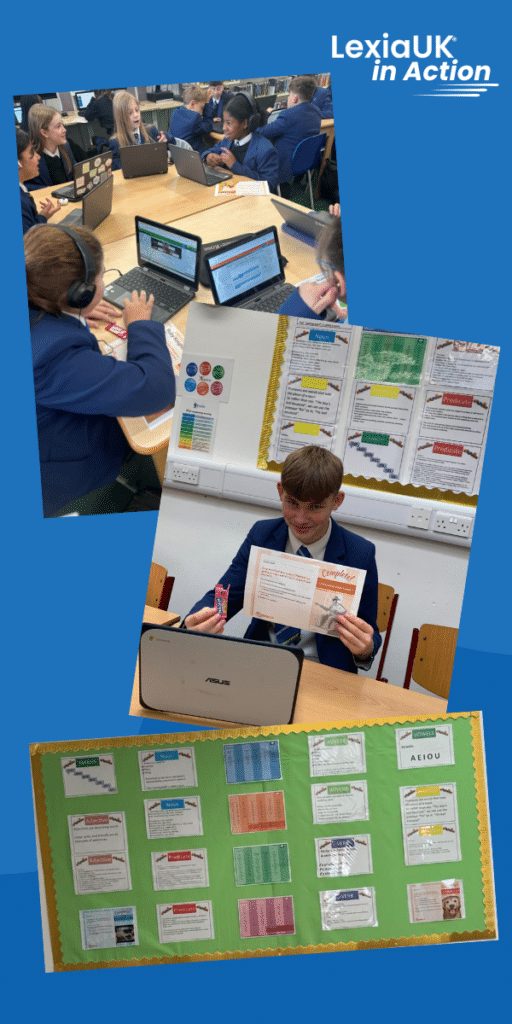
Submitted by: Lisa Hollands, Learning Support Assistant
Our winning submission stood out for its creativity, consistency and inspiring whole-school culture of celebration.
Two years ago, Lisa took on the responsibility for Lexia interventions and immediately found ways to tailor the experience around pupils’ needs. One of her first changes was transforming the intervention rooms:
“Many of our students particularly struggle with the grammar section of Lexia, so I filled the walls with simple explanations and examples… Students regularly refer to these visuals, and they have proved extremely helpful in supporting their understanding and confidence.”
Lisa didn’t stop there. She revamped how progress was celebrated by handing out certificates daily, paired with a small treat to recognise success in the moment.
“This simple change has had a huge impact—students are much more motivated, and they now push themselves to complete levels.”
Her weekly “Longest Streak” challenge keeps pupils focused and encourages them to ask for help when they need it, building both independence and resilience. Even staff get involved:
“We make it a point to model that mistakes are normal, even staff don’t always get the answers right! The students… take great joy in catching us out.”
A termly staff–student competition added a sense of fun and community and as the school has grown, so too has the Lexia cohort.
Congratulations to Lisa and The Forest School for an outstanding, learner-centred approach to Lexia!
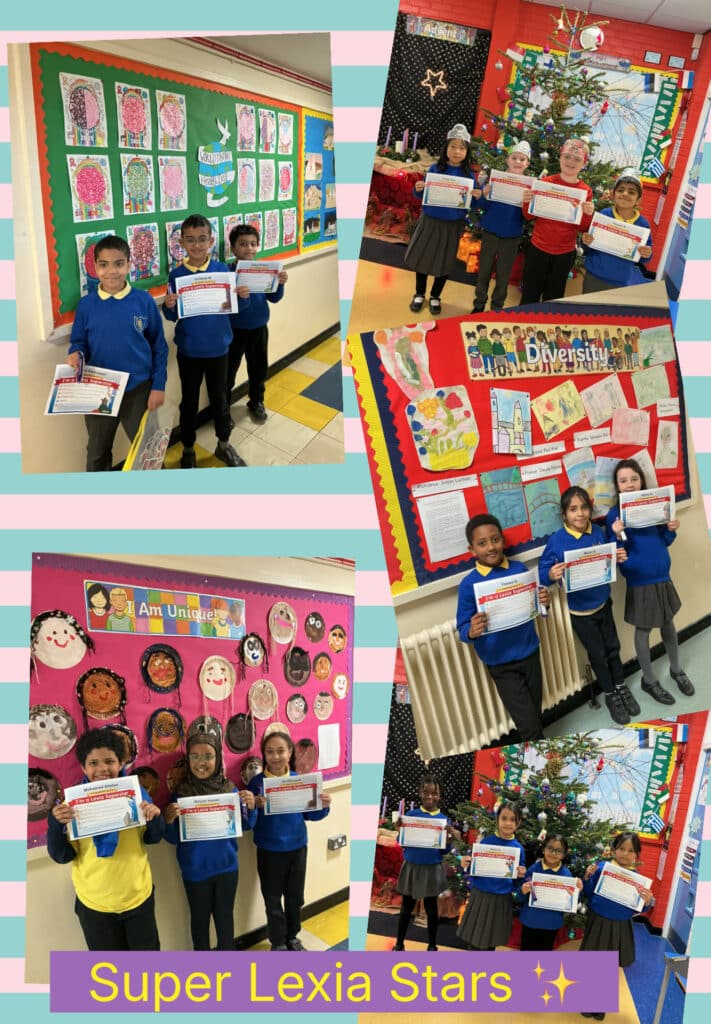
Submitted by: Pame Muñoz-Cabrera, Newcomer & Diversity Leader
Holy Rosary impressed us with its deeply embedded approach to supporting newcomer pupils and learners with diverse needs.
Lexia plays a central role in the school’s blended literacy strategy:
“We embed Lexia daily as part of a blended approach to reading instruction.”
Direct teaching works hand-in-hand with Lexia’s adaptive tasks. Pame uses Lexia’s resources to plan small-group interventions focused on phonics, vocabulary, and reading strategies:
“Lexia adds to their learning journey by reinforcing these skills digitally and giving them confidence through personalised practice.”
To keep engagement high, the team at Holy Rosary do the following:
This thoughtful, consistent approach has made a real difference for pupils at Holy Rosary.
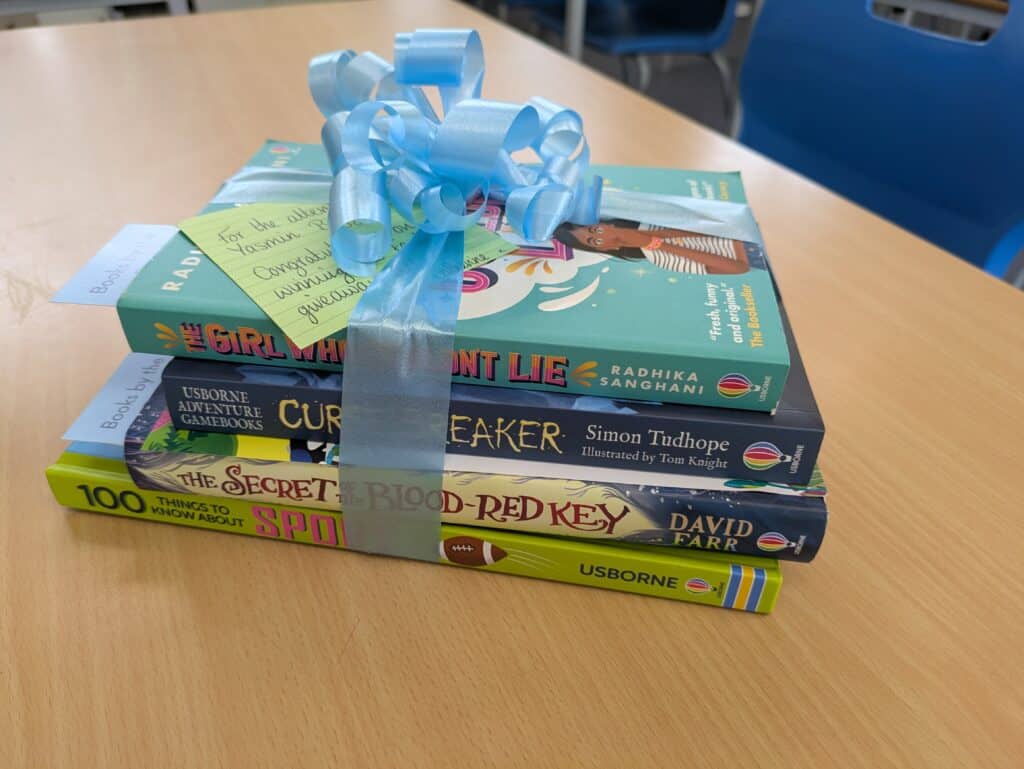
Submitted by: Yasmin Biggins, Literacy Lead
Our second runner-up demonstrated powerful, whole-school consistency from Year 7 all the way to Year 11.
“We have been using Lexia for two years, and the impact it has had on our students has been truly life-changing.”
Anchor charts and display materials support literacy across the intervention space, and older pupils benefit from bespoke GCSE-aligned targets. The end-of-year data tells a compelling story:
“Many demonstrate significant gains in their reading and spelling ages, with some even exceeding age expectations.”
Motivation is boosted with generous prizes, many donated by the local community. Highlights include skip-the-queue passes, food vouchers and an end-of-term raffle. Sharing progress updates with donors has strengthened community relationships as well as pupil engagement.
The most meaningful impact, however, is on students’ confidence:
“When a child who previously struggled with low self-esteem and confidence feels secure enough to raise their hand and read aloud, it is a clear sign that the programme is making a meaningful difference.” Yasmin Biggins, Literacy Lead
Backed by independent research and trusted by thousands of educators, our literacy programmes are research-proven.
Find out how we are helping schools to accelerate their literacy progress.
Keep up to date with the latest industry news from LexiaUK.