Hill View Infant Academy
Staff reported exceptionally strong engagement with Lexia Core5 Reading, with many children asking "When is Lexia?" at the start of the school day.


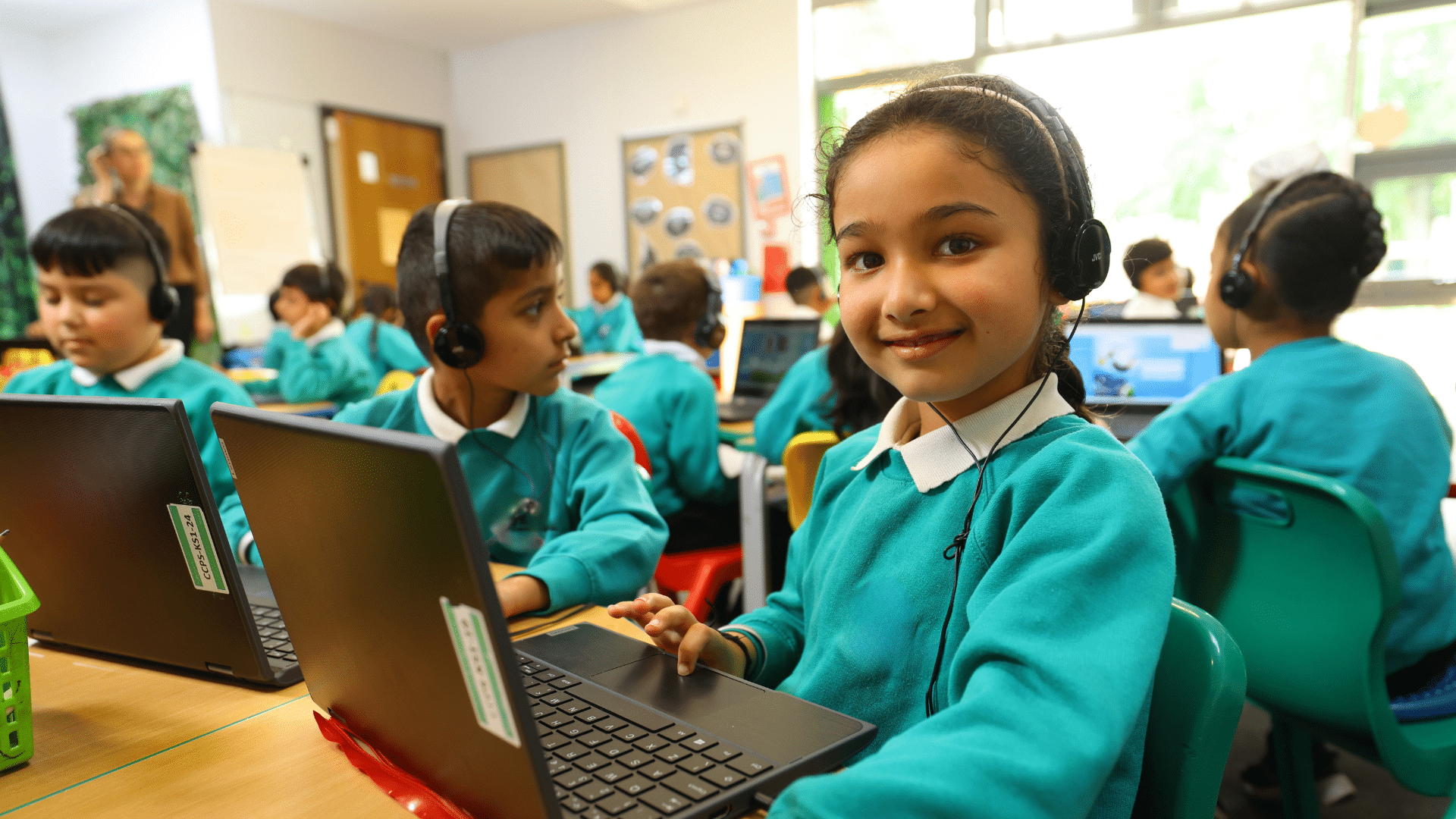
Crocketts’ Community Primary School is a two-form entry primary school located in the diverse community of Smethwick, Birmingham.
Crockett’s was selected by the Education Endowment Foundation (EEF) as a part of the experimental group for the latest effectiveness study. Staff identified many pupils were arriving at school with lower levels of language and literacy development, something they partly attributed to screen use before starting school. The school also supports a high proportion of whose first language is not English.
Staff reported seeing positive progress quickly, including among pupils with significant SEND needs. Following their experience in the study, the school expanded its use of Lexia Core5 Reading across the whole of Year 2 and now also uses the programme as an intervention throughout Key Stage 2.
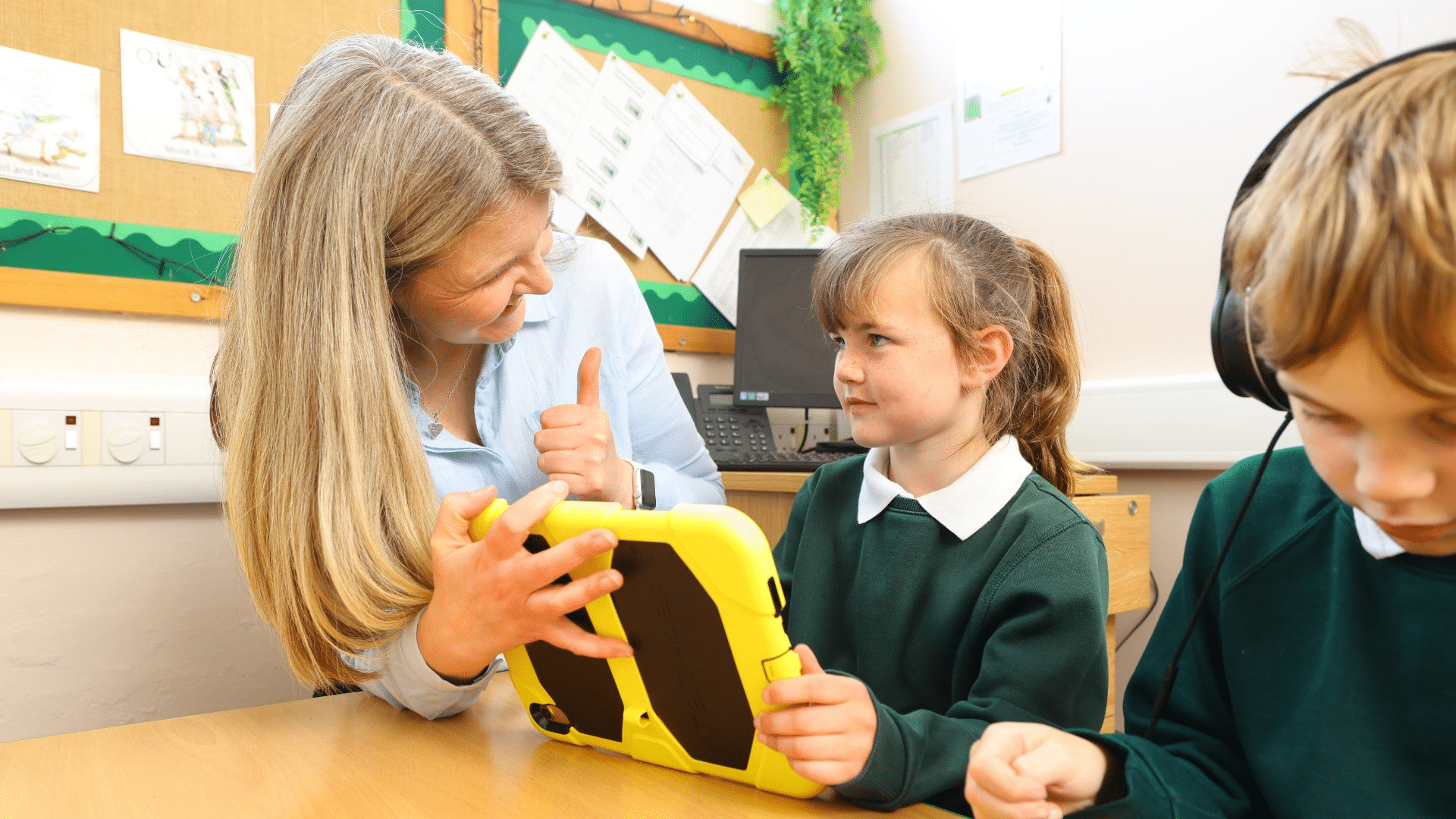
Staff reported exceptionally strong engagement with Lexia Core5 Reading, with many children asking "When is Lexia?" at the start of the school day.

Behind every piece of evidence are the schools, staff and pupils who brough the research to life.
The school noticed a huge impact upon starting the programme, particularly among lower attaining pupils who struggle with reading skills.
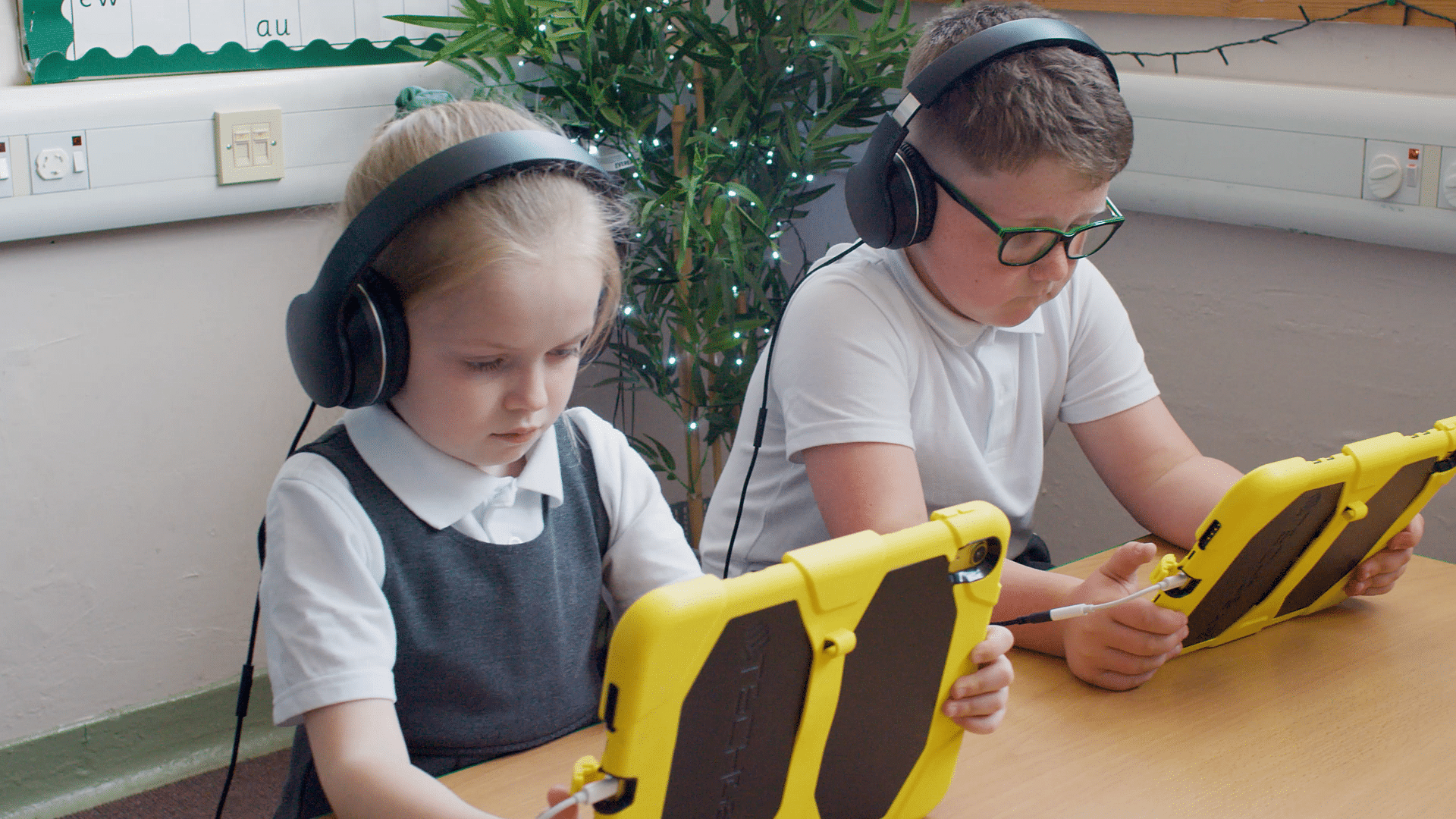
Hill View Infants Academy is a large four-form entry infant school in Sunderland, with around 445 pupils.
Although the school has relatively low levels of SEND and Pupil Premium eligibility, many families rely on wraparound childcare due to working commitments. As a results, opportunities for reading practice and homework at home can sometimes be limited.
Staff reported exceptionally strong engagement with Lexia Core5 Reading. Once daily routines were established, pupils became highly motivated to use the programme, with many children regularly asking “When is Lexia?”, at the start of the school day.
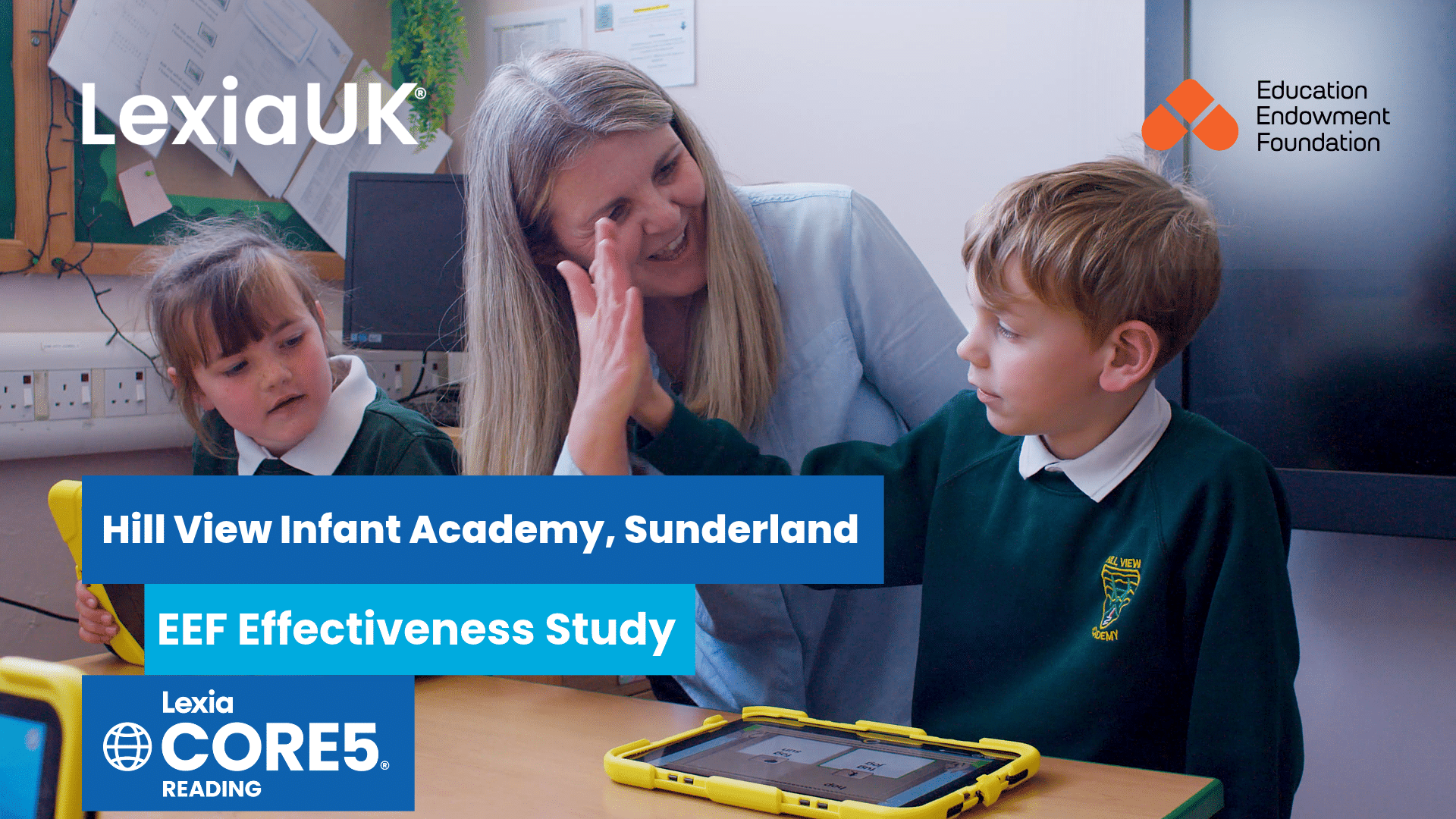
The school noticed a huge impact upon starting the programme, particularly among lower attaining pupils who struggle with reading skills.
Behind every piece of evidence are the schools, staff and pupils who brought the research to life.
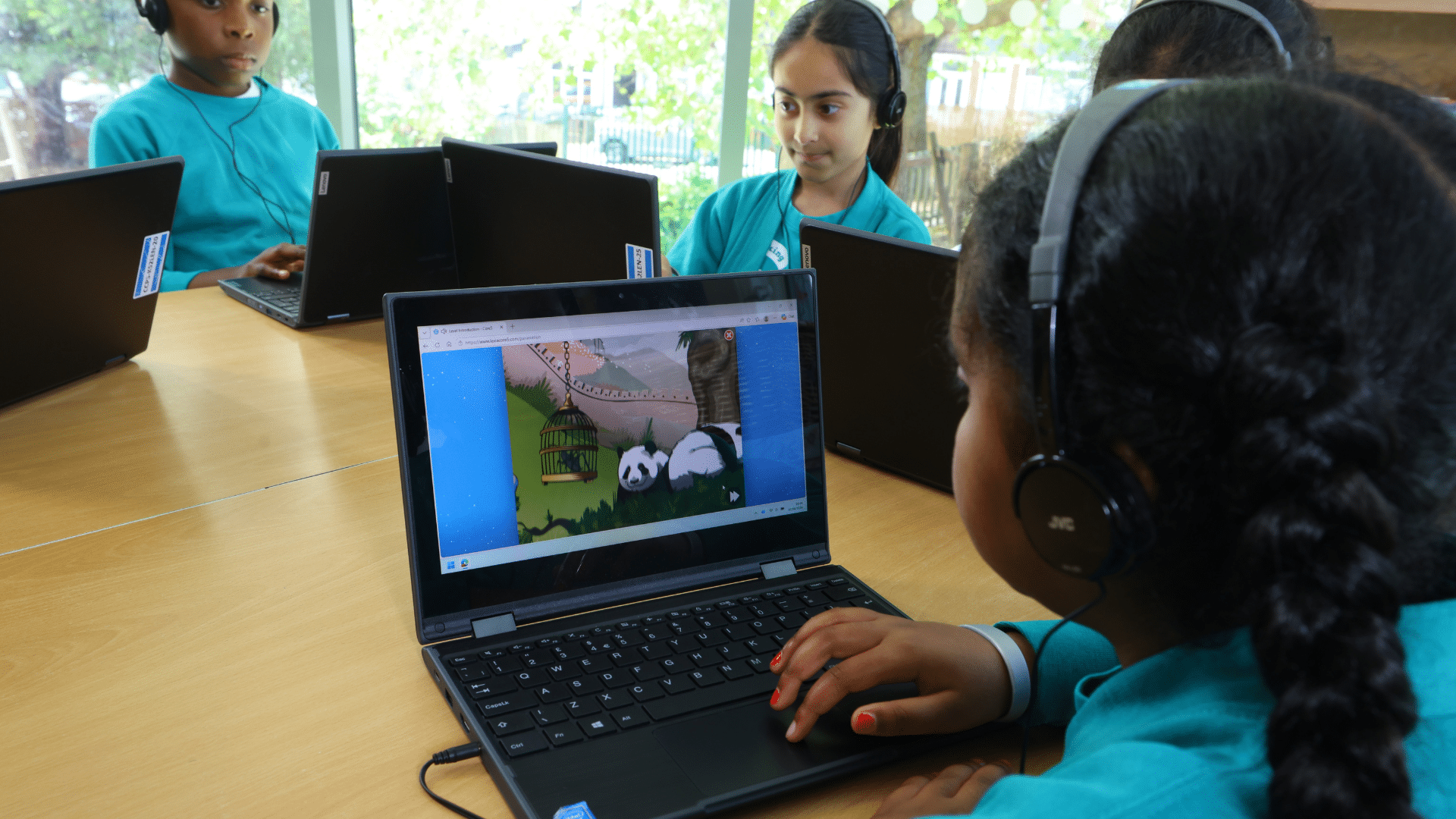
Staff reported seeing positive progress quickly, including among pupils with significant SEND needs.
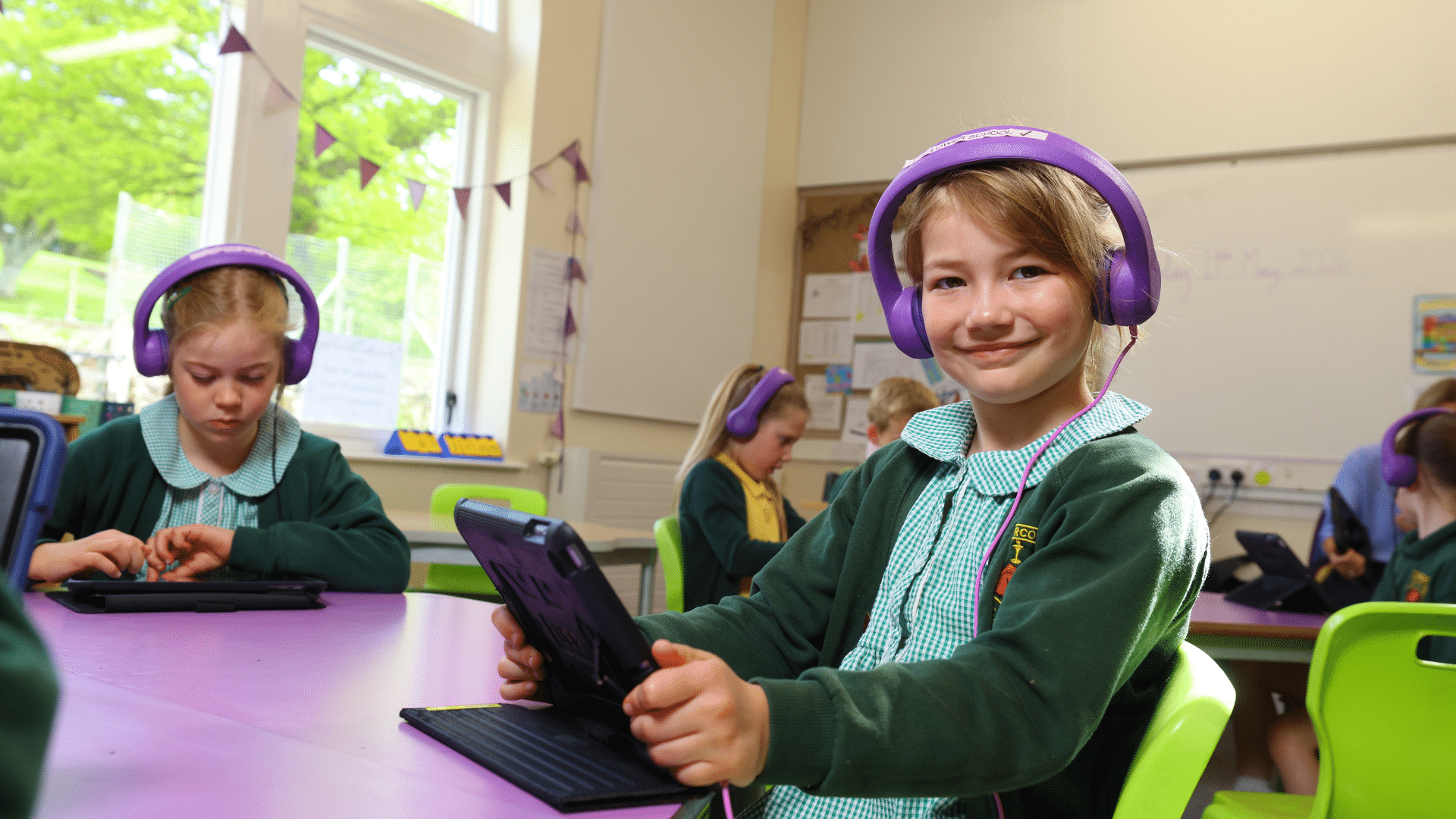
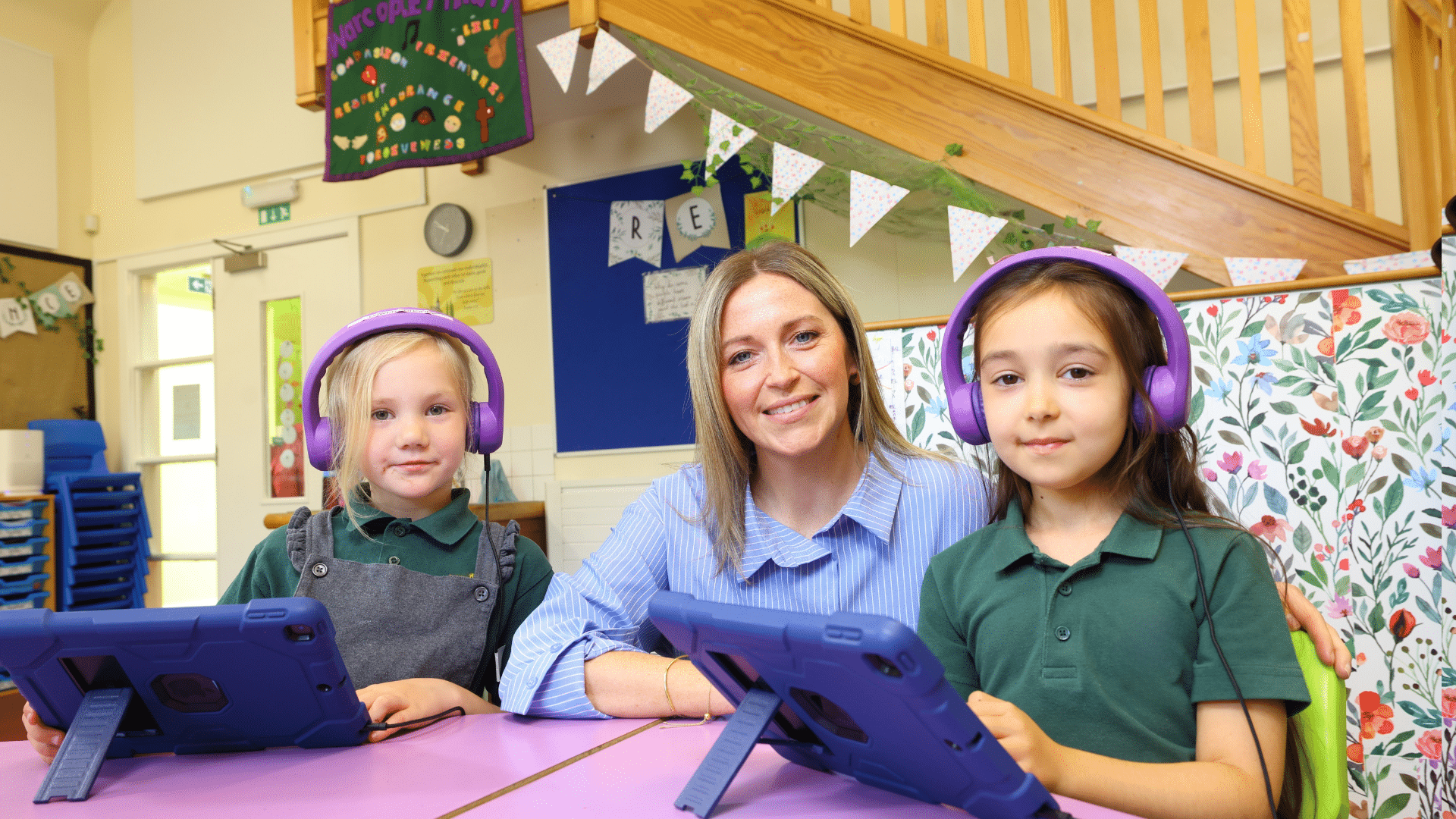
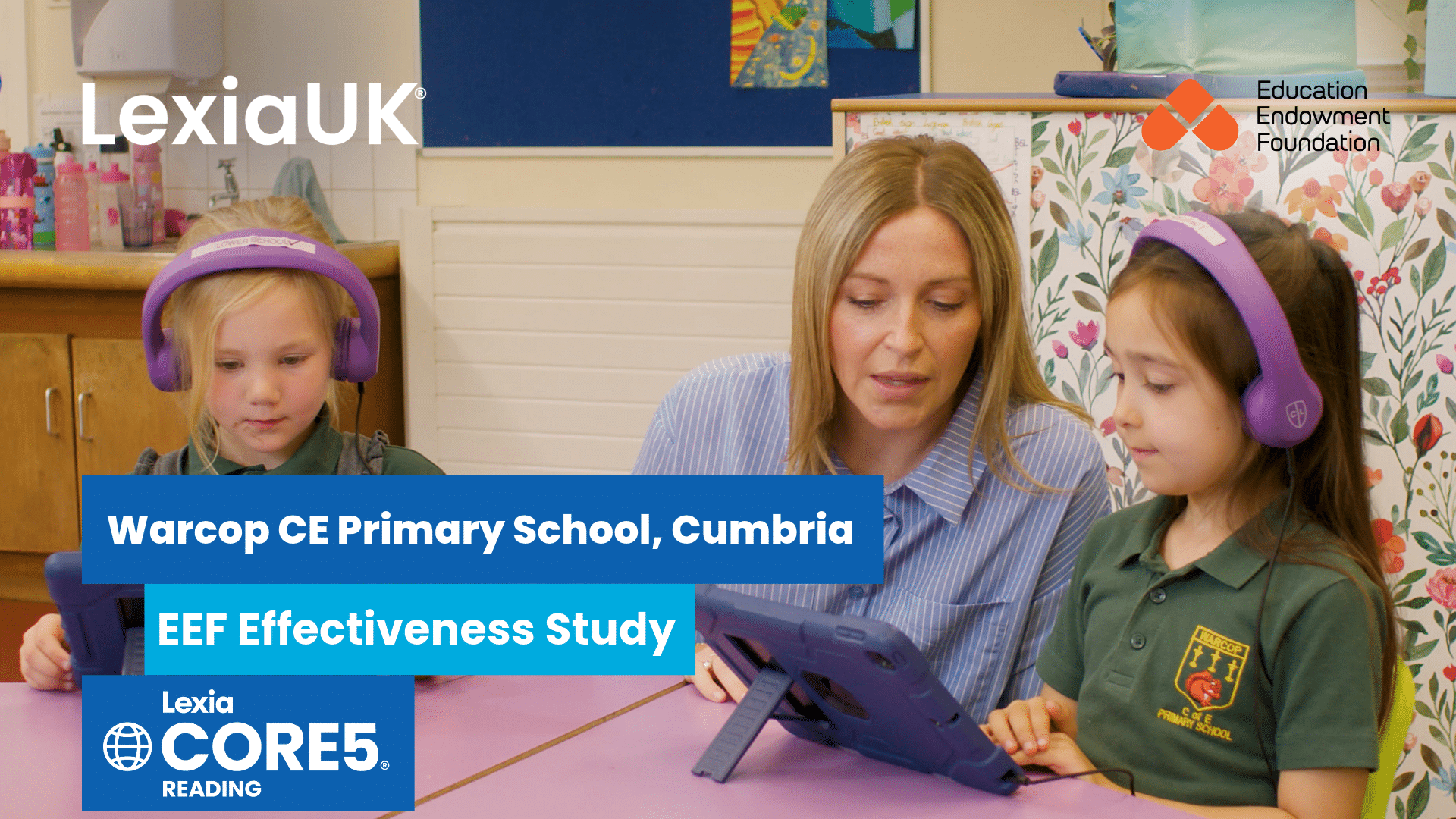
Warcop CE Primary School is a small rural school located in the Eden Valley, with around 85 pupils organised across four mixed-age classes. Like many rural schools, access to larger libraries and literacy resources can be more limited, making targeted reading support especially valuable.
The school noticed a huge impact upon starting the programme, particularly among lower attaining pupils who struggle with reading skills that may not have otherwise been reached in Guided Reading sessions.
Staff found that pupils engaged enthusiastically with Lexia Core5 Reading from the very beginning. Children particularly enjoyed earning certificates, celebrating their achievements and developing a strong sense of ownership over their own learning and progress.
Staff reported exceptionally strong engagement with Lexia Core5 Reading, with many children asking "When is Lexia?" at the start of the school day.
Behind every piece of evidence are the schools, staff and pupils who brough the research to life.
Staff reported seeing positive progress quickly, including among pupils with significant SEND needs.

We spoke to Suzanne Abram, SENCO of St Joseph’s Primary School in East Belfast. Suzanne tells us of how a chance encounter with our program nearly a decade ago has led to over two years of closing literacy gaps in her school, and how Core5 Reading transformed one boy’s perspective of education.
We are an urban school in East Belfast and we have about 400 pupils on our register at the minute, with two classes in each year group. There’s a wide range of abilities across the school. We have a lot of newcomer pupils, and about 16–17% of pupils on our register have a special educational need. Within that group, we have children with specific literacy difficulties.
I was away on a career break and, when I came back, the numbers of children with literacy difficulties really had shot up. I had heard about Lexia before, and we really felt there was a need to put some sort of intervention in place to help these pupils. Differentiation obviously works within the classroom, but there are those pupils who need that one-to-one, targeted approach that’s consistent and progressive.
I thought Lexia was kind of perfect for that, because you could deliver it to a lot of pupils all at the same time.
Well, I had heard about it probably about seven or eight years ago when I was working with another local school. I had met up with their SENCO and we were walking through the school, and all these computers were set up in the assembly hall. I was like, ‘Oh, what’s this?’ And she explained that this was where they delivered Lexia.
It was really good because it could be facilitated for a big group of children, all working individually. Her classroom assistants could help, and it was targeted at spelling. They have a similar demographic of children to us and a similar size of school, and I sort of had thought about that, but obviously the budget wouldn’t allow for it at the time.
Then I went away and, when I came back, it just came into my head again. I remembered that and thought, this is something we could use. So we decided, with the okay from the principal, to go and trial it. And within a few weeks, the staff had said they’d already seen an impact. The children were engaged, and it was able to be targeted at each individual level for them.
Within a few weeks, we were like, ‘Yes, that’s for us. Thank you very much!’
Well, I think to start with it’s the number of children that you can actually target, because we are a large school and we need to be able to deliver something to large groups of children at different levels. So it’s not a one-size-fits-all kind of approach.
It also uses technology, along with any Skill Builders or any lessons that could be delivered by the teachers or the classroom assistants. Every child loves technology and they don’t feel like they’re doing spellings. When you’re trying to do spellings with them, they don’t want to do spellings, but if you put it on a computer, they’re happily going to sit and do it and engage with it. Even as low down as P2 are doing it now.
So, I think that blended approach of technology, and being able to deliver it at different levels, really works. We can see the data really quickly. The teachers do the five-minute check-ins, so they’re able to see exactly that week who needs more time, who hasn’t been on it, and whether there are any lessons that need to be delivered. It’s very fast.
Well, initially in September, I start screening all the children from P3 to P7. Any children that fall below their age-related expectations then get issued a licence.
Initially, I had to be very picky because we had a lot of children who were two years below or more, you know. Now we’ve seen the impact (this is the second year we’re running it) so I’ve been able to increase that to children within six months of the age-related expectations. So, we use it that way.
After talking with an Implementation Adviser at LexiaUK, I’m going to screen all the P2s in Term 3 so that they’re ready for September. That way, I don’t have do that in September when it is busier.
So, if I know exactly who’s going to have a licence, they can start doing it in class because we have iPads and they can use them during those times as well.
With our initial training it was recommended and encouraged to timetable it in. I know from visiting the another school, that’s what they did, because school days are really busy. There’s lots of activities happening, and the daily routine can change. Sometimes interventions can be the first thing to be bumped off that list because it’s easy to say, ‘Okay, we won’t do it that day.’ But then that has a snowball effect.
So, what I did was timetable it, in conjunction with our ICT coordinator, for four mornings a week for Key Stage 2 pupils, and then four afternoons a week with our Key Stage 1 pupils. That way, even if they didn’t hit every single session for those four days, there’s still a minimum of two or three that they’re getting every single day.
With children with specific literacy difficulties, it’s little and often, and repetition and overlearning is key. It’s not going to be one day a week that they’re going to have any kind of impact, it has to be constant.
Even with the Primary 2 pupil that I work with one-to-one, he gets it every single day. Whilst the first level took nearly a month or two to get through, he’s working far quicker now because he’s getting that every day and he’s getting used to the activities and learning how to work the program.
Yeah, well, I think it’s had a positive impact, particularly in Key Stage 2. If they see me in the corridor, they actually ask, ‘Is Lexia on today? When am I coming?’ So, the fact that they actually want to go and do it is a big plus.
Sometimes getting children to do spellings is very difficult, and especially if they have a difficulty in literacy, they’re more resistant or reluctant to take part in a session focused on something they find challenging.
They love to get the certificates, so we find those really beneficial. In Key Stage 1, we would have our weekly assemblies, and the teachers have decided to give those certificates out during assembly to really highlight their achievement.
We also look at their GL data three times a year. You can see an impact, especially with those children who have specific literacy difficulties. For those we were specifically targeting with spelling, they are able to transfer those skills from the intervention into their daily writing. You can see an impact on their daily writing and then in their GL assessments as well.
I would say yes, one of our P6 boys. This is our second year of running the Lexia programme, so he would have started when he was in Primary 5. He had quite significant spelling difficulties in his literacy, and that impacted on his confidence. There was actually school-based anxiety as well, which would have been an issue for him too. He would have held a lot of that in during the school day.
Towards the end of the last term in Primary 5, I actually got an email from his parent, and she had pinpointed the Lexia programme as the defining feature in why he suddenly did not hate coming to school. We didn’t even know he was having meltdowns about coming to school, but he didn’t want to come. He didn’t want to be participating in lessons, and he would have masked all of that in school.
She had really great difficulty getting him to school, and by the end of the year, he was happy to come. He loved school. She actually wrote in black and white that it was the Lexia programme that had been the change for him, because it had been P5, so that was the only thing that had changed for him in school. He’d been with us for five years.
He has completed Lexia. He’s completely finished it!
It is done as a daily practice within the classroom. The teachers all know the timetable, they’re given that in August before we start, so they know when their pupils are going, and throughout the year we might add pupils to it.
They’re always very positive about the certificates and about the pupils doing it. They can see every week how their pupils are doing in relation to the progress they’re making, and it’s that positive praise. Children love positive praise and that verbal feedback, and it’s every week. It’s not just one week and then you forget about it for months – it’s constant.
It reminds the children that other staff members, who maybe aren’t their teacher or directly involved are able to see what’s going on. Then at assemblies it’s highlighted as well, with the certificates alongside the verbal feedback.
The first year was about implementing it, getting it into the timetable and teachers remembering to send their pupils. But this year it’s embedded. We’re tweaking it, the children know the routine, and it’s become part of the school culture and daily life.
I think they’ve been really valuable. Obviously, I would be on it every other day, checking the different classes and the SEN cohort, and after speaking with Chris, I’m going to change how I classify the children as well, so I can see reports for the SEN children or newcomer children, as well as the main body of children who are working on it.
I’m in and out of it every day, but the teachers are also logging in as regularly as they can and they can see the data. If Skill Builders need to be done or there are lessons to deliver, they can see that exactly. We’re lucky enough to have classroom assistants, and I got them trained last year. They’re familiar with the programme and how to deliver the lessons, and they’re on it as staff as well, so they can see the data too.
We’re using that real-time data to really see who’s struggling and what they’re struggling with. The children can see that it’s not a standalone lesson every day in the ICT room, it filters into the classroom routine and into all aspects of the curriculum really. It’s transferable skills. It’s not just, ‘I go to the computer room for Lexia,’ and then I never think about it for the rest of the day.
I think I would have two main pieces of advice really. The first would be to avail of the training – not just the initial training, and not just for teachers. Get the classroom assistants trained as well, because they can facilitate it too.
Also, take up the training throughout the year. I was able to do the training again last year as the SENCO, and to include other staff as well. It refreshes your memory about what you need to do and helps you implement it properly and get the most out of it. It’s an expensive programme and you want to get as much out of it as you can, and you get as much out of it as you put into it.
The second thing would be to timetable it, because as we all know, schools are very busy and it could be the first thing to go. But if it’s timetabled and it’s part of the daily routine, it’s going to be beneficial for the children and valuable for them.
Yes, they like using it. They love that aspect of playing with the technology, it doesn’t really feel like learning for them, and it’s gamified a wee bit. They can play the games, and even after individual units within a level, they get the little on-screen reward.
As I say, in the corridor they’ll ask me, ‘Is Lexia on today? What’s happening?’ Especially at times when assessments are taking place, and they know it’s not happening, they’re all eager to find out when it’s going to start again. I think if the pupils are asking when it’s going to be, you know it’s valuable and you keep it!
Is there anything else you would like to add?I knew from speaking with that teacher that Lexia was very valuable, and there’s a reason why it’s been used in so many schools for so long. Things come and go. Education can be very fad-based. One year there’s a new intervention, and the next year it’s gone and there’s a different one.
But Lexia has been around for a good few years, and if something’s around that long, there’s a reason for it. It’s the impact on the children that’s the most important thing.
I would say definitely engaging for the children and valuable for the staff. And effective, because we can see the impact back in the classroom on their literacy work and on them being able to access the curriculum, especially at Key Stage 2, when some of them were maybe reading three or four years below their level.
Some of these children weren’t on my SEND register, so they weren’t able to access provision at Stage One or Stage Two of the Code of Practice. This is a whole-school provision and it’s on our provision map. So, if a child has any kind of barrier to their literacy, they don’t have to have a special educational need to access it, they can access it as part of whole-school provision
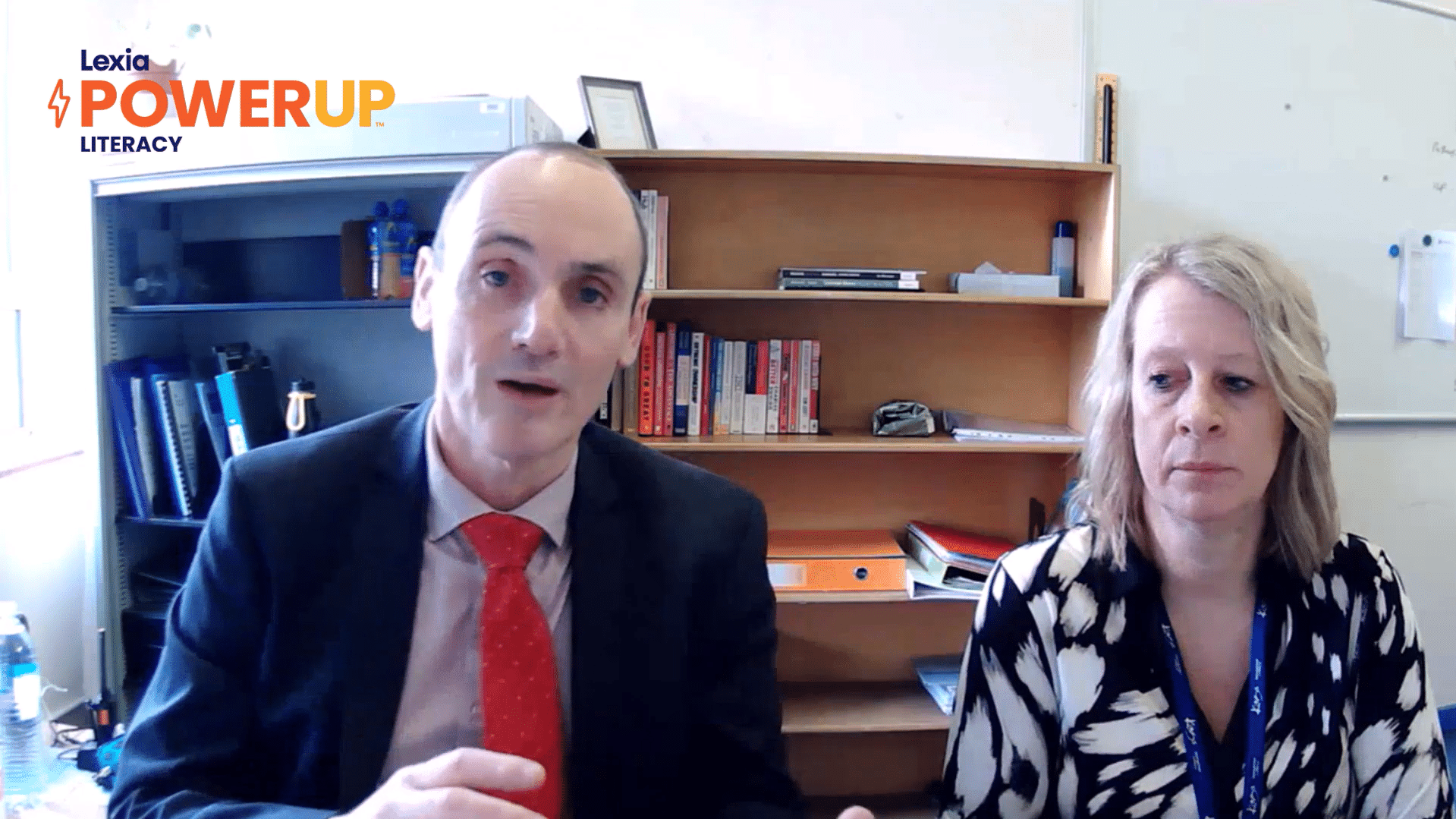
We spoke to Martin Byrne and Jo Stevenson at Kings International College. A non-selective secondary school, Kings International College have been a Lexia customer for over 6 years. Martin and Jo share with us how they implement PowerUp Literacy across a broad student cohort, share myLexia reports with concerned parents and keep students motivated on the programme.
Martin: I know in the early stages; we weren’t using Lexia effectively. I think during that time it was used for very small, group SEN interventions only. Part of the challenge for us is that we didn’t have a very robust set to cohort level reading age data. As our use of Lexia started to develop we became better at benchmarking and assessing the whole school literacy in our incoming cohorts. Once we understood it more, we began to recognise the great value it provided in our interventions. We started on a small scale, felt the impact, and felt like it was worth investing in.
Jo: We use the NGRT to initially assess the student’s reading age in Year 7, and regularly as they progress through Key Stage 3. We use that to determine what type of intervention they need. Obviously, we’re looking directly at students that need support with the relevant lexia strands of Word Study, Grammar and Comprehension. Once we’ve determined those students, I then run 3x 50-minute sessions with those students in a classroom. This usually goes on for a ter.
Martin: The actual selection of student we vary on the intake. We look at a combination of the NGRT data, standardised reading score and a difference between chronological reading age and reading age. This identifies a gap. Depending on how many student we’ve got in different cohorts, typically we’ll classify students’ literacy abilities as “wave one” in a similar way we would with SEND.
Wave one are students that can access the curriculum and are at their reading age. Wave two are between 18 months and 2 years below their chronological age and here is where Lexia intervention begins. Finally, wave three is where there is a much bigger gap, and we use Lexia here amongst other literacy interventions. Lexia we find gets students on track quickly. We use Lexia to arrest the narrow gaps.
Martin: It’s impactful, it’s evidence-based and it has built in diagnostic tools that help track student progress. The reports get quite granular in terms of student engagement, what progress they’re making, and what areas they need to target to make meaningful improvement. Lexia isn’t a broad-brush approach. Once you’ve got students on this intervention, it’s tailored to their individual need.
Jo: The ability to pick out individual needs and how they need to be addressed. The myLexia reports are absolutely invaluable. Every Friday I run reports on each individual student, and this allows us to monitor students on an ongoing basis and have these conversations of “you need help in this area i.e. comprehension”
Martin: I’ve found that we see less anxiety about attending lessons, more willingness to engage and really give it a go in mainstream lessons once the students return from the intervention. There is less regression and backsliding too, year on year the data comes through and we find that once a student has been through Lexia they hold ground better than they did with other previous interventions.
Jo: It’s the increase in confidence too. For example, I was in a lesson the other day that involved reading aloud, and one of the last year’s Lexia cohort had the confidence to stand up and read aloud. Sometimes this gets lost in you’re only looking at the data, but to see it in practice that they have increased confidence in the classroom is really good to see.
Jo: I think with this it’s important to start with the context of when they start on Lexia. Often the students are quite concerned – “Oh does this mean I have low reading ability” – so that knocks their confidence a little. The Year 11’s I’m working with now started Lexia when they were in Year 8, and some of them begrudgingly admit that “Yes Lexia did have an impact, and it was worthwhile”!
Martin: When the student has been through the Lexia programme, and the programme has been delivered with integrity, then it has lasting impact. There are a lot of variables that affect educational outcomes, and a lot of barriers. In our school, Lexia removes on of our barriers. What stands out about the students on Lexia is that there isn’t really a standout. The become the standard.
Jo: As part of our school award system, we have achievement points, and when students on Lexia hit their targets then they receive an achievement point. What we’re careful to do is avoid only rewarding those students that have completed the most work, because quite often we find that lower ability students may have only completed a few units a week. We look more for if time has been well spent on Lexia and reward that instead, so we like to reward effort as well as achievement.
Motivation changes from year group to year group too. The Year 7’s really like the more gamified aspects and the streaks and comparing who has done the most work. They’re very eager to know if they’ve made the most progress! We have a boy at the moment that has a streak of 1200!
We have other rewards too; it’s a silly thing but having my chair, the teachers chair, is rewarded to the student that I feel has made the most effort that session!
Jo: In terms of informing planning, the autoplacement at the beginning of the Lexia process is invaluable. All of the planning at early stages is built around that feature. It allows us to easily see what we’re dealing with.
The reports are great for feedback for parents too. We find that parents tend to get quite interested when they’re told their child is being given literacy intervention, and voice concern of “Oh gosh, I wasn’t aware there was an issue!”. We can then use the data in the reports to reassure them that we’re doing 100% of what we can for their child and show them their progress as the student moves through Lexia. It helps us to establish a relationship with the parent that feels more like a team.
Martin: What we’ve learned over the past six years, and the past three years of implementing the programme impactfully, is that it’s vital to get your student selection correct. Your Lexia cohort needs to be based on rigorous data. This is key.
We look not only at reading gaps, but attendance too. In secondary schools you need to be asking the question “Are they actually going to turn up and be present, or will we just be wasting our resources?”. Sometimes that is a hard call to make, but we have learned through experience over the years that it is necessary.
Lexia implementation staff do advise what works, and how to implement the course effectively. With any intervention there is a cost implication, be staffing or time. Trying to deliver Lexia without dedicated, well-trained staff will not deliver the full impact that the programme can have – that is recognised by the EEF.
I think that for any school leadership out there thinking about trying Lexia, I would recommend that you take the hit, invest financially in staffing and protect the time in the school day for it. If you ensure this from the beginning, then in pays dividends.
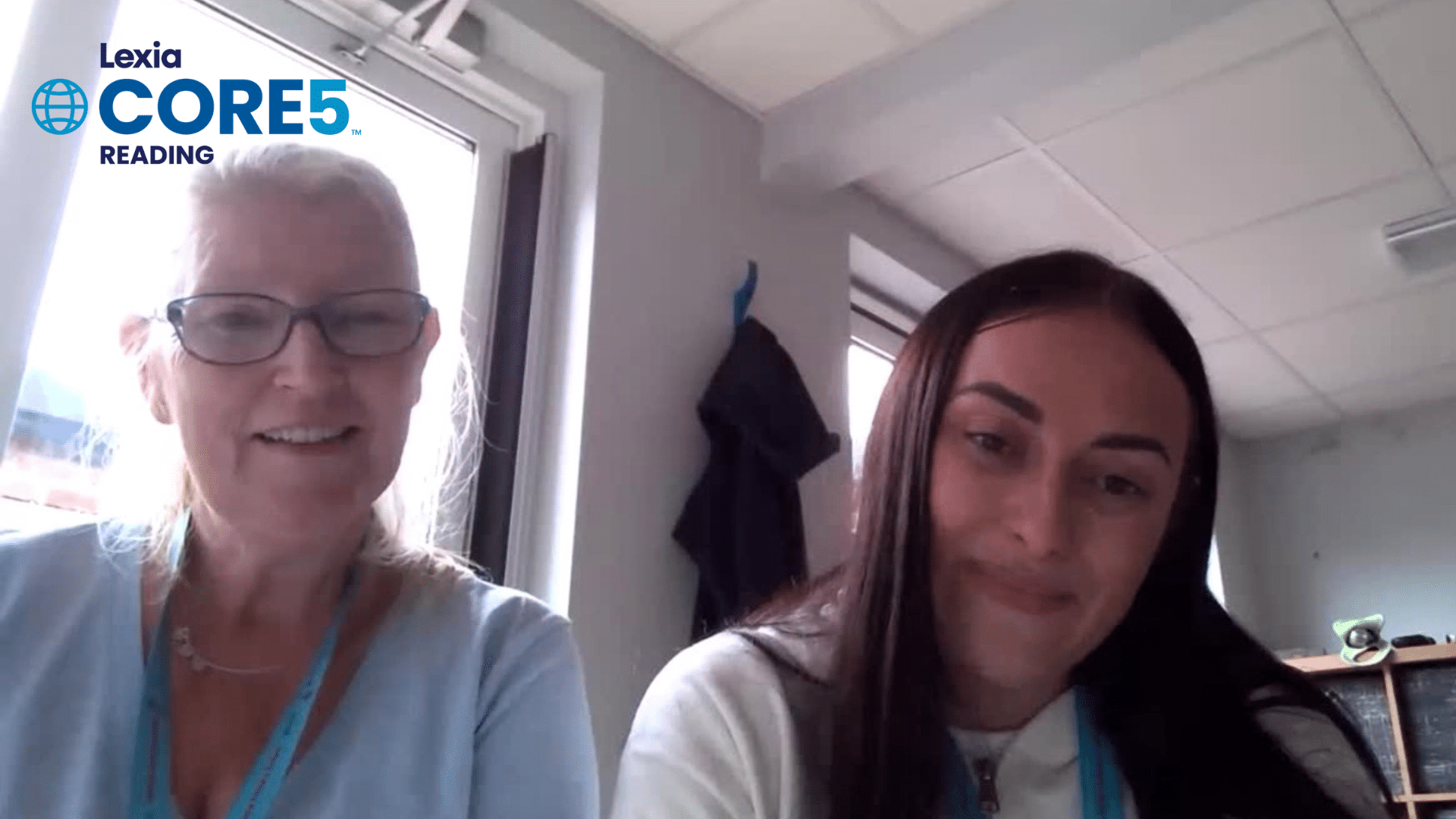
At Moyle Primary School, Larne, Northern Ireland, Hannah Henry (P1 Teacher & Lexia Coordinator) and Allison Perry (Lexia Support Teacher) have been seeing remarkable literacy growth from Lexia’s Core5 Reading programme. As our Star School for November 2025, Hannah and Allison discuss why they chose Lexia to support pupils flagged through dyslexia screening. They share how they organise daily routines to make the programme work, and what makes Lexia different from other literacy tools.
Their inspiring story shows how a structured, engaging, and effective approach can make a real difference in literacy outcomes.
Hannah: I was part of the curriculum team at the time, and we were researching how we could best support children who had been flagged through the dyslexia screener. We were researching different options, what interventions we could use, and that’s when I first heard about Lexia.
It actually came through a contact at another school who recommended it to me. We arranged a demonstration and started trialling it with small groups to see how it worked in practice.
We absolutely loved it. The individual learning paths, the teacher-friendly reports, and the fact that the pupils really enjoyed it made such a difference. That’s really what led us to the decision to go ahead with it.
Allison: After doing some training with LexiaUK around May last year, I learned a lot more about the admin side. Things like adding pupils, assigning them to classes, and even about the PowerUp programme, which I hadn’t realised we had access to before.
Hannah: It really is real-time monitoring of the children. Alison’s brilliant at picking up if a child is flagged, she can identify them straight away, and then we can get individual lessons sorted. Any difficulties are nipped in the bud, and we can feed that back to teachers so they know where a child might be struggling.
Allison: That’s one of the things I really like: not only do you get immediate feedback if a child hasn’t understood something, but you can also print out a one-to-one lesson and deliver it right away. You’re addressing the skill they struggled with on the same day, not waiting six months and hoping they remember.
Sometimes when I go to deliver a lesson, the children will say, ‘Oh, I was doing that on Lexia!’ In fact, there have been times when a pupil has even explained the spelling rule back to me perfectly, and I’ve thought, ‘Right, you clearly get this now, we don’t even need to continue with the lesson.’
Hannah: There’s also a nice bit of healthy competition. Pupils will almost challenge each other to see how many units they can complete. I love that energy.
Hannah: Every half term, teachers meet with the principal, vice principal and senior leaders to identify children they feel would benefit from Lexia. From there I pass them on to Allison and that’s when we set up the timetable.
Allison: We run three sessions a day, Monday to Friday, in the mornings. I also keep two afternoons each week as ‘mop-up’ sessions. That’s when I monitor who hasn’t met their unit target, who needs extra support or who might need a one-to-one lesson. I encourage the children to focus on their unit goal rather than just the time goal. The aim is that every student gets at least three 30-minute sessions a week, which is enough time to meet both their unit and time goals. If they don’t, they go into a mop-up session.
Hannah: Some children work better in smaller nurture groups, especially in Alison’s room, where we have the therapy dog, Nessa, while others do fine in larger groups. Some are too tired in the afternoon, others don’t arrive at school until later, so we avoid putting them in early sessions. And a small number prefer working in class rather than group sessions, but they’re monitored just as closely.
Allison: We’re very lucky to have a dedicated literacy coordinator, supportive leadership and extra staff to share the workload, whether that’s delivering lessons or helping with admin like printing and preparation.
If you want Lexia to be successful, you do need to put staff into it. The best way to make it work is to create a specific role for someone to deliver and manage the programme, rather than giving it as an extra responsibility. That’s essentially what’s been done for me, and it makes all the difference.
Hannah: Yeah, I think the impact has just been amazing. Even from my own experience in P5 and P4, I’ve noticed a real difference. A lot of the pupils who had been struggling with reading now have so much more confidence. Their fluency has improved, and they enjoy seeing their own progress. They love that sense of achievement.
We present Lexia certificates in assembly, which really helps celebrate success. You can see how much it means to them. They know exactly when they’re due one and will be waiting eagerly to go up.
Hannah: Our principal even said he should rename assembly the ‘Lexia Assembly’ because so many certificates were being awarded. It’s brilliant, though, because the children absolutely love it. And what’s been really encouraging is seeing those pupils who normally freeze at the word ‘literacy’ actually enjoying Lexia. For them, it doesn’t even feel like literacy, it feels different and that’s powerful.
Hannah: Yes, so there’s one child I’m thinking of. He was in Primary 5, and in a single year he went up nine levels. It was amazing! He was just so motivated.
Because I’d taught him the year before, I knew him well, and even when I saw him outside class he’d be saying, ‘Guess what? Guess how many levels I’ve done? Guess how many units I’ve got today?’
Allison: He was just so excited. You couldn’t get rid of him, he was always at the door saying, ‘Do you need me this afternoon?’ If there was a space, I’d let him come in, because he just loved it so much.
Allison: We track who gets the highest number of units each week. Those pupils get to come down to our little Lexia classroom, where they can see Nessa, our therapy dog, and pick a treat from the box of goodies.
Hannah: Yeah, it’s been really, really useful. At the end of the year we were printing out the overview, and Alison and I looked at it together. It was so detailed, and very interesting to see the levels.
I’ve also found it helpful that teachers can see very clearly where a student might be struggling. I keep a shared resource for staff, so if a child is flagged in a certain area, teachers can go in and see relevant support materials. We also have the workbooks for children, which teachers can use too.
Allison: The key is getting all staff on board. Timetables are busy and nobody wants ‘something extra.’ But once I’d done the training with LexiaUK, I realised how important it was for everyone to know what’s available and how to access it. It doesn’t just have to be children on Lexia who benefit, the Skill Builders and worksheets can be used by any member of staff. If a teacher wants to cover, say, “Magic E”, the resources are already there.
It helps keep everything joined up, and stops us reinventing the wheel. The information is already there, and using it just makes life so much easier.
Hannah: I think the key is to start with a really clear plan. At the beginning it can feel a bit overwhelming, so make sure from the start that staff understand how to use the reports and the resources.
It also helps to have a clear Lexia lead. Not too many people all doing the same thing, but also not leaving it all to one person either.
Allison: We’re also very lucky to have a dedicated space where children can come out of class for Lexia. We have tried running it within classrooms, and that can work for a few pupils, but it really needs a classroom assistant there to keep children on track.
Hannah: Finally, with the children themselves, I’d say celebrate them early on. Build engagement right from the start. Those small wins really matter, get the certificates printed and handed out quickly, and make them feel excited and invested.
Hannah: Yeah, so the feedback’s very positive. They like the fact that they get this time that’s just for them. They have their own login, they can see everything so clearly, and it’s theirs to do. It adapts to their level, so they’re working on things suited to them, and they also have choice in it.
Allison: They’ve also become very au fait with checking their progress. They’ll quickly go back to the home screen to see how many units they’ve done and how much time they’ve spent. They’ll often say things like, ‘Oh, I’ve done 40 minutes more than I should have,’ or ‘My unit wheel is complete.’ They really know where they’re at. It’s empowering for them, putting them in control.
Hannah: And a lot of the kids love having Nessa, our therapy dog, in the room. Even when she’s just walking around, they stay focused and engaged.
Allison: You’ll see them with their headphones on, working on their iPad, while patting the dog with the other hand. It’s very sweet.
Hannah: I think one reason it’s been so successful is because we’ve got clear responsibilities and good communication. We check in with each other regularly, how are things going, what needs to change and we’re adaptable. If something’s not working, we adjust.
We also talk a lot with class teachers. They’ll tell us if a pupil is struggling a bit, or finding it hard to come out of class, and we’ll think about ways to change things.
Both: We’ll go with “3 E’s”: Engaging, effective and empowering!
Our Star School for April is…
We spoke to Stacey Saddington and Kate Crook who lead on the Lexia programme at Chipping Ongar Primary School. They shared with us how they have embedded Lexia into their school day, personalised learning for their pupils, use myLexia progress data to track progress and inform interventions and share some inspiring success stories with Lexia Core5 Reading and Lexia PowerUp Literacy.
Stacy: We first came across Lexia about four years ago. When researching different programmes it stood out to us as it provided an independent learning experience for the children, while still offering the right level of scaffolding for them.
The support it provides for them is brilliant. Lexia also came highly recommended and researched, something that we were really impressed with.
Kate: I agree. We love that Lexia gives children the independence to be responsible for their own learning. Even if they find something a bit tricky, they will still keep going, and we really love how it encourages that resilience.
Stacy: It was also a highly regarded programme, which was really important to us, so we wanted to be part of that. Plus, the training it offers is brilliant—it provides fantastic support for staff. Having that annual training each year has been great, and we make sure to share it with staff. That ongoing support has been key to our decision.
Kate: We really like the data it offers—not just for us as teachers but also to share with parents. It’s really detailed and accessible across iPads and computers, whether through the app or the website.
And it’s just so much more flexible. We’ve found we can easily manoeuvre it into our day and fit around the children in different classes.
The different formats are really engaging—Core5 works brilliantly, and we use the PowerUp programme with our Year 6 pupils. They absolutely love it with all the hip-hop songs and the variety of content. It just feels so much more mature for them, so they are loving that!
And obviously, the little ones love Core5 too; travelling through different countries, discovering new places, all while developing their reading and writing skills.
Stacy: I think the whole format is just brilliant—the engagement it creates really motivates them in their learning.
The little things they say, like, “I’ve been to Egypt today” or “I’ve visited this country today,” show how much it motivates them. That kind of motivation is key and really sets Lexia apart from other programmes.
Having those elements makes them feel like they’re playing a bit of a game, but they’re actually learning, which is fantastic for them. It keeps them engaged and wanting to do more. So yeah, that definitely sets it apart.
Stacy: So the timetable is always a priority—it’s all built into the curriculum, but it varies from class to class. We’ve tried a few different ways of implementing it, and we’ve found that the best approach is for each class to schedule it in a way that suits them best.
Some children do it first thing in the morning because that fits well with their class routine. Others do it as part of our “Drop Everything and Read” time. Then there’s also small intervention work built into the day, so that how it is embedded into the day.
We know that teachers stay on top of targets and individual progress, and one thing we focus on is talking about units rather than minutes. That’s a big one for us—it’s one of our little slogans here. We used to say, “Do 10 or 20 minutes,” but now we say, “Give me three green lines.” That shift has worked really well because it sets a clear expectation, and children know exactly what they’re aiming for.
Stacy: I think it’s definitely engaged their motivation, especially in reading. It’s not just about reading—it’s about writing too. But we’ve noticed improvements across the whole curriculum as well. If they can read and write, they’ve got more access to other subjects.
Kate: And I think with implementing PowerUp with the Year 6s, it’s really focused on those three strands: grammar, comprehension, and word study. As they approach their SATs, it really helps to embed those skills. It’s fun, and it makes such a difference in their learning, especially as they prepare for their SATs in May.
Stacy: That’s why we switched over, actually. We noticed a bit of disengagement with the Year 6s, where the format of the previous programme maybe wasn’t as mature for them. So, last year we decided to switch them over to PowerUp, and the difference has been incredible.
We’ve seen such a change with our Year 6s—they’re so engaged now. They’ll come up to you at break or lunch and say, “Oh, listen to this!” It’s been really effective, and you can see the instant impact on what the children are learning. Plus, like you said, it links directly to the SATs, so the teachers are more engaged too. There’s definitely been more of a buzz back in Year 6, which has been fantastic to see.
Kate: And with the younger ones on Core5, we’ve seen improvements in their phonological awareness. It’s not just in English or reading—it’s also in speech and language interventions, and even their social skills. They’re having more conversations with peers outside in the playground, and its expanding their vocabulary is expanding. The improvements are just phenomenal. It’s really brilliant.
Kate: So, we’ve had a few success stories, but the one we’re particularly proud of is a pupil who’s currently in Year 6. Last year, she set herself the target to be the first person to complete the entire Lexia Core5 programme. She’s faced some challenges herself, but she set that goal and absolutely smashed it. By the time she was halfway through Year 5, she had completed every single level on Lexia.
She was so proud of herself, and we were ecstatic, so proud of her! We made a big fuss of her in assembly, we made her a bunch of flowers as a keepsake, and celebrated with her certificates.
Stacy: Seeing that change in her was amazing. I’ve worked with her since reception, and we’ve done a lot of speech and language interventions. This was a programme she could really access, which was nice because some other programmes hadn’t worked as well for her. Lexia was engaging and motivational, so she felt at ease with it. Once she got into the flow, she was on a roll. We were all buzzing for her—just to see that child so proud of herself was amazing. It’s definitely one of our biggest successes.
Kate: We’ve also had some current Year 4s, who, when they were in Year 3 last year, make incredible progress. They exceeded the Year 3 benchmark and moved into the Year 4 benchmark before the end of Year 3, which was fantastic. This boosted their confidence and self-esteem. Once they got to the end Year 4 levels, their teachers decided they no longer needed the programme, which opened up licences for other children coming through.
It’s made such a difference for everyone. The children who were able to finish the programme moved into their regular learning with confidence, and we could help more children through the programme as well.
Stacy: The data backs it all up, too. We always make sure the data aligns with our planning, and it shows that they’re on track and at the right level, which has been brilliant.
The most rewarding part for us is seeing them take pride in their achievements. It builds a stronger relationship with the children. We get more dialogue from them, and that’s not something we would have had before but now we are the ‘Lexia Team’ in school. It has really helped strengthen those connections, which has been fantastic for us.
Stacy: Yeah, we have lots of reward systems in place, depending on the class. For example, we have Kings and Queens of Lexia in different classrooms, which the children love. We also have a Lexia Superstar assembly. In our star assembly, every week, myself and Kate print out and laminate the certificates. The children come up to the front of the class along with other children who receive different certificates. We make a big fuss of them in assembly, and we do that every week. So, every week, we’re giving out certificates to the children, which is fantastic.
As well as big achievements, we really make sure to focus on promoting all the smaller wins as well. It’s great that the children set themselves big goals and targets, but we also see from monitoring that some children might be struggling a bit with a particular unit. It might take them a while, but we know not to step in too quickly. We’ve learned to hold back a bit and give them that independence. We don’t intervene too soon; we let them try on their own.
Stacy: It provides lots of support in terms of next steps for planning, and it also supports the SEN cohort with their one plans and things like that, which is great. The data supports teachers with parents’ evenings, so they can monitor progress. We offer that as an extra piece of evidence alongside their school data. We can back up where they’re at in school with evidence from Lexia, which is brilliant for tracking progress as well.
Our SENCO will often go onto Lexia to track progress and monitor, just to make sure it backs up her data. The graphs and things are so informative. They’re so visual and easy to access, which we love.
Kate: She also finds them to be really valuable tools. It also supports any of the children’s transitions, because the data is easy to read and gives such a good overview of each child.
Kate: We also use the data for interventions. When I do precision monitoring, I’ll go onto Lexia, look at what words the children are reading, and where they might be coming up against challenges as they move further on in their levels. We’re constantly showing them as much as we can and integrating it across different areas, especially in our interventions.
Stacy: You can see that all on Lexia. For example, we’ll see if we need to focus on a particular word or skill. We put in skill builders after every level. Once they get a certificate, we’ll insert a skill builder mid-level if we need to consolidate any areas. They’re fantastic! We also send them home with a cover letter so parents are aware that their child has passed the certificate and done a fantastic job.
Kate: It’s also nice how Lexia lessons are labelled as low, medium, or high priority, which helps us know when to step in. It makes it easier for us to determine whether we need to intervene or if we can give the child more time and independence. But we’re still there if they need us.
Stacy: That’s the beauty of it all. It’s all right there for us to see straight away.
Stacy: My first piece of advice would be to start as soon as you can! Think carefully about the children you want to add onto the programme. It’s not always your low-attaining children. We’ve found that other children can access it too, and it can push them to greater depth.
Have a designated lead that monitors, tracks, and delivers Lexia interventions. I think we know the Lexia programme inside-out now. We’re comfortable enough to say that we know it, and we share the information. So I think that’s key—having a couple of people that can support, use the resources, and share knowledge. The Resources Hub page is fantastic across the board for teachers and LSAs, not just for Lexia interventions but for any sort of interventions. That resource point is really valuable.
The training provided is brilliant. Honestly, I’ve learnt so much from the training we’ve had from LexiaUK. We’ve had a couple of years in a row now, and then we share that with staff. So I think it’s key to make use of it! Make use of the emails and newsletters . There’s so much support, so make use of all of it.
Kate: Also, when we’ve found things through the training or the emails, we’ve put together tip sheets for the LSAs. For example, if there’s a specific unit, like the doubling rule, the tip sheet will explain how it’s being taught to the children.
Stacy: But I think, going back to the advice, make use of the data. Make use of everything, because it does save a lot of work, and it’s all there for you. Make use of the graphs, keep checking, keep monitoring. I think Lexia offers so much support—it’s brilliant.
Kate: They all love it. The buzz that Lexia has created around the whole school is just infectious. Even the children who aren’t on Lexia are so proud of their classmates and just so happy for them. There’s always this really lovely buzz of, “Oh, you’ve done so well this week, you got a certificate!” and it’s just been great.
But then, speaking to the children who are actually doing it, they love it. One of my little boys in my class loves that he has to do Stage One, Stage Two, and then a skill check. He likes that he has to repeat what he’s doing before he gets to the end of his level, and then he loves getting a certificate at the end of it. For him, that recognition really means something—it’s his reward for his hard work, and he loves that side of it.
Stacy: For some children, they need that structure. I think it works really well for them because they know what to expect, they know how the system works, and they feel more relaxed with it, which is really nice. That’s what stands out for him.
Stacy: They also love the visual side of it, the gameplay feel of it. The visuals are brilliant. They’re always telling us about places they’ve been in the programme, what they’ve learned, what they’ve seen—which is great!
The Year 6s love the songs on PowerUp too. The other day, they were all singing the noun song together in class. That’s the kind of buzz we want! It creates motivation—they actually want to go on the next day and continue, which is really good.
Kate: They know their work is really valued—not just by everyone at school, but by us as Lexia leads. They know we really value the hard work they’re putting in, and we see it. We see both the effort and the progress. They’ll say, “Oh, I know, I’m going to do five more units next week,” and we’ll say, “Brilliant! I’ll check in with you.” There’s just this buzz about it—they know we’re monitoring them, but it’s all positive.
Kate: When we were first introduced to Lexia and started using it, we spent time really getting to know the programme—so we knew exactly what we were delivering, what we were going to be saying to the children, and how we would introduce it to them. We just made sure we understood it fully.
Stacy: Having Educator Mode was helpful. We spent a lot of time on that, so we could actually access it through their eyes, which has been really helpful. I think we’re just so proud of how far we’ve come. Because you can see the progress visually, and then you’ve got all the success stories as well.
Kate: All the children who have been part of Lexia—we’re just so proud of them because they’ve come such a long way. And that’s credit to Lexia too—it’s amazing. It’s brilliant to see. It’s just lovely to see their progress, lovely to see their confidence grow. We just absolutely love it and we love the buzz that it creates in our school. We really do.
Our Star School for March is…
Beth Phipps, Reading Lead at Herrick Primary, shares how Lexia has transformed literacy learning, particularly for English Language Learners. By embedding Lexia into daily routines and fostering pupil independence, Herrick Primary has seen excellent progress with engagement, confidence, and reading skills across the school.
I had a friend who also worked at a primary school, and she was facing similar struggles with regards to basic comprehension, letter formation, sounds and their corresponding letters. I asked her, what are you doing about this? How are you managing and able to target, 60+ children when they have a very similar staffing structure to us?
She raved about Lexia and told me to get in touch so they could talk me through the program – and that’s what I did.
It was around 2018-2019 and I met with a LexiaUK Literacy Software Consultant online. They talked through everything, and I took all the information back to my head teacher and he agreed that this is a way that we can support children across the school. We decided to use Lexia to support our children that struggled the most with learning English, but I was told by the company that Lexia can be used with all children. I was given examples of schools that use the program to progress all children further down their literacy journey.
I had looked at others at the time; how they would work and what their pros were and what their drawbacks were. What we find works best with Lexia to support our children is the home screen allows them to monitor their own progress. The wheel allows them to see how many minutes they need to complete and how many units they’ve worked on. They refer often to the apple in the corner and they’ll give us that feedback themselves. They know when the apple glows red, that they are finding the activity a little tricky.
We wanted something that of course we as staff needed to pioneer and champion, but also something that the children themselves were confident with using. It was no good logging something in handing it over to them and just saying, oh, you need to work on this. They can physically track their progress and the level they’re on. They get so excited to say they’ve moved on to something new.
Lexia was something that we knew was going to engage them with the graphics and the idea of moving through the world. So, it was something that stood apart from other models that were on the market at the time.
We found that, with other programmes, the onus was purely on the educators to see where the children were, whereas we wanted something that our children could take ownership of as well, and that’s what we found in Lexia.
The children are really independent. The iPads are out on the side, they know their login information themselves. We have created little cards that stay in school and go home. So, if they were to forget their log in, they know where the Lexia card is located.
We use it as a morning task across the school for our children, and they’re incredibly independent that when they come in in the morning, they put their things away, they grab their iPad, they get their headphones on and they want to get started straight away. A lot of the time, I’ll look at their wheel first thing in the morning, and they’ve already filled them in. And I say, “how have you done that?” And they said, “Oh, I like to eat my breakfast and have a look on Lexia to see what I need to do for the day.” I think it’s really lovely. Some of the routines are embedded before they even get to school, which is wonderful.
We have comfy reading corners in all of our classrooms, which initially were purely for children to read in, but we found that the children using Lexia love to go into these areas as well. They take their shoes off, they get cosy and comfortable and they make good use of that time.
If certain children have not been able to meet their usage, maybe they’ve been absent or they’ve had a long term absence for whatever reason, we utilise assembly time, so those children will miss an assembly and work on Lexia during that time.
Sometimes they ask at lunchtime, “Can I come in and do my Lexia minutes?” And we said that’s absolutely fine. They know it’s very much an open doors policy with regards to coming in and completing their minutes. Some children prefer to do their minutes purely at home. That allows best for them in their routines and after-school commitments they have.
Something that always stands out to us is the impact that it has had on our English Language Learners. Some children join our school without a word of English, they arrive one day and they can tell you their name but the conversation stops there. They’re still part of our teaching and our lessons, and they’re fully immersed into school life and learning English. I would say for those children, it’s so lovely that they are learning those skills such as capital letters, full stops, which letters correspond with which sound. Then when it comes to their lessons, they’re applying those skills.
I have heard so many success stories where teachers have asked a child, ‘how have you learned how to do that?’ And they’ll say, ‘I was working on that on Lexia’. That’s so lovely for us to hear because all schools would love to have a specialised unit for children who first need to learn English. But realistically, they are part of the main class environment, and they have to learn at the same pace as everyone else. It’s been great for us to see how Lexia has supported those children.
It always strikes me when children start off with quite low motivation with regards to education in general. To them, we are just one more person on their case, telling them something to do. Whereas when you watch them use Lexia, they’re playing games, having fun on the iPad and getting to have some downtime. They’re fully immersed in what they’re doing and you’ll see them have a little chuckle, you’ll look over and it’ll be an animation moving over the screen.
I think that has been wonderful for us to see something like Lexia, which can help with those hard-to-reach children. They might not want another person telling them we’re going to learn how to use full stops and capital letters, but instead, they’re seeing it as synonymous with games and playing. That’s been really nice to see.
I would also say confidence for children who have arrived with very little English. They may start off not knowing the routines, maybe not even having used a tablet before. Five months later, they come in, get their iPad, talk to their friends about what it is they’re learning, help another child to log in. So, it’s provided almost a sense of community for those children. Their peers are working on it as well, and they work in a little area together. It has supported them in embedding a daily routine whilst also learning those basic first literacy skills.
We have the Lexia certificates that we use. There are lots of different ways in which the certificates can be presented, but for us, the winner is always the bright, colourful one! The children love it because it’s got their first and last name so it’s official and it shows that it’s theirs. The fact that it references at the bottom to what it is they’ve achieved is great too. So many times, children will receive a certificate and if you were to ask them what it was for a week later, they might not be able to tell you. Whereas Lexia certificates specifically break down what they’ve been able to do. They then take that home and show it to their parents and rather than just ‘I got a certificate’, they can specifically explain why. So, certificates have been great for motivating our children, and teachers have used them in different ways. They’re always printed for the children, but sometimes they’re given out in assemblies as well. We also have them displayed on the large screen the children can clap for their peers and congratulate their Lexia success!
We use Dojo rewards at our school, so they’re also awarded for children that either complete a time goal or complete a unit. We found that for children that were struggling, they might be completing their minutes for the week, but there might be units that they’re still stuck on. So, we’ve looked at the data and used this to award a Dojo reward or incentive for when they finally get past that unit. That’s worked really well to support them progressing.
Often, the children celebrate their success with others. So, even if it’s not completing an entire level, you’ll see them talk to each other and they’ll swipe along the iPad and see how many more units they have to complete. It’s been lovely again to see them monitoring their own progress and sharing their successes with each other, which I don’t feel you’re able to do with other programmes. They can monitor it themselves so that’s massively helped, along with rewards, in keeping the children motivated.
Lexia has been incredibly useful for our school. Whenever a child moves on to a new school, I download their progress reports and share them with their next school. This ensures that their new teachers know what they’ve already completed with us. The way the data is presented also allows us to see what skills the child had when they first took their assessment, which has been incredibly valuable.
If a teacher is unsure about a child’s progress, myLexia is a fantastic tool. It clearly shows whether the child has mastered basic skills and allows teachers to dig deeper into the specific skills they’re currently working on, along with their predictor traffic light status. We can instantly see their speed and accuracy in completing a particular skill.
I also like how the predictions update throughout the year, showing how likely students are to meet their goals. The progress tracking feature is excellent—it immediately highlights the percentage of children meeting their goals. I believe it’s essential to check the school overview each week, even if just one person does it and shares a summary with staff. It helps us identify where the children are and if there are any gaps for certain groups of children. It also helps us to identify if any children deserve a special shout-out for their dedication in completing their units.
I find the online platform incredibly easy to use, especially how the PDF reports and resources can be downloaded.
For schools just getting started with Lexia, my advice would be to involve as many staff members as possible. When it comes to initial training, or even just setting aside time in a staff meeting, use a demo account to explore the programme. Experience it from a child’s perspective—see how they access it, how they move through levels, and what happens if they get stuck. That way, when you observe pupils using Lexia, you’ll understand what they’re working on and be better able to support them.
Involving as many staff members as possible isn’t just about class teachers—it’s about teaching assistants too. Our TAs have played a huge role in embedding Lexia in our school, and much of our success is thanks to them. They know exactly which children should be using Lexia, they help get them set up, and they establish those routines quickly. The faster those routines are set at the start of the year, the sooner they become second nature for the children.
It can be difficult for staff to lead something if they don’t feel confident in it themselves. That’s why it’s so important to fully involve anyone who’s expected to use Lexia, helping them understand what it is and what it can achieve.
When it comes to parents, we ran a workshop when we first introduced Lexia, and we also have information available on our school website, which can be translated. So when children take home that initial letter about Lexia, parents have something physical to refer to. We also make sure every child gets their login card so they can access Lexia at home and show their parents what they’re doing.
Another great way to engage parents is by setting up a dedicated Lexia area at school events—whether it’s a parents’ evening or any open school event. Even just having a table with demo students logged in can make a big difference. Children who use Lexia naturally gravitate toward it when they see the logo, and they love showing their parents what they’re working on.
Celebrating success is also key. If a child is motivated and consistently meeting their Lexia minutes, let parents know! When parents see that their child’s engagement with Lexia is making a real difference at school, they’re more likely to encourage them at home.
Ultimately, the key is to involve as many people as possible—staff, teaching assistants, and parents—so that everyone understands what Lexia is and how it supports children’s learning.
We’ve had very positive feedback from the children. They love the ‘around the world’ theme—you’ll often hear them saying, “I’ve just been in China,” or “I’m moving on to India next.” For people unfamiliar with Lexia, they can wonder what it is they are talking about at first, but it creates such a buzz around the programme.
The visuals are eye-catching and vibrant, which makes a big difference. The children relate to them, and they spark conversations—especially any references to animals, which they are always interested in.
They also enjoy the mix of fiction and non-fiction texts. A lot of school materials are often photocopied in black and white, whereas Lexia’s content is bright, colourful, and interactive, which the children love. It’s easy for them to use, and they quickly learn how to track their progress. They like having something to listen to, and they know they can repeat instructions if they need extra help.
What’s great is that this enthusiasm comes from children at all levels—whether they’re right at the beginning of their Lexia Journey, learning basic print concepts, all the way to children in Year 6 working through comprehension tasks. For those at the higher end, Lexia helps them tackle new vocabulary and understand word meanings in a way that supports their learning.
Overall, it’s been fantastic to see such positive engagement from children at all ends of the spectrum.
One of the special things about Lexia is seeing the journey children go on. Some start at that very initial placement, settling into the nursery level skills, and then three or four years later, they’re not far off their peers in sentence completion or passage comprehension. Watching them go on that journey with Lexia supporting them every step of the way, is quite special.
When they move from Year 2 to Year 3, they already know Lexia is something they’ll continue with. They’re already familiar with the routines, which makes the transition seamless.
A lot of this success is testament to initial time and effort spent setting everything up. At first, it can feel like a barrier to be constantly chasing the same children or sorting out the infrastructure—but once those routines are in place, the daily running almost takes care of itself.
Getting as many staff members involved as possible—logging in, checking where children are up to—makes a big difference. The more people engaged, the better the experience for the children.
Most importantly, persevere with it. It’s so worth it. Once everything’s set up and running, you start to see the success shining through!

Our Star School for February is…
We had a great conversation with Grace Ashton, Assistant Principal and Georgina Shipp, SENCO and Assistant Principal at Oakwell Rise Academy. They shared how Lexia Core5’s personalised learning model has helped, not only to improve academic success in SATs, but boost their pupils’ confidence too!
Grace: We’ve had Lexia now for a number of years. We were looking for something that the children could access with some independence. It’s fab for workload. With the placement test, it’s totally scaffolded and differentiated to the level that those children need. It’s helpful when you’ve got quite a few children within one classroom that need lots of different levels of learning.
I think we chose Lexia because it had good results and it was totally tailored to those children’s individual needs. Even within one lesson on Lexia, it automatically shifts between independent practice and guided instruction without the teacher having to do that. It’s very visual as well so it is easy to see if a child is struggling and, of course there are the Skill Builders and Lexia Lessons if those children are still struggling and need teacher input.
So, it was really about ease of use for us. Not only did it have cracking results, but it was easy for us to deliver and set up.
Georgina: I think for me, it’s really visual and engaging for the children. They enjoy all those elements, so it feels like a game. We never feel as if we are forcing them to do a structured intervention. It’s something that they’ve got that ownership over. They can see those levels are ticking up and when they are getting those certificates, they feel they are achieving. I like the way the levels are themed as well, its very beautiful as you work yourself around the world map. The kids really enjoy it.
Grace: I think it’s also the ease of use from both the students side and the staff side. It is so simple for the children to get logged on using the website or app. The myLexia staff area is really easy to navigate and simple as well. You can pick it up and run with it.
Georgina: From a tracking perspective, it does it all for you. All the lovely tables and lovely graphs. It shows you visually where the children are starting from, where they’ve got to at this point and what we need to do to get them there next. It’s intuitive enough to know that it is doing that for us. So, we are not having to pull in other interventions because we know that Lexia is going to take us to that next level.
Grace: The children that we target for Lexia are the children that are not currently working on their year group objectives so, we use it to give those children a push. We identify those children after assessments and based on teacher judgements.
Usually, children access Lexia at 8:30am each morning, so that is usually how those children start the day. We do also hold sessions in the afternoons which is monitored by a TA who checks and supports over the shoulder. We share the logins with parents as well so pupils are also able to access it at home. It’s a whole school approach and we value it.
Georgina: During our Pride Awards, all of the certificates that the children have earned throughout the week are handed out. We love celebrating their progress and the fact that those children have worked independently and have been achieving those goals for themselves.
I had one of the young men that I teach in Year 5 told me he had already gained 10 units that week and it was only Tuesday! I asked him how he had managed to gain 10 units already and he said, “I did it at home last night, I really want to get to the end of the program!”
That self-motivation is there and it’s in-build. I think it’s just part of our culture now. Because we are celebrating our Lexia children, we are noticing that children that are not doing Lexia are asking if they can do it too! They love it!
Grace: We’ve seen that the children that are getting the greatest usage on Lexia and working through the units, their reading data in Year 6 from Autumn to May for the SATs has skyrocketed. Because it’s purposefully tailored to them and, at the higher levels there is a massive focus on comprehension, that really supports them with those SATs papers. Those children who are a little bit behind who are working are the lower levels are also getting those basic reading skills and phonics intervention from it, so it has the impact across school.
All of the children who are on Lexia make great progress in reading, but you can see that it does support SATs results as well.
Georgina: We have a lot of children with English as an Additional Language that attend here so those that are new to English may need a little bit more practice when it comes to reading and the English language. It’s helpful for them, particularly the way you can have instruction repeated. In addition to this, there are opportunities for adults to support if we are not understanding what they need. It really does help develop those children and gives them that daily practice with staff as well as independent practice when they get home.
Grace: What’s nice is when they are working on reading a text in the program, if there is a particularly tricky word, they can usually click on it and read about what it means and get a definition and a picture. This is not only fantastic for EAL children, but all children who have not got as much of a command of language. They do not need to constantly ask the teacher what each word means, they can develop their own independence as well which is nice.
Grace: It’s not so much a particular student but something that really stuck with me last year what when a few pupils started some of the units on Idioms. Of course, some of our EAL student were brand new to idioms like ‘break a leg’ but it linked very nicely to our writing topics and it came out that, actually, as a class, we weren’t quite sure what those idioms meant. We were then able to complete the Idioms Skills Builder as a class and use some of the additional resources in the Lexia materials to teach whole-class. The resource that is behind the program can be used in whole class sessions as well.
Georgina: I am fairly new to the school, but we had one young man, last year, that got to the end of the program and he got a massive prize for that! He was quite a nervous young man, and didn’t have a lot of confidence in himself. He had a diagnosis of autism and was quite timid and shy in himself but, seeing him up there and showing everyone ‘I’ve worked hard, and I’ve done this all by myself’. He just beamed and was so proud of himself. He really shone from the inside!
Grace: Yes, There was that confidence element but, within that, he went from a low starting point that year, to passing at the end of the year. Lexia was a contributor to that.
Grace: We place a lot of value on the certificates that we give out in our weekly Pride Awards assembly. For example, I had a little boy who got two certificates in one week. When he achieved the second one, I asked him if he wanted it to be printed straight away or to save it for the next awards in a weeks’ time. Even though he had to wait, he chose to wait until the Pride Awards because he wanted to stand up in the assembly.
The teachers really value it too. We use Dojo’s and house points if children are doing well during the week. We also have awards for Star Learner, Class Champion and Homework Hero and sometimes staff choose to award those to children trying really hard on Lexia as well. So it is valued and promoted in every assembly.
Georgina: We also take a picture of every child that has achieved a Lexia certificate and that goes on our social media page so we are communicating with parent how much we value to time they give to Lexia at home. So we celebrate in the wider school community as well.
Grace: I like the colour coding of the myLexia reports, like how you can see what progress they have made in the year so far against their overall progress. You can also go into the detailed reports where it clearly shows the speed at which they are progressing and their accuracy score. It also provides information on how independently the children have completed each unit so, even if they have worked at a low speed, we can see if they have done it on the independent mode or have they needed help with Guided Practice. It’s really helpful to see that detail of pace, accuracy and independence in their work.
Georgina: From a SEN perspective, we use the report to inform our support plans. If a child’s not successful on that level, then what support do we need for that? We track their progression over time from their last support plan to this support plan to see if we are getting the right level of progress that we are expecting. If not, we may also look into wider professional to see what that further support might look like. For example, do they need additional tuition from a dyslexia specialist? So, we use the reports widely from a teaching a learning perspective, but we are also looking at it from an SEN perspective as well.
Grace: Last year we had some Lexia training and that was useful to build staff knowledge of the program and what is covered in each level. I think it’s important to value the program and share with staff the value of Lexia and the impact that it can have. We are all so busy in schools but it really helps to make sure it is something that you give the time to. The CPD session in particular was very helpful, not only to see what the children’s side looked like and what the teachers’ side looked like, but building that knowledge of what each level covers. That way when they see one of their children are on Level 7, they know exactly what skills they are working on.
Georgina: I came to this schools from another that had Lexia and, the fact that it is timetabled in every day here and that every child has the opportunity to access it, it makes a big difference. They have all got a device to access it, they all have their login, we have trained the children on how to log in successfully and we’ve got everything that we need for them to be successful. The main thing is that they have actually got that time allocated to it and it is prioritised in the timetable. It’s not something that maybe one or two might access when we have got 5 minutes. It is prioritised, it’s valued and its something that is celebrated and rewarded. I think that’s what makes it really successful here. Children need to be accessing it with real rigour for it to be purposeful.
Grace: They love it, they enjoy it. They like the certificates. Some of our lower attaining children that struggle in other areas love it because it is perfectly tailored to them. They are getting that reward every week, at their level and it is valuing their efforts. I think with the younger children, it is so visually appealing, that they genuinely love going on it. Even the Year 6’s, the oldest in school, will go on it from home so they clearly do enjoy using it.
Grace: I think it just goes back to the confidence that the children have grown with Lexia but also the academic success. It’s got both of those lovely aspects of supporting children in developing their confidence and their academic success. Children that had have previously had a negative outlook on reading, but actually because they’ve caught up and they’ve build those skills, the have come into general reading and writing lessons with that little bit more confidence and belief in themselves, which is really lovely.

Backed by independent research and trusted by thousands of educators, our literacy programmes are research-proven.

Find out how we are helping schools to accelerate their literacy progress.

Keep up to date with the latest industry news from LexiaUK.
Our Star School for January is…
We spoke to Claire Brammer, Teaching Assistant at Meersbrook Bank School. She told us how they have utilised Lexia Core5 and the myLexia reports to boost reading skills and motivation in pupils of all abilities.
Lexia was introduced to us by our SENCO at the time. It came into school as just a few licenses at first and that’s how I adopted it, by testing it with some of the children that I supported at the time. The children really got into it. They made great progress, and before long, we rolled it out across the school. We quickly worked out that it wasn’t just for SEN children, by actually, our gifted and talented children could be pushed by using Lexia because it worked at their level. It didn’t matter if they are above their year level because it worked with them. It then quickly became a thing that we used across the school with a focus on our older children.
I think it’s the fact that it assesses the child and works at their speed. If they are succeeding, it will move them through the levels faster and when they reach their ceiling or a sticking point, it then focuses on that skill until they have got it and allows them to move on. One thing I really like about Lexia is that it isn’t just a multiple guess. Some online programs tend to work on a ‘trial and error’ model which allows them to guess, but Lexia doesn’t let them do that. It will take them back when they are struggling and give them more practice based on that skill, rather than just giving them the same questions over and over.
I also like that it provides you with the one-to-one interventions if you need them. So, it will flag up that a child is stuck and at that point you can print off a one-to-one intervention lesson. They can be delivered by anybody because they are so self-explanatory, you do not have to be au fait with Lexia to deliver it. You can print it off and hand it to any adult in school and ask them to spend 5 minutes on a skill with a child. It just help support them within that skill set that they are struggling with. It’s not just a computer-based intervention.
The children also like that it marks them instantly, so it gives them that instant feedback. They haven’t got to wait until the teacher marks their work and gives it back the next day which for a lot of our children is too long and they can lose interest. With Lexia, its an instant reward or correction for them and I think that seems to work really well.
It’s also the way that we can track it easily. It isn’t something that we have to then assess and analyse. It does it all for you and you can print out all your reports just be clicking the right button!
We’ve used Lexia in many different ways over the years and we have used Lexia for quite a few years now! The current model we are running, which at the moment we feel works well, is that the children will have access to the computer suite for the first 20 minutes of the day. The children come straight into the Lexia Lesson so they have got 20 minutes of Lexia in the morning. We can facilitate all of our Key Stage 2 children in this way, whether it’s Year 3’s or Year 6’s, there is always an adult on hand in that room to support those children, usually myself. Once they know how to use Lexia, we give them the opportunity to have at least 3x 20 minutes slots within the school week.
We also, particularly with our younger children, build it into our guided reading carousel within the classroom. So at least once a week they will have a Lesson session in Guided Reading as well.
When a child is added to Lexia, the information is sent home to parents for them to be able to access it from home. We have having quite a good uptake this year. We’re not a school that sends home homework beyond reading and spellings. So, for our Lexia children, they can access Lexia from home as a homework. A lot of the parents like it especially since you can get it in different devices like iPads.
When they come in first thing in the morning, they settle down and get on because they enjoy it and they want to get their next certificate and show they have completed a task.
I will then keep an eye on where they are using myLexia and if there is anything that needs to be delivered individually, I will either pull them aside during that morning slot, or it will be passed to the class teacher to deliver during the day.
They absolutely love Lexia and will ask me every day if they can do more tomorrow! You can see them in class, doing a piece of writing and suddenly they will say ‘I know how to spell this, it was on Lexia yesterday!”
We have some Year 3 children who are quite new to Lexia this year, but since leaving the phonics programme, were struggling with phonics and reading. Now, I’m watching them fly through the Lexia levels. Lexia seems to be the way that they prefer to access phonics teaching.
Children who have found phonics and reading difficult, they can be a bit down and they don’t want to read, but they want to come in and do Lexia and earn their next certificate. They are coming to me on a Monday morning to let me know they earned a certificate over the weekend.
Also, the parents are messaging saying that their child is wanting to read at home now, and wanting to do Lexia at home now so they can read them the sentences and passages to show them what they can do.
We are only at the end of their first half term with Lexia, but it’s nice to see their attitude towards phonics, reading and spelling is very different to what it was at the end of Year 2. They are much more positive about what they can do.
We even have Year 6’s asking if they can continue Lexia in Secondary school!
At the beginning of last year we had a new child starting who joined us from Korea so English was a second language for him. We popped him on to Lexia because it gave him that daily input of the English language that the teachers was not always able to give him one to one. By the end of the year, he completely caught up with the rest of his class and he is flying high now!
We used Lexia with him, not because he was a low ability child, but just to give him that exposure to the English language, the spellings, the written word, and everything he needed to be able to access the classroom learning.
The Lexia Certificates are very popular. They really like having their Lexia certificates.
For the children that have progressed slower through the levels because they have reached their ceiling so they are not getting certificates quite so often, we use Class Dojo in school. We can use those smaller rewards when they have completed a section or activity, or if their attendance in the Lexia sessions is good and they have managed to complete plenty of minutes. They will earn points for those types of things.
Like a lot of schools, we do special mentions and stars of the week at the end of the school week, so we make sure to include the Lexia children into things like that as well. Often, I will include a child who has reached their target for the week or have completed all their minutes as my star of the week. Things like this can really motivate the children and they will start coming to me the following week telling me they have 50 minutes so far this week and it’s only Wednesday! They want to be recognised for their work too.
The reports are totally invaluable. They’re absolutely brilliant!
We use them to inform our parents at meeting and parents’ evenings. If we have parents’ meeting coming up, I will always make sure that I’ve printed off the most up-to-date reports for teachers to talk through in their meeting.
For SEN pupils who have EHCPs, it’s always printed off and fed into their paperwork there.
I like to be able to log on and see which children have been accessing and for how many minutes. The fact that dates when they have completed it, it makes it easy to see when they are accessing from home too.
Last year, for the first time, we printed the parent reports and sent them home. The parents absolutely loved having those and I think it encouraged some of our parents to get their children to access it from home. We noticed a big uptick of use over the summer which was great!
If we get a message from a parent asking what they can be working on with their child, its great to be able to log on to myLexia as see they need to work on prefixes and suffixes, for example. So, it really helps with them.
I like how much is available with myLexia. I am a bit of a button-clicker so every time I open it up I will find something else that’s useful. At first, some teachers saw it as a bit of an extra job within a teacher’s week but, it can be time-saving. Now, teachers are accessing it during their planning sessions to access the additional resources, reports and Lesson Plans. Lots of the resources and activities can be used with a group of children or whole class so it doesn’t just have to benefit the Lexia children. myLexia has become integral to feeding into teachers’ classroom planning. It’s helped get more of the teachers on board with Lexia. Instead of the students disappearing off to their Lexia sessions and coming back, teachers are understanding what is happening in those sessions and take part in it more.
I think the main thing is fitting it into the school day. Giving it that time and fitting it well into the school day is important. Lexia is not very adult labour intensive so it’s about not being afraid to use it with larger groups. Now that the children are trained up and know how to use it, I can have 40 children come to me in the IT suite at the same time. It doesn’t matter whether they are in Year 3 or Year 6, for those 30 minutes, all 40 are engaged, they’re all progressing and they’re all learning at their level. Giving that time to training the children to use it and giving them that input means that in the long run, you can reach so many more pupils.
The children absolutely love it. They are always asking me if they are doing Lexia today. We don’t close our register until 9am and a lot of our students didn’t show up to school until 9am. Now that they know they’re doing Lexia on certain days, they are the first children at the gate because they want to get in quickly to get their full 20 minutes on the program. It has significantly improved their motivation, they are eager to come in and get logged on so they can get started.
They love that it is so visual and the cartoon style, as well as the little animations they get when they finish a task. They also love that they can learn some facts about the animals on their level screen, They want to get to the next level so they can learn some new facts and take them back to class to share with their teachers! They don’t see it is as work, they want to come and ‘play’ Lexia.
They also like that its catered to their level. They know it’s not going to give them something too difficult and, if it does get too difficult, then it’s going to guide them through at their pace and give them the information they need.
I’ve worked in this school for over 20 years, and I have done Lexia for quite a few of those years. But every year, when we come back, it looks slightly different, and it has been updated. It doesn’t use the same content and images that were used 10 years ago, it keeps changing with the children’s interests. Every year, I am excited to see what has been updated and how it keeps growing.